Adib Shishakli: The Rise and Fall of Syria's Military Strongman
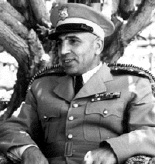
Adib Shishakli was a pivotal and controversial figure in the early political history of the Syrian Republic. A career military officer who rose through the ranks during a period of intense instability, Shishakli served as the de facto leader of Syria from 1949 to 1954, holding the presidency during two separate intervals. His tenure was marked by a transition from parliamentary governance to a centralized military dictatorship characterized by a cult of personality and the suppression of political dissent.
Key Facts
- Role: De facto leader of the First and Second Syrian Republics (1949–1954).
- Political Affiliations: Syrian Social Nationalist Party (SSNP) and the Arab Liberation Movement.
- Military Rank: General.
- Governance Style: Authoritarian military rule with a focus on propaganda and security surveillance.
- Fate: Overthrown in a 1954 coup and later assassinated in Brazil in 1964.
Early Life and Military Foundations
Born in 1909 in Hama, Ottoman Syria, Adib Shishakli came from a diverse background; his father was a Syrian Turkmen and his mother was of Kurdish origin from the Barazi family. The name Shishakli is derived from the Turkish word çiçek, meaning flower.
Shishakli's professional trajectory began in 1930 when he was commissioned as an officer in the colonial military during the French Mandate of Syria. He received his training at the Damascus Military Academy. During this time, he became an early member of the Syrian Social Nationalist Party (SSNP), an organization founded by Antun Saadeh that advocated for the creation of a Greater Syria.
His military reputation grew during the 1948 Arab-Israeli War, where he commanded the 2nd Yarmouk Brigade of the Arab Liberation Army (ALA). His leadership during the assault on Qal'at Jiddin earned him significant respect and a loyal following among the Syrian officer corps.
The Path to Power: A Series of Coups
The instability following the 1948 war led to a series of military interventions. In 1949, Husni al-Za'im led a coup that dismantled Syria's parliamentary system. However, Za'im was soon overthrown by a junta including Shishakli and Colonel Sami al-Hinnawi. This second coup was partly motivated by Za'im's betrayal of SSNP leader Antun Saadeh, whom Za'im had handed over to Lebanese authorities for execution.
While Sami al-Hinnawi initially restored the parliamentary system and appointed the veteran nationalist Hashim al-Atassi as prime minister, tensions soon arose. Shishakli strongly opposed Hinnawi's efforts to form a union with Hashemite Iraq. In December 1949, Shishakli launched a third coup of the year, arresting Hinnawi to eliminate Hashemite influence while keeping Atassi in his post to maintain a veneer of legitimacy.
Consolidating Control
Shishakli continued to tighten his grip on the state by removing rivals. He ordered the assassination of Air Force Commander Colonel Mohammad Nasser and later arrested Prime Minister Maarouf al-Dawalibi and his cabinet in November 1951 after they refused to appoint Shishakli's ally, Fawzi Selu, as Minister for Defence.
Following the resignation of Hashim al-Atassi, Shishakli installed Fawzi Selu as a figurehead head of state, though the actual power remained entirely with Shishakli.
The Era of Personal Rule
Once in absolute control, Shishakli dissolved all political parties and banned non-compliant newspapers. He targeted a wide spectrum of opposition, including the Communist Party, the Baath Party, the Syrian Muslim Brotherhood, and the National and People's parties. Prominent Baathist leaders such as Michel Aflaq and Salah al-Bitar were exiled to Lebanon.
Shishakli pioneered the use of a cult of personality in the post-independence Arab world. He utilized radio broadcasts for mass communication, adorned shopfronts with his portraits, and established a dedicated ministry for information and propaganda. To maintain order, he deployed a vast network of spies and security agents to monitor the population.
In 1952, he created the Arab Liberation Movement, an official government party that adopted limited socialist policies and allowed women in its ranks, though it was boycotted by civilian political leaders. By 1953, he staged an election to formally assume the presidency.
Foreign Policy and Regional Relations
Shishakli's foreign policy was a balancing act. While he sought positive relations with Western powers, he remained uncompromising regarding Israel. He maintained strong ties with the Saudi monarchy and King Talal of Jordan, though he remained suspicious of the rise of Nasserism in Egypt.
Despite his pro-Western leanings, he adopted a policy of pan-Arabism to align with the desires of the Syrian majority. However, he faced internal strife with the Druze minority in Jabal al-Druze. Accusing them of being funded by Jordan to destabilize his regime, Shishakli resorted to shelling Druze strongholds in 1954.
His relationship with the United States and Britain was complex. While Britain hoped Syria would join a Middle East Defence Organization, and the U.S. offered funds to settle Palestinian refugees in Syria, Shishakli declined these offers, as the Palestinian cause remained a volatile and central issue for the Syrian public.
Downfall and Assassination
The accumulation of grievances—including the arrest of military officers and the persecution of political families—led to a coalition of opposition. This movement was led by Hashim al-Atassi, the Druze leader Sultan al-Atrash, and members of the Baath and Communist parties.
On February 23, 1954, a coup overthrew Shishakli. To avoid a full-scale civil war, Shishakli chose to flee, first to Lebanon and eventually to Brazil.
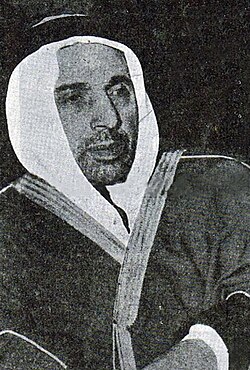
In exile, Shishakli attempted to plot a return to power with Iraqi funding, but the plan was foiled, and he was sentenced to death in absentia. His life ended on September 27, 1964, in Ceres, Brazil, where he was assassinated by Nawaf Ghazaleh, a Syrian Druze seeking revenge for the deaths of his parents during the bombardment of Jabal al-Druze.
| Category | Details |
|---|---|
| Period of Influence | 1949 – 1954 |
| Key Political Parties | SSNP, Arab Liberation Movement |
| Major Military Conflict | 1948 Arab-Israeli War |
| Primary Opponents | Hashim al-Atassi, Sultan al-Atrash, Baath Party |
| Final Destination | Ceres, Goiás, Brazil |
Frequently Asked Questions
What was Adib Shishakli's role in the Syrian government?
Shishakli was the de facto leader of Syria from 1949 to 1954. While he served as President during two specific periods (1951 and 1953–1954), he often exercised power behind the scenes through figurehead leaders like Fawzi Selu.
How did Shishakli maintain control over the Syrian population?
He utilized a combination of state propaganda, a cult of personality, and a widespread network of security agents and spies to suppress opposition and monitor citizens.
Why did Shishakli clash with the Druze community?
Shishakli accused the Druze in Jabal al-Druze of attempting to overthrow his regime using funds from Jordan, leading him to use military force and shelling against their strongholds in 1954.
What led to Shishakli's eventual downfall?
A broad coalition of military officers, the Baath Party, the Communist Party, and nationalist leaders like Hashim al-Atassi and Sultan al-Atrash launched a successful coup in February 1954.
How did Adib Shishakli die?
He was assassinated by firearm on September 27, 1964, in Brazil. The assassin, Nawaf Ghazaleh, was a Syrian Druze seeking retribution for the military actions Shishakli had taken against the Druze people.