9th (Secunderabad) Division: A Pillar of the British Indian Army
The 9th (Secunderabad) Division was a significant infantry formation of the British Indian Army, active from 1904 to 1922. Established during a period of sweeping military reorganization, the division served as a critical component of the Southern Army, balancing the demands of internal security within British India with the global requirements of the First World War.
The division's creation was a direct result of the reforms instituted by Lord Kitchener, who served as Commander-in-Chief, India between 1902 and 1909. Kitchener sought to modernize the military by merging the three separate Presidency armies into a single, unified force. This restructuring introduced higher-level formations, including eight army divisions, and integrated Indian and British units into shared brigades. Under this new system, the British Indian Army became a force recruited locally and permanently based in India, led by expatriate British officers.
Key Facts
- Active Period: 1904 – 1922.
- Allegiance: British Crown.
- Primary Role: Internal Security and regional defense.
- Higher Command: Part of the Southern Army.
- WWI Deployment: While the division remained in India, specific brigades were deployed to France and East Africa.
Operational History during World War I
Throughout the First World War, the 9th (Secunderabad) Division primarily maintained internal security duties within India. However, the global nature of the conflict necessitated the detachment of several of its specialized brigades to support overseas campaigns.
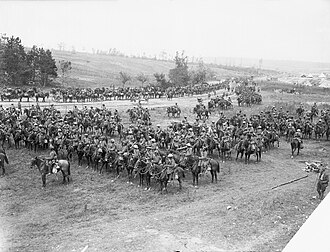
The Secunderabad Cavalry Brigade was deployed to the Western Front in France, where it operated as part of the 2nd Indian Cavalry Division. These units provided essential mobile support during some of the war's most grueling engagements.
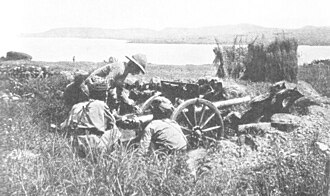
Simultaneously, the Bangalore Brigade was reorganized as the 27th (Bangalore) Brigade and assigned to the Indian Expeditionary Force B. This force was dispatched to British East Africa. By December 1914, Force B was broken up, and its constituent units were redistributed to bolster the defense of East Africa.
Division Composition in 1914
At the outbreak of the war in August 1914, the division was under the command of Major-General A. Phayre. Its structure was a diverse mix of cavalry, infantry, and technical support units.
Cavalry and Infantry Brigades
The division featured several specialized brigades, each led by experienced commanders:
- Secunderabad Cavalry Brigade: Commanded by Brigadier-General F.W.G. Wadeson, featuring the 7th (Princess Royal's) Dragoon Guards, 20th Deccan Horse, and 34th Prince Albert Victor's Own Poona Horse.
- 1st Secunderabad Infantry Brigade: Commanded by Major-General P.S. Wilkinson, including the 2nd Battalion, King's (Shropshire Light Infantry) and the 1st Brahmans.
- 2nd Secunderabad Infantry Brigade: Commanded by Brigadier-General E.H. Rodwell, including the 1st Battalion, Royal Inniskilling Fusiliers and the 6th Jat Light Infantry.
- Bangalore Brigade: Commanded by Brigadier-General Richard Wapshare, which later became the 27th (Bangalore) Brigade.
- Southern Brigade: Commanded by Brigadier-General W.G. Hamilton, consisting of units such as the 2nd Battalion, Buffs (East Kent Regiment).
Technical and Support Units
The division's operational capacity was supported by the Royal Field Artillery and the Royal Horse Artillery. Engineering capabilities were provided by the 2nd Queen Victoria's Own Madras Miners and Sappers, which contributed four field companies (9th through 12th) to the division.
| Component | Commanding Officer | Key Units |
|---|---|---|
| Secunderabad Cavalry Brigade | Brigadier-General F.W.G. Wadeson | 20th Deccan Horse, 34th Poona Horse |
| 1st Secunderabad Infantry Brigade | Major-General P.S. Wilkinson | 1st Brahmans, 88th Carnatic Infantry |
| 2nd Secunderabad Infantry Brigade | Brigadier-General E.H. Rodwell | 6th Jat Light Infantry, 83rd Wallajahbad Light Infantry |
| Bangalore Brigade | Brigadier-General Richard Wapshare | 101st Grenadiers, 108th Infantry |
| Southern Brigade | Brigadier-General W.G. Hamilton | 73rd, 75th, and 86th Carnatic Infantry |
| Engineers | N/A | 2nd Queen Victoria's Own Madras Miners and Sappers |
Frequently Asked Questions
When was the 9th (Secunderabad) Division formed?
The division was formed in 1904 as part of the large-scale military reforms introduced by Lord Kitchener.
What was the primary role of the division during World War I?
The division primarily remained in India to handle internal security duties, although specific brigades were detached for overseas service.
Which overseas theaters did the division's units serve in?
Units from the division served on the Western Front in France (Secunderabad Cavalry Brigade) and in British East Africa (27th Bangalore Brigade).
Who was the commander of the division in 1914?
At the start of the First World War in August 1914, the division was commanded by Major-General A. Phayre.
What were the Kitchener reforms?
The Kitchener reforms involved merging the three Presidency armies into a unified British Indian Army and creating higher-level formations, such as the eight army divisions, to improve organizational efficiency.