61st Pioneers: A Legacy of the British Indian Army
The 61st Pioneers were a distinguished infantry regiment of the British Indian Army with a storied history spanning nearly two centuries. From their origins as coastal defenders to their role as specialized pioneers—soldiers trained in both combat and engineering tasks—the regiment played a pivotal role in securing the Indian Empire's interests across Asia and Africa.
Key Facts
- Active Period: 1758–1922.
- Original Designation: 1st Battalion Coast Sepoys.
- Primary Branch: Infantry (Pioneers).
- Key Affiliations: Madras Army (until 1895) and Madras Command.
- Regimental Colors: Red with white facings.
Early History and the Madras Army
The regiment's lineage began in 1758 when they were raised as the 1st Battalion Coast Sepoys. In their early decades, they were integral to the Madras Army, participating in the Carnatic Wars between 1746 and 1763, as well as the Third Anglo-Mysore War.
During the Fourth Anglo-Mysore War, the regiment saw significant action in several major engagements, including the Battle of Seedaseer, the Battle of Nagpore, the Battle of Ava, and the pivotal Battle of Seringapatam.
Expansion and Global Campaigns
As the 19th century progressed, the regiment's operational scope expanded beyond the borders of the Indian subcontinent. They were deployed during the Indian Rebellion of 1857 as part of the Central India Campaign, helping to restore British control.
The regiment subsequently took part in several high-profile international conflicts, including the Second Burmese War, the Second Afghan War, and the Boxer Rebellion in China. These deployments cemented their reputation as a versatile force capable of operating in diverse and challenging terrains.
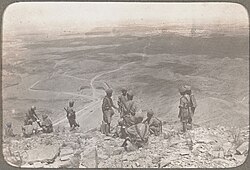
World War I and Final Years
During World War I, the regiment served as part of the 27th Bangalore Brigade within the 9th (Secunderabad) Division. However, the brigade operated independently of its parent division, deploying to British East Africa as part of the Indian Expeditionary Force B.
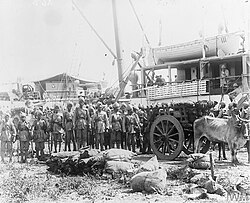
Following their service in East Africa and a return to India, the regiment participated in the Third Afghan War. The post-war era brought significant structural changes to the Indian government's military organization. In 1922, the army transitioned from single-battalion regiments to multi-battalion structures. Consequently, the 61st Pioneers were redesignated as the 1st Battalion 1st Madras Pioneers. This unit was eventually disbanded in 1933.
Regimental Lineage and Evolution
The regiment underwent numerous name changes over its 164-year history, reflecting changes in military organization and royal patronage:
| Year | Regimental Designation |
|---|---|
| 1758 | 1st Battalion Coast Sepoys |
| 1769 | 1st Carnatic Battalion |
| 1784 | 1st Madras Battalion |
| 1796 | 1st Battalion, 1st Madras Native Infantry |
| 1824 | 1st Madras Native Infantry |
| 1883 | 1st Madras Native Infantry (Pioneers) |
| 1901 | 1st Madras Pioneers |
| 1903 | 61st Madras Pioneers |
| 1906 | 61st Prince of Wales's Own Pioneers |
| 1910 | 61st (King George's Own) Pioneers |
| 1922 | 1st Battalion 1st Madras Pioneers |
Frequently Asked Questions
What were the 61st Pioneers?
The 61st Pioneers were an infantry regiment of the British Indian Army, originally raised in 1758 as the 1st Battalion Coast Sepoys. They served as both combat troops and pioneers, providing essential engineering and infantry support.
Which major wars did the regiment participate in?
The regiment fought in the Carnatic Wars, the Third and Fourth Anglo-Mysore Wars, the Indian Rebellion of 1857, the Second Afghan War, the Second Burmese War, the Boxer Rebellion, World War I, and the Third Afghan War.
Where did the 61st Pioneers serve during World War I?
During World War I, they were part of the 27th Bangalore Brigade and served in British East Africa as part of the Indian Expeditionary Force B.
When was the regiment disbanded?
After being reorganized as the 1st Battalion 1st Madras Pioneers in 1922, the unit was officially disbanded in 1933.
What were the regimental colors of the 61st Pioneers?
The regiment's colors were red, faced with white.