54th Sikhs (Frontier Force)
The 54th Sikhs (Frontier Force) was a distinguished infantry regiment of the British Indian Army with a history spanning nearly two centuries of conflict and reorganization. Known by the nickname Burmah Paltan, the unit evolved from a frontier security force into a highly decorated battalion serving in both the Indian and Pakistani armies.
Key Facts
- Founded: January 1, 1846, at Ludhiana.
- Nickname: Burmah Paltan.
- Uniform: Drab with emerald green facings.
- Key Affiliations: Punjab Frontier Force (The Piffers) and later the 12th Frontier Force Regiment.
- Current Status: Exists as the 6th Battalion The Frontier Force Regiment of the Pakistan Army.
Early History and the Punjab Frontier Force
The regiment was raised on January 1, 1846, by Captain C. Mackenzie. Its initial ranks were composed of men transferred from the Umballa Police Battalion and the 6th and 11th Regiments of Bengal Native Infantry. Originally named the 4th Regiment of Infantry The Frontier Brigade, it underwent several name changes, becoming the 4th Regiment of Sikh Local Infantry in 1847 and the 4th Regiment of Sikh Infantry by 1857.
In 1851, the unit joined the Punjab Irregular Force, which later became the renowned Punjab Frontier Force, affectionately known as The Piffers. This elite force, comprising cavalry, infantry, and artillery, was tasked with maintaining order on the Punjab Frontier.
The regiment's early operational history was marked by rapid deployment and versatility. They volunteered for the Second Burmese War (1852-53) and played a critical role during the Indian Mutiny of 1857, completing a grueling 560-mile march from Abbottabad to Delhi in just thirty days during the peak of the Indian summer. They also served in the Chitral Campaign of 1895.
World War I and the Palestine Campaign
Following the 1903 Indian Army reforms led by Lord Kitchener, the unit was redesignated as the 54th Sikhs (Frontier Force). By 1914, the regiment featured a diverse class composition, consisting of four companies of Sikhs, two of Punjabi Muslims, and one company each of Pathans and Dogras.
While the regiment spent much of the First World War on the North West Frontier of India, they were deployed to Egypt in 1918. There, they participated in the Palestine Campaign and fought in the Battle of Megiddo, a decisive engagement that led to the collapse of the Turkish Army in Palestine. After further service in Turkey and Russian Transcaucasia, the unit returned to India in 1920.
World War II and the Burma Campaign
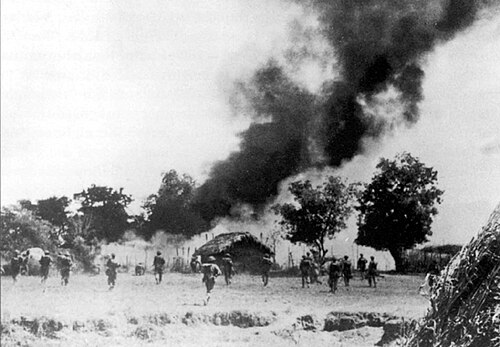
In 1922, the 54th Sikhs were grouped with other Sikh units and the Guides Infantry to form the 12th Frontier Force Regiment, becoming its 4th Battalion. During the Second World War, the 4/12 FF served with distinction in the Burma Campaign.
The battalion produced two exceptionally distinguished officers during this era: Major (later Field Marshal) Sam Manekshaw of the Indian Army and Major (later Lt Gen) Attiq ur Rahman of the Pakistan Army, both of whom were awarded the Military Cross.
Transition to the Pakistan Army
Upon the partition of India in 1947, the Frontier Force Regiment was allocated to the Pakistan Army. In 1956, following a merger with the Pathan Regiment and the Frontier Force Rifles, the unit was redesignated as the 6th Battalion The Frontier Force Regiment (6 FF).
The battalion continued its legacy of valor in subsequent conflicts. During the Indo-Pakistan War of 1965, 6 FF distinguished itself during the advance toward Akhnur and the Battle of Chawinda. In 1971, while serving at Sulemanki, Major Shabbir Sharif was awarded the Nishan-i-Haider, Pakistan's highest gallantry award. His brother, Raheel Sharif, also served in the battalion and eventually rose to the rank of General and Chief of Staff (COS) of the Pakistan Army.
Regimental Summary
| Period/Year | Designation | Key Engagement/Event |
|---|---|---|
| 1846 | 4th Regiment of Infantry The Frontier Brigade | Formation at Ludhiana |
| 1852-53 | 4th Regiment of Sikh Local Infantry | Second Burmese War |
| 1857 | 4th Regiment of Sikh Infantry | Indian Mutiny (March to Delhi) |
| 1903 | 54th Sikhs (Frontier Force) | Kitchener Reforms |
| 1918 | 54th Sikhs (Frontier Force) | Battle of Megiddo (Palestine) |
| 1922 | 4th Battalion (Sikhs) 12th Frontier Force Regiment | Regimental Grouping |
| 1942-45 | 4/12 Frontier Force Regiment | Burma Campaign (WWII) |
| 1956-Present | 6th Battalion The Frontier Force Regiment | Indo-Pak Wars (1965, 1971) |
Frequently Asked Questions
What was the nickname of the 54th Sikhs?
The regiment was known as the Burmah Paltan.
Who are some of the most famous officers associated with this unit?
The most notable officers include Field Marshal Sam Manekshaw (Indian Army), Lt Gen Attiq ur Rahman (Pakistan Army), and General Raheel Sharif (Pakistan Army).
What is the current designation of the regiment?
The unit currently exists as the 6th Battalion The Frontier Force Regiment of the Pakistan Army.
What was the role of "The Piffers"?
The Piffers (Punjab Frontier Force) were tasked with maintaining order and security on the Punjab Frontier of British India.
Which high gallantry award was won by a member of the battalion in 1971?
Major Shabbir Sharif was awarded the Nishan-i-Haider, Pakistan's highest award for valor, for his actions at Sulemanki in 1971.