4th Gorkha Rifles: History and Legacy of an Elite Infantry Regiment
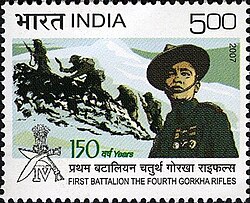
The 4th Gorkha Rifles (4 GR) is a distinguished light infantry regiment of the Indian Army. Comprising soldiers of Indian Gorkha and Nepalese nationality—specifically from the Magar and Gurung hill tribes of Nepal—the regiment has a storied history of bravery and discipline. Raised in 1857 as part of the British Indian Army, it transitioned to the Indian Army following India's independence in 1947.
Guided by the powerful motto "Kafar Hunu Bhanda Marnu Ramro" (Better to die than live like a coward), the regiment currently consists of five infantry battalions and is headquartered at the 14 Gorkha Training Centre (14 GTC) in Subathu, Himachal Pradesh.
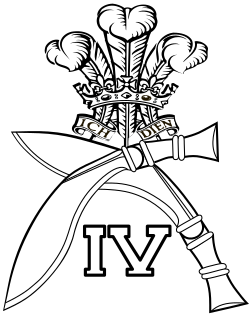
Key Facts
- Founded: August 1857.
- Role: Light Infantry.
- Composition: Five infantry battalions.
- Regimental Centre: 14 GTC Subathu, Simla Hills, Himachal Pradesh.
- Regimental Day: March 11.
- Primary Ethnic Groups: Magars and Gurungs.
Regimental Overview
The 4th Gorkha Rifles is characterized by its unique traditions and strict adherence to military excellence. The regiment's colors are Rifle Green, faced with black and red. Historically, the regiment was deeply tied to Bakloh, a hill station acquired in 1866 from the Raja of Chamba for 5,000 Rupees. Bakloh served as the Regimental Center and Depot for 82 years until 1948.
| Attribute | Details |
|---|---|
| Active Period | 1857–Present |
| Branch | British Indian Army (1857–1947), Indian Army (1947–Present) |
| Motto | Better to die than live like a coward |
| Regimental Day | 11 March |
| Notable Battle Honours | Punch, Gurais, and Bilafond La |
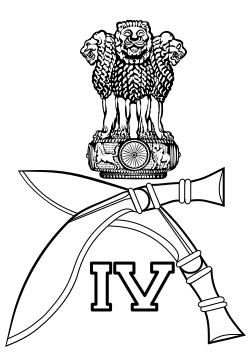
Combat History
World War I
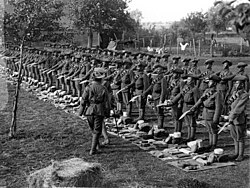
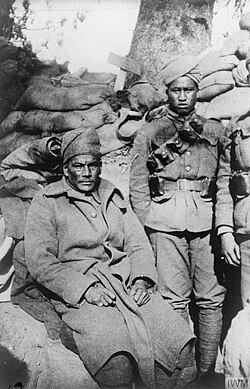
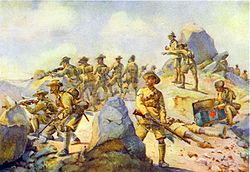
During the First World War, the 1st Battalion (1/4 GR) was deployed to France as part of the 9th (Sirhind) Brigade. They saw intense action in the battles of Givenchy, Neuve Chapelle, and Ypres. In 1915, the battalion served at Gallipoli before deploying to Mesopotamia in April 1916.
World War II and the Burma Campaign
The regiment expanded during World War II with the raising of the 3rd (3/4 GR) and 4th (4/4 GR) battalions in 1940 and 1941. The regiment's reach extended across Iraq, Syria, Egypt, Cyprus, Italy, and the Far East.
In the Burma Campaign, the 1/4 GR fought in the Battle of Sittang Bridge (1942) and the Battle of Imphal (1944). The 3/4 GR became legendary as part of the Chindits—long-range penetration groups—participating in Operation Thursday in 1944. The 4/4 GR also played a critical role in the Battle of Mandalay.
Post-Independence Transition and Modern Era
The transition in 1947 was complex. While orders mandated that Gorkha regiments transfer intact to the Indian Army, some British officers transferred funds to England. These funds were later used for a war memorial and the publication of regimental histories.
The Regimental Center moved several times after the Partition of India, shifting from Bakloh to Dharamshala, Chakrata, and Clement Town, before finally settling in Subathu in April 1960. Here, it merged with the 1 Gorkha Rifles Centre to form the 14 GTC.
Battalion Highlights
- 1/4 GR (Jethi Paltan): Raised in 1857. In 2002, it received the COAS Unit Citation for neutralizing 94 foreign terrorists in the Kupwara district of Kashmir.
- 3/4 GR (Sainli Paltan): Raised in 1940, known for its service with the Chindits.
- 4/4 GR (Kainli Paltan): Raised in 1941, demobilized in 1946, and re-raised in 1962 following Chinese aggression.
Regimental Traditions
The Regimental Day is celebrated on March 11, commemorating the victory in Baghdad (1917) and the action at Neuve Chapelle. This day serves as a reunion for serving and retired officers to maintain the bond of the "Paltan." To preserve its history, the Officers' Association has published an annual Newsletter since 1977, which includes sections in English, Hindi, and Nepali.
Frequently Asked Questions
What is the meaning of the 4th Gorkha Rifles motto?
The motto "Kafar Hunu Bhanda Marnu Ramro" translates to "Better to die than live like a coward," reflecting the regiment's commitment to courage and honor.
Who makes up the ranks of the 4th Gorkha Rifles?
The regiment consists of Gurkha soldiers of Indian Gorkha or Nepalese nationality, primarily from the Magar and Gurung hill tribes of Nepal.
What was the significance of the Chindits in the regiment's history?
The 3rd Battalion (3/4 GR) served as part of the Chindits, specialized long-range penetration forces that operated behind enemy lines during the Burma Campaign of World War II.
Where is the current Regimental Centre located?
The Regimental Centre is located at the 14 Gorkha Training Centre (14 GTC) in Subathu, Shimla Hills, Himachal Pradesh.
Why is March 11 celebrated as Regimental Day?
It commemorates two significant World War I events: the 1st Battalion's action at the Battle of Neuve Chapelle and the 2nd Battalion's entry into Baghdad on March 11, 1917.