3rd Millennium BC: A Global Era of Early Civilizations
The transition from the 4th to the 3rd millennium BC marked a pivotal turning point in human history. This era witnessed the shift from small settlements to complex urban centers, the birth of writing, and the rise of the world's first great empires. From the arid coasts of Peru to the fertile plains of Mesopotamia and the river valleys of Asia, humanity began organizing itself into structured societies with shared religious beliefs and sophisticated governance.
The Foundations: Precursors in the 4th Millennium BC
Before the 3rd millennium BC fully took hold, several key developments set the stage for urban expansion. One of the most significant was the Caral-Supe (or Norte Chico) civilization in Peru. Flourishing between 3700 and 1800 BC, its first city, Huaricanga, emerged around 3500 BC. Located in the Fortaleza Valley, 14 miles inland from the Pacific Ocean, Huaricanga spans 100 hectares and features pyramidal earthwork mounds and standing stones known as huancas.
Recent excavations have revealed a temple predating the Mito architectural tradition of the Peruvian highlands. Furthermore, evidence of maize and fourteen other domesticated fruit and vegetable species suggests that agriculture played a more critical role in the development of Caral-Supe than previously believed, mirroring the agricultural foundations of Mesopotamia, Egypt, China, and India.
Other early milestones included the establishment of the Indus Valley trade-port city of Lothal in India around 3700 BC, the appearance of the Minoan culture on Crete (c. 3650–3000 BC), and the emergence of the Helladic and Cycladic cultures in Greece around 3200–3100 BC.
Key Facts
- Oldest City in Americas: Huaricanga (Caral-Supe) dates back to approximately 3500 BC.
- Imperial Rise: Sargon of Akkad established the Akkadian Empire in 2334 BC after conquering Mesopotamia.
- Egyptian Unification: Upper and Lower Egypt were unified around 3000 BC.
- Technological Firsts: The first evidence of gold use in the Middle East appears around 3000 BC.
- Writing Evolution: Sumerian cuneiform writing developed, gradually reducing the use of pictographs.
- Biological Milestone: The last mammoths on Wrangel Island went extinct between 2500 and 2000 BC.
The Rise of Great Empires and City-States
Mesopotamia and the Near East
The 3rd millennium BC was a golden age for Mesopotamia. The city of Mari was founded in Syria during the 29th century BC, while Semitic tribes occupied Akkad and the northern plain of Shinar. The Phoenicians also established vital coastal centers at Tyre and Sidon.
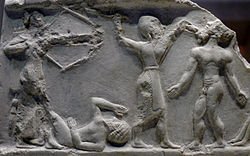
In Sumer, the Dynasty of Lagash rose to prominence, followed by the Golden Age of Ur (2474–2398 BC). A defining moment occurred in 2334 BC when Sargon of Akkad conquered the region to create the Akkadian Empire.
Ancient Egypt and Nubia
Egypt saw a rapid succession of dynasties and political consolidation. Following the unification of Upper and Lower Egypt around 3000 BC, the Second Dynasty flourished under Hotepsekhemwy (c. 2890 BC). The Third Dynasty began with Sanakhte (c. 2686 BC), and the Fourth Dynasty saw the reign of Sneferu (c. 2613 BC). By the end of the millennium, Egypt had progressed through the Fifth, Sixth, and eventually the Seventh through Eleventh dynasties.
To the south, the Nubian A-Group (Ta-Seeti) kingdom ended around 3000 BC, potentially due to Egyptian raids, later followed by the arrival of C-Group pastoralists around 2300 BC.
Asia and the Far East
In China, this period began with the mythical era of the Sage Kings (the Three Sovereigns and Five Emperors), eventually leading to the start of the Xia dynasty (c. 2070–1600 BC), the first dynasty in traditional Chinese historiography. Meanwhile, in northern Vietnam and southern China, the Xích Quỷ Kingdom and the Hồng Bàng dynasty rose around 2879 BC.
Cultural and Artistic Achievements
European Developments
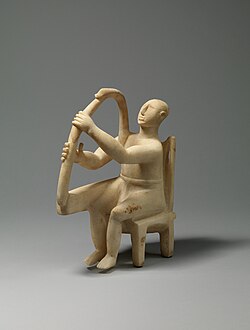
Europe experienced a flourish of Megalithic, Corded Ware, and Beaker cultures. In Greece, the Cycladic culture produced iconic art, such as the Harp Player from Keros (c. 2800–2700 BC) and various female figures and "frying pan" incised panels from Syros (c. 2500–2200 BC).
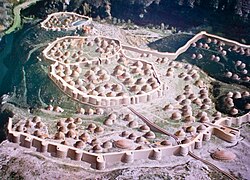
In the Iberian Peninsula, the Chalcolithic (Copper Age) civilizations of Los Millares and Zambujal were founded around 2600 BC.
Global Innovations
The era was marked by significant intellectual and material leaps. Sumerians developed complex poetry, such as laments for the shepherd god Tammuz, and celebrated festivals marking the victory of the spring god over the goddess of chaos. In Malta, the Hypogeum of Ħal-Saflieni was developed around 2500 BC as a subterranean temple and necropolis. Meanwhile, Egypt began producing glass beads, and the Indus Valley Civilization became unified around 2600 BC.
Summary of Major 3rd Millennium BC Events
| Approx. Date | Region | Event/Development |
|---|---|---|
| c. 3000 BC | Egypt | Unification of Upper and Lower Egypt |
| c. 2879 BC | Vietnam/China | Rise of Xích Quỷ Kingdom and Hồng Bàng dynasty |
| c. 2600 BC | Iberia / India | Founding of Los Millares; Unified Indus Valley Civilization |
| c. 2500 BC | Mesopotamia | Establishment of the state of Assyria |
| 2334 BC | Mesopotamia | Sargon of Akkad establishes the Akkadian Empire |
| c. 2070 BC | China | Beginning of the Xia dynasty |
Frequently Asked Questions
What was the significance of Huaricanga in the Caral-Supe civilization?
Huaricanga is considered the oldest city in the Americas and one of the earliest in the world, dating to approximately 3500 BC. It demonstrates early urban planning with pyramidal structures and suggests that agriculture (maize and other species) was vital to the civilization's growth.
Who was Sargon of Akkad?
Sargon of Akkad was the leader who conquered Mesopotamia in 2334 BC, establishing the Akkadian Empire and creating one of the first multi-ethnic, centrally governed empires in history.
What are the Cycladic figures?
These are early artworks from the Cycladic culture in Greece, including female figures and the Harp Player from Keros (c. 2800–2700 BC), reflecting the artistic sophistication of the Aegean region during the 3rd millennium BC.
When did the last mammoths go extinct?
The world's last surviving mammoth population, located on Wrangel Island in the Arctic Ocean, went extinct sometime between 2500 and 2000 BC.
What is the Hypogeum of Ħal-Saflieni?
Developed around 2500 BC in Paola, Malta, it is a complex subterranean temple that was later used as a necropolis (a cemetery).