Mesopotamia: The Cradle of Civilization Between the Two Rivers
Nestled between the Tigris and Euphrates rivers, the region known as Mesopotamia served as the foundational stage for human civilization. Often referred to as the "land between the rivers," this fertile area witnessed the birth of recorded history, the rise of the first great empires, and the development of technologies that still influence our modern world.
From the early settlements of the Neolithic period to the sophisticated urban centers of the Bronze and Iron Ages, Mesopotamia was a crucible of innovation. It was here that humanity first transitioned from small farming communities to complex, organized societies governed by law, science, and monumental architecture.
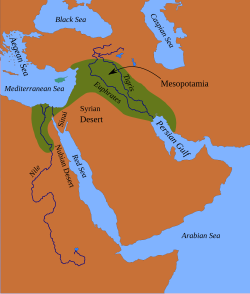
The geography of the region was defined by its river systems. The Tigris and Euphrates provided the water necessary for large-scale agriculture, which in turn supported growing populations and the emergence of powerful city-states.
Key Facts
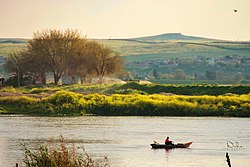
![Mesopotamian Marshes at night, southern Iraq. A reed house (Mudhif) and a narrow canoe (Mashoof) are in the water. Mudhif structures have been one of the traditional types of structures, built by the Marsh people of southern Mesopotamia for at least 5,000 years. A carved elevation of a typical mudhif, dating to around 3,300 BC was discovered at Uruk.[18]](/images/89/72/8972fe2d31019460c8cf1cd733a42f0934018c0329d0de2082d64fdae33b4c7e.jpg)
- Core Geography: Located between the Tigris and Euphrates rivers in the ancient Near East.
- Mathematical Legacy: Developed a sexagesimal (base 60) system, which gave us the 60-minute hour and 360-degree circle.
- Major Empires: Included the Akkadian, Assyrian, and Babylonian empires.
- Writing: Utilized early writing systems that allowed for the recording of law, literature, and science.
- Timeline: Recorded history began around 3100 BC, with major shifts occurring through the fall of Babylon in 539 BC.
The Evolution of Mesopotamian Societies
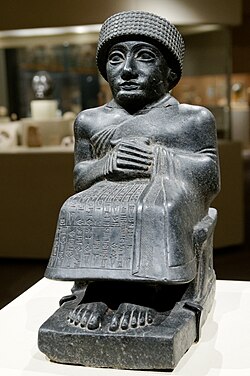
The history of Mesopotamia is a complex tapestry of shifting cultures and rising powers. Long before the great empires, the region was home to various prehistoric cultures that laid the groundwork for urban life.
Prehistory and Early Cultures
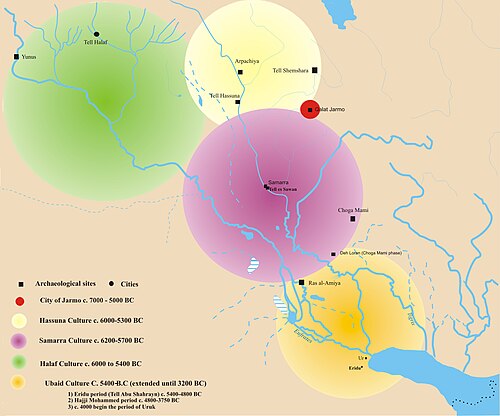
The transition from hunter-gatherer lifestyles to settled agriculture began during the Pre-Pottery Neolithic periods. By 7500 BC, sites like Jarmo showed early signs of organized settlement. As time progressed, distinct cultural groups emerged, including the Hassuna, Halaf, Samarra, and Ubaid cultures. The Uruk period (c. 4000–3100 BC) was particularly significant, marking the rise of true urbanism.
The Rise of Empires
The era of recorded history is dominated by the Sumerians and Akkadians. Around 2350 BC, Sargon of Akkad established the Akkadian Empire, initiating a 2,000-year cycle of imperial succession. During the early second millennium BC, the region became polarized between Assyria in the north and Babylonia in the south.
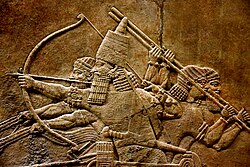
The Neo-Assyrian Empire (911–612 BC) eventually asserted dominance over much of the Near East, characterized by significant military power. Following their decline, the Babylonians rose to prominence, serving as the final independent Mesopotamian realm until they were conquered by the Achaemenid Empire under Cyrus the Great in 539 BC.
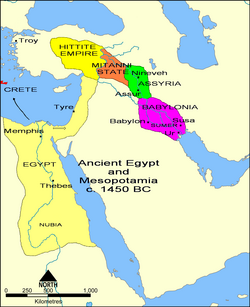
The region later fell under the influence of Alexander the Great in 332 BC, followed by the Seleucid Empire, and eventually the Parthians and Romans.
Science, Mathematics, and Technology
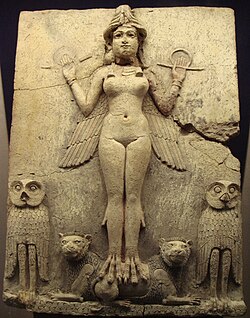
One of Mesopotamia's most enduring legacies is its contribution to science. Mesopotamian scholars developed a sexagesimal numeral system, a base-60 method of counting. This mathematical framework is the direct ancestor of how we measure time (60 minutes in an hour) and angles (360 degrees in a circle).
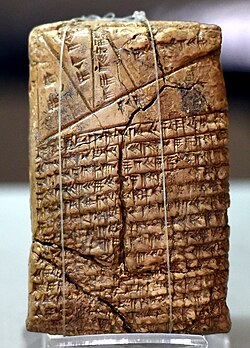
Mathematical Achievements
Babylonian mathematicians were remarkably advanced. They possessed theorems for measuring the area of shapes and solids. Historical records indicate they understood the relationship between a circle's circumference and its diameter, approximating the value of π (pi) as 3.
Medicine and Astronomy
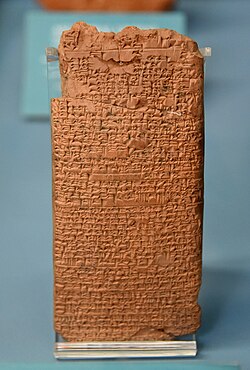
Beyond pure mathematics, the Mesopotamians applied their knowledge to medicine and astronomy. Clay tablets have been discovered containing medical recipes, including those concerning poisoning. Their observations of the heavens were so precise that they influenced early map-making and the development of the lunisolar calendar.
Culture, Law, and Literature
![King Meli-shipak I (1186–1172 BC) presents his daughter to the goddess Nannaya. The crescent moon represents the god Sin, the sun the Shamash and the star the goddess Ishtar.[53][54]](/images/0a/6e/0a6eb4dd304bb32c6b72810f40a141c4524c62f5523b4a57e9723137d79d0692.jpg)
Mesopotamian society was highly structured, with laws and literature playing central roles in maintaining order and preserving heritage.
The Rule of Law
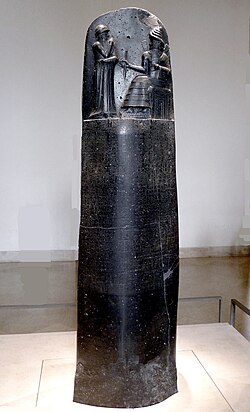
The Code of Hammurabi, composed around 1755–1750 BC, stands as one of the most significant legal texts in human history. Written in the Old Babylonian dialect of Akkadian, it is the longest and best-preserved legal document from the ancient Near East, providing insight into the justice system of the time.
Epic Literature
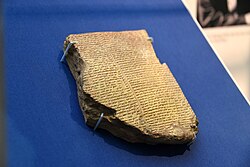
The region also produced some of the world's earliest literature. The Epic of Gilgamesh is regarded as the earliest surviving notable work of literature, exploring profound themes of heroism and mortality through epic poetry.
Summary of Major Mesopotamian Periods
| Period/Empire | Approximate Dates | Key Characteristics |
|---|---|---|
| Uruk Period | 4000–3100 BC | Rise of urbanism and early writing. |
| Early Dynastic Period | 2900–2350 BC | Emergence of Sumerian city-states. |
| Akkadian Empire | 2350–2100 BC | First major empire under Sargon. |
| Old Babylonian Period | 18th–17th Century BC | Era of Hammurabi and legal codification. |
| Neo-Assyrian Empire | 911–612 BC | Dominance over the Near East. |
| Neo-Babylonian Empire | 626–539 BC | Final independent Mesopotamian realm. |
Frequently Asked Questions
What does the term "Mesopotamia" mean?
The name is derived from Greek, meaning "the land between the rivers," referring to the area between the Tigris and Euphrates.
How did Mesopotamian math affect us today?
Their use of a base-60 (sexagesimal) system is the reason we have 60 minutes in an hour, 60 seconds in a minute, and 360 degrees in a circle.
Who were the Sumerians and Akkadians?
They were two distinct groups that dominated Mesopotamia at different times. The Sumerians are noted for early city-states and writing, while the Akkadians established one of the world's first empires.
What was the significance of the Code of Hammurabi?
It was one of the earliest and most complete sets of written laws, establishing a standardized system of justice in ancient Babylon.
What is the Epic of Gilgamesh?
It is an ancient epic poem that is considered the earliest surviving notable work of literature, detailing the adventures of a legendary king.