2011 New Jersey Redistricting Commission and the Apportionment Process
Following the release of census data, states must undergo a process of apportionment—the act of redistributing legislative seats and redrawing district boundaries to reflect population changes. In 2011, New Jersey navigated this complex political process through a dedicated ten-member commission tasked with creating a fair and legal map for the state's legislative districts.
The Composition of the Commission
The 2011 Commission was designed as a bipartisan body, consisting of an equal split of five Democrats and five Republicans. This structure was intended to ensure balanced representation during the redrawing of district lines.
Republican Members
- Jay Webber: Assemblyman and former State Republican Chairman (Co-Chair)
- Irene Kim Asbury: Former Assembly candidate (Vice Co-Chair)
- Kevin J. O'Toole: State Senator
- George Gilmore: Ocean County Republican Chair
- Bill Palatucci: Republican national committeeman
Democratic Members
- John Wisniewski: Assemblyman and State Democratic Chairman (Co-Chair)
- Nilsa Cruz-Perez: Former Assemblywoman (Vice Co-Chair)
- Joseph Cryan: Assembly Majority Leader
- Sheila Oliver: Assembly Speaker
- Paul Sarlo: State Senator
The Path to the 2011 Apportionment
The timeline for the redistricting process was tight. New Jersey's census data were released on February 3, 2011, leaving the commission until March 5, 2011, to finalize the district map.
However, by the deadline, the ten members reached an impasse, unable to agree on a final map. To break the deadlock, Chief Justice Stuart Rabner appointed an 11th member to the committee: Alan Rosenthal, a professor of public policy at Rutgers University. Rosenthal brought significant expertise to the role, having previously served on the redistricting commissions for New Jersey's congressional districts in both 1992 and 2001.
On April 3, 2011, the commission held a decisive vote. The result was 6 to 5 in favor of the Democrats' map, with the five Democratic members and Alan Rosenthal providing the winning votes. This decision established the New Jersey Legislative Districts for the 2011 apportionment.
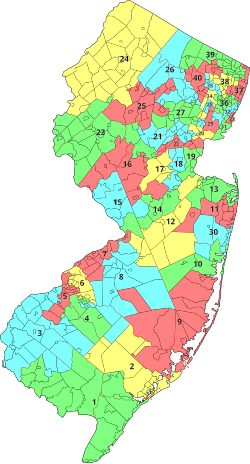
Legal Challenges and Court Rulings
The new map did not emerge without controversy. A court case challenging the validity of the districts was brought forward, but it was dismissed by the New Jersey Supreme Court in August 2011. The court ruled that population discrepancies between the northern and southern counties were not significant enough to support a legal claim for voter dilution—the practice of reducing the voting power of a specific group.
Furthermore, the court clarified that the act of splitting counties was no longer a valid basis for invalidating a redistricting map. A subsequent appeal against this decision was rejected in September 2012, cementing the 2011 map.
Key Facts
- Commission Structure: Originally 10 members (5 Democrats, 5 Republicans), later expanded to 11.
- Tie-Breaker: Alan Rosenthal was appointed by Chief Justice Stuart Rabner to resolve the impasse.
- Final Vote: The map passed 6-5 on April 3, 2011.
- Legal Outcome: The New Jersey Supreme Court dismissed challenges regarding voter dilution and county splitting.
| Event | Date | Outcome/Detail |
|---|---|---|
| Census Data Release | February 3, 2011 | Initiated the redistricting timeline |
| Initial Deadline | March 5, 2011 | Commission reached an impasse |
| Final Map Vote | April 3, 2011 | Approved 6-5 (Democrats' map) |
| Supreme Court Ruling | August 2011 | Challenge dismissed |
| Appeals Rejection | September 2012 | Final legal confirmation |
Frequently Asked Questions
Who broke the tie in the 2011 Commission?
Alan Rosenthal, a Rutgers University public policy professor, was appointed as the 11th member by Chief Justice Stuart Rabner to break the deadlock between the Democratic and Republican members.
What was the final vote count for the 2011 map?
The commission voted 6 to 5 in favor of the map proposed by the Democrats.
Why did the New Jersey Supreme Court dismiss the legal challenge?
The court found that population differences between northern and southern counties did not constitute voter dilution and ruled that splitting counties is not a sufficient reason to invalidate a map.
When was the 2011 map officially finalized legally?
While the map was voted on in April 2011, the final legal challenge was settled when an appeals court rejected a challenge in September 2012.
What was the original composition of the commission?
The commission originally consisted of five Democrats and five Republicans, including Co-Chairs John Wisniewski and Jay Webber.