1960: The Year of African Independence
The year 1960 stands as a pivotal turning point in global history, often referred to as the "Year of Africa." In a staggering wave of decolonization, the number of independent countries grew from nine to twenty-six within a single year. This shift saw 17 colonies break away from European rule, representing a population increase from 95 million to 180 million people gaining sovereignty.
This mass transition was driven by a combination of mounting internal conflicts, shifting political ideologies in Europe, and a growing movement toward Pan-Africanism—the idea that peoples of African descent share common interests and should be unified in their struggle for liberation.
Key Facts
- 17 colonies gained independence in 1960 alone.
- The majority of these new nations (14) emerged from the French colonial empire.
- The British Empire saw two colonies gain independence, while Belgium lost one.
- The total population of independent African nations rose to 180 million by the end of the year.
- Many former French colonies continued to use the CFA franc, maintaining economic ties to France.
The French Transition: From Empire to Community
France's approach to decolonization was heavily influenced by the May 1958 crisis and escalating conflict in Algeria. In response, France established a new constitution in 1958, creating La Communauté (The French Community). This restructured the empire into a federation where colonial states became member states.
While most states joined, Guinea refused and obtained its independence in 1958. Although France responded by cutting off all support, Guinea's defiance set a precedent. By December 1959, leader Charles De Gaulle agreed that any member state could choose full independence. This triggered a rapid exodus of colonies far faster than the French government had anticipated.
The newly independent French states often adopted constitutions inspired by the French model, incorporating parliamentary systems with strong executives and values of democracy and universal rights, sometimes drawing from the UN's Universal Declaration of Human Rights.
| Country | Independence Date | Notes |
|---|---|---|
| Cameroon | January 1 | Unified with part of British Cameroons in 1961 |
| Togo | April 27 | Formerly French Togoland |
| Mali Federation | June 20 | Split into Mali and Senegal on August 20 |
| Madagascar | June 26 | - |
| Dahomey | August 1 | Renamed Benin in 1975 |
| Niger | August 3 | - |
| Upper Volta | August 5 | Renamed Burkina Faso in 1984 |
| Ivory Coast | August 7 | - |
| Chad | August 11 | - |
| Central African Republic | August 13 | - |
| Republic of the Congo | August 15 | Brazzaville |
| Gabon | August 17 | - |
| Mauritania | November 28 | - |
Despite their political independence, these nations remained within the French sphere of influence. France brokered agreements with Madagascar and the Mali Federation to maintain political ties, ensuring French companies could continue to profit from these markets.
Independence from the United Kingdom and Italy
The British Empire saw two major transitions in 1960. Nigeria, the continent's largest economy and most populous nation, gained independence on October 1. Meanwhile, the process in the Horn of Africa involved both British and Italian territories.
On June 26, British Somaliland became the independent State of Somaliland. Just five days later, on July 1, it united with the Italian Trust Territory of Somalia to form the Somali Republic.
Additionally, the Dominion of Ghana transitioned to a Republic on April 27, 1960. This ended the reign of Queen Elizabeth II as Queen of Ghana and saw the election of the world-renowned Pan-Africanist Kwame Nkrumah as President.
The Belgian Congo and the Congo Crisis
The path to independence for the Republic of the Congo was marked by intense agitation. Patrice Lumumba, a key figure in the movement, had been imprisoned in 1959 for inciting a riot. However, recognizing the inevitability of independence, Belgium released Lumumba to attend a conference in Brussels in January 1960.
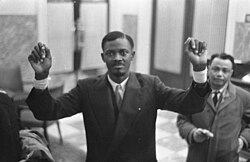
The conference established June 30 as the date of independence. Lumumba won a plurality in the May elections and became Prime Minister on the day the country gained its freedom. The joy of the occasion was captured in the hit song "Indépendance Cha Cha" by musician Le Grand Kallé.
However, the triumph was short-lived. The country quickly descended into turmoil, leading to Lumumba's deposition on September 14, followed by his torture and execution. This period of instability became known as the Congo Crisis. The chaos in the Congo led some colonial supporters, such as the London Daily Express, to dismiss the "Year of Africa" and call for a "year of realism" in 1961.
Frequently Asked Questions
How many countries gained independence in 1960?
A total of 17 colonies gained independence in 1960, increasing the number of independent countries from nine to twenty-six.
What was "La Communauté"?
La Communauté (The French Community) was a federation created by France in 1958 to restructure its empire, making colonial states part of a larger community before many eventually transitioned to full independence.
Who was Patrice Lumumba?
Patrice Lumumba was a leader of the Congolese independence movement who became the first Prime Minister of the Republic of the Congo on June 30, 1960, before being deposed and executed during the Congo Crisis.
Which country was the largest economy in Africa in 1960?
Nigeria had the largest population and the best economy on the continent when it gained independence on October 1, 1960.
What happened to Ghana in 1960?
Ghana voted to become a Republic on April 27, 1960, ending the reign of Queen Elizabeth II and electing Kwame Nkrumah as President.