1909 Grand Isle Hurricane: A Deadly Category 3 Storm
The 1909 Grand Isle hurricane was a devastating Category 3 major hurricane that left a trail of destruction across Cuba and the northern Gulf Coast of the United States. Known for its immense scale and high fatality rate, the storm remains one of the deadliest cyclones in U.S. history, claiming over 400 lives and causing millions of dollars in damage.
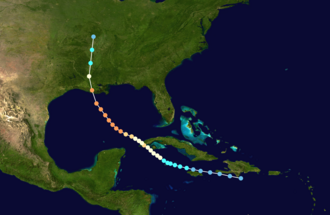
The storm's journey began as a tropical disturbance south of Hispaniola on September 13, 1909. As it moved west-northwest, it gradually intensified, eventually crossing the Caribbean and the Gulf of Mexico before striking Louisiana with catastrophic force.
Key Facts
- Peak Intensity: Category 3 major hurricane with maximum sustained winds of 120 mph (195 km/h).
- Lowest Pressure: 952 mbar (hPa).
- Total Fatalities: At least 400 people (371 in the U.S., 29 in Cuba).
- Financial Loss: $11 million (1909 USD).
- Landfall Points: Pinar del Río Province, Cuba, and Grand Isle, Louisiana.
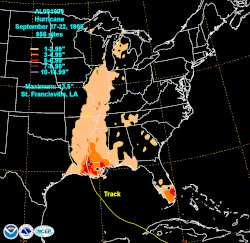
- Maximum Rainfall: 13.5 inches (340 mm) in Louisiana.
Meteorological History
Formation and Caribbean Passage
The system originated from a tropical disturbance in the western Atlantic in early September 1909, aided by high pressure over the Azores and British Isles. By September 13, it developed into a tropical depression south of Hispaniola. After brushing the coast of Haiti, it reached tropical storm intensity off Jamaica on September 15.
On September 16, the storm reached Category 1 status on the Saffir-Simpson scale (a classification system for hurricanes based on sustained wind speed). It moved slowly toward Cuba, intensifying to 100 mph (160 km/h) before making landfall in Pinar del Río Province on September 18.
Intensification in the Gulf of Mexico
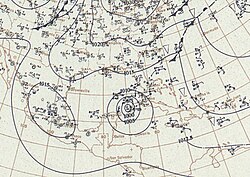
After a brief period of weakening over land, the hurricane entered the Gulf of Mexico and rapidly regained strength. By September 19, it reached its peak intensity as a mid-range Category 3 hurricane with winds of 120 mph (195 km/h). The storm's forward motion increased as it accelerated toward the United States coastline.
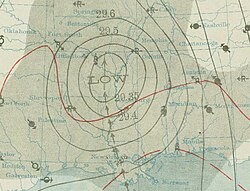
On September 21, the hurricane made landfall near Grand Isle, Louisiana, with winds estimated at 115 mph (185 km/h). At this time, the storm's central pressure dropped to 952 mbar. While some operational analyses suggested it may have reached Category 4 intensity (with a pressure of 931 mbar), later research confirmed that winds did not exceed 120 mph.
Dissipation
Once the system moved inland, it lost strength rapidly. Within 12 hours, it was no longer a hurricane, eventually weakening to a tropical depression over southern Missouri. By September 22, the remnants merged with a trough over the Midwestern United States.
Impact and Destruction
Cuba
In western Cuba, the storm brought heavy rains (up to 7.88 inches) and winds of 60 mph. The orange crop suffered significant losses, and numerous buildings were damaged. The most tragic event occurred off the coast near the Isle of Pines, where the steamship Nicholas Castina sank, resulting in 29 deaths.
Louisiana
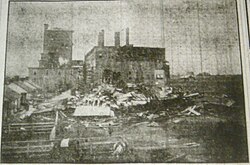
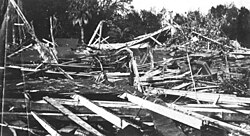
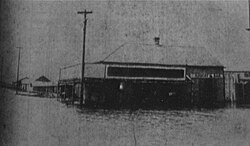
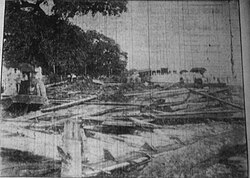
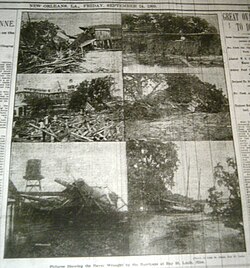
Louisiana bore the brunt of the hurricane's fury, with 353 recorded fatalities. A massive storm surge (an abnormal rise of water generated by a storm, over and above the predicted astronomical tide) of 15 feet penetrated two miles inland, destroying 5,000 homes along a 25-mile stretch of coast.
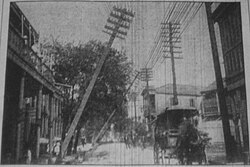
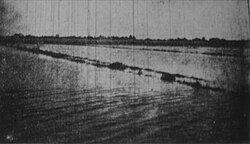
In New Orleans, the storm caused flooding that reached depths of 10 feet in some areas, mirroring the scale of the 2005 Hurricane Katrina floods. Communication was severed as telegraph wires were downed, and 306 coal barges sank off the coast. The agricultural sector was hit hard, with two-thirds of the unharvested rice crop ruined near the Texas border and significant damage to sugar cane plantations.
Mississippi and Other Regions
Mississippi reported 18 deaths and extensive flooding. In Natchez, 50 mph winds tore roofs off homes and disabled the power station. In Jackson, the dome of the newly constructed capital building was destroyed. Along the coast, a four-mile stretch of beach saw all homes and a portion of the electric car line wiped out by the surge.
Florida also experienced impacts, with 60 mph winds in Pensacola causing ships like the Romanoff to topple onto wharves. The storm's remnants eventually brought rainfall to Arkansas, Missouri, Tennessee, and Kentucky, washing out sections of the Louisville and Nashville and Illinois Central railroads.
Summary of Storm Data
| Metric | Value |
|---|---|
| Saffir-Simpson Category | Category 3 |
| Max Sustained Winds | 120 mph (195 km/h) |
| Minimum Pressure | 952 mbar (28.11 inHg) |
| Total Deaths | 400+ |
| Estimated Damage (1909 USD) | $11 Million |
| Max Rainfall (Louisiana) | 13.5 in (340 mm) |
Aftermath and Legacy
Despite the high death toll, the National Weather Bureau was praised for providing warnings that saved many lives. Relief efforts began on September 22 near Houma, Louisiana, though many devastated areas waited days for government or military aid.
Economically, there were initial fears of a cotton price spike, but later reports indicated that losses were manageable, with rice and cotton crops sustaining 35% and 20% losses, respectively. Interestingly, the storm surge was once listed in the Global Tsunami Database due to contemporary reports of a "tidal wave," but this was later debunked as a misinterpretation of the storm surge.
Frequently Asked Questions
How many people died in the 1909 Grand Isle hurricane?
At least 400 people died in total, with 371 fatalities in the United States (353 in Louisiana and 18 in Mississippi) and 29 in Cuba.
What was the maximum wind speed of the storm?
The hurricane reached peak sustained winds of 120 mph (195 km/h), making it a Category 3 major hurricane.
How did the flooding in New Orleans compare to later storms?
The flooding in New Orleans reached depths of up to 10 feet, which was similar in scale to the flooding caused by Hurricane Katrina in 2005, though it caused less destruction due to fewer residential buildings at the time.
Was the "tidal wave" reported in 1909 actually a tsunami?
No. While it was initially added to the Global Tsunami Database, further research determined that the "tidal wave" was actually a storm surge caused by the hurricane, and the event has since been debunked as a tsunami.
What was the financial impact of the hurricane?
The storm caused approximately $11 million in damage in 1909 USD, which is roughly equivalent to $265 million in 2010 USD.