Zoological Society of London: A Legacy of Conservation and Science
The Zoological Society of London (ZSL) is a world-renowned non-profit organization and registered charity dedicated to the global conservation of animals and their natural habitats. Founded nearly two centuries ago, ZSL has evolved from a private club for naturalists into a scientific powerhouse that manages two of the world's most famous zoos and conducts critical research to protect biodiversity.
From its early days of collecting exotic species for study to its modern focus on mitigating climate change, ZSL remains at the forefront of zoological science and public education.
Key Facts
- Founded: April 1826 in London, England.
- Primary Facilities: London Zoo (est. 1828) and Whipsnade Zoo (est. 1931).
- Scientific Arm: The Institute of Zoology, specializing in species and habitat conservation.
- Legal Status: Registered charity under English law.
- Key Focus Areas: Global biodiversity monitoring, wildlife health, and climate change mitigation.
The History of ZSL
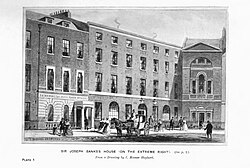
The seeds of the society were sown on November 29, 1822, during a meeting at the Linnean Society in Soho Square. Led by Rev. William Kirby, the group sought to create a "Zoological Club" inspired by the Jardin des Plantes in Paris. The goal was to establish a collection that would both interest the general public and provide a resource for scientific study.
In April 1826, the society was officially founded by a distinguished group including Sir Stamford Raffles, the Marquess of Lansdowne, Lord Auckland, Sir Humphry Davy, and Robert Peel. Sir Stamford Raffles served as the first chairman and president, though his tenure was short-lived due to his death in July 1826. Under the subsequent leadership of the Marquess of Lansdowne, the society secured land in Regent's Park from the Crown and received a royal charter from George IV on March 27, 1829.
The Evolution of the Zoos
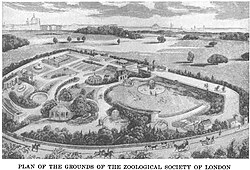
The Zoological Gardens opened to members in April 1828. A significant expansion occurred in 1831 when William IV presented the Royal Menagerie to the society. By 1847, the gardens were opened to the general public to increase funding, leading Londoners to affectionately nickname the site the "Zoo." For a time, London Zoo boasted the most extensive animal collection on Earth.
As the 20th century progressed, ZSL recognized the need for animals to live in more natural, expansive environments. This vision led Peter Chalmers Mitchell, the ZSL Secretary from 1903 to 1935, to seek a larger site. In December 1926, ZSL purchased Hall Farm near Whipsnade village for £13,480 12s 10d. After the arrival of the first birds in 1928, Whipsnade Park opened to the public in 1931 as the world's first open zoological park.
The Institute of Zoology
Beyond public exhibition, ZSL is a leader in scientific research through the Institute of Zoology. Established in 1960–61 by Lord Zuckerman, this government-funded division employs scientists to tackle urgent conservation issues. The Institute has maintained various academic affiliations, moving from the University of London in the 1980s to the University of Cambridge in 2000, and finally to University College London in 2011.
The Institute currently focuses its research on five primary pillars:
- Biology and recovery of small populations.
- Co-existence between wildlife and humans.
- Global biodiversity monitoring.
- Mitigating the impacts of climate change on biodiversity.
- Wildlife health.
Governance, Awards, and Publications
ZSL is governed by a 15-member Council, consisting of trustees who serve terms of up to five years. The presidency is a voluntary role; notable past presidents include HRH Prince Albert and HRH Prince Philip, the Duke of Edinburgh. The current president is Professor Sir Jim Smith.
The society is also a prolific publisher of scientific literature. It produced the Zoological Record (1864–1980) and continues to publish the Journal of Zoology (originally the Proceedings of the Zoological Society of London since 1830), as well as Animal Conservation and the International Zoo Yearbook.
To recognize excellence in the field, ZSL administers numerous prestigious awards, including the Frink Medal, the Stamford Raffles Award, and the Charles Darwin Award and Marsh Prize.
ZSL Summary Overview
| Category | Details |
|---|---|
| Founded | 1826 |
| Key Locations | London Zoo, Whipsnade Zoo, Institute of Zoology |
| Primary Goal | Worldwide conservation of animals and habitats |
| Legal Status | Non-profit registered charity |
| Key Legislation | Zoological Society of London (Leases) Act 2024 |
Frequently Asked Questions
When was the London Zoo opened to the public?
While the Zoological Gardens opened to members in 1828, the general public was admitted in 1847 to help provide necessary funding for the society.
What is the purpose of the Institute of Zoology?
The Institute of Zoology is ZSL's scientific research division. It focuses on conservation-relevant issues, including wildlife health, biodiversity monitoring, and the effects of climate change on species.
What is the significance of the Zoological Society of London (Leases) Act 2024?
This Act of Parliament amended the Crown Estate Act 1961 to increase the maximum lease term for ZSL's land in Regent's Park from 60 years to 150 years.
Who are some of the notable Honorary Fellows of ZSL?
Distinguished Honorary Fellows include Sir David Attenborough (elected 1998), HSH Prince Albert II of Monaco (2020), and HM the Emperor Emeritus Akihito of Japan (1991).
What is the difference between London Zoo and Whipsnade Zoo?
London Zoo is the society's original urban facility in Regent's Park, while Whipsnade Zoo, opened in 1931, was designed as the world's first open zoological park to allow animals to live in more natural, expansive environments.