Zevaco: The Visionary of Moroccan Modernism
Born in Casablanca on August 8, 1916, to a Corsican family, Zevaco emerged as a pivotal figure in the architectural transformation of Morocco. His work represents a daring intersection of international modernist trends and the specific climatic and cultural needs of North Africa, moving away from colonial norms toward a bold, sculptural language of concrete.
Educational Foundations and Early Career
Zevaco's formal training began in 1937 at the National School of Fine Arts in Paris, where he studied under the Pontrémoli-Leconte studio. The turbulence of World War II shifted his studies to Marseille, where he worked in the studio of Eugène Beaudoin during the Nazi occupation of northern France.
Returning to Casablanca after the war, Zevaco began his professional journey with humble beginnings, first operating a makeshift agency in his family's veranda. He later partnered with Paul Messina at rue Bugeaud before establishing his own independent practice at 7 Passage Sumica.
The Rise of the White Villas
In 1949, Zevaco and Paul Messina designed landmark private residences, including Villa Gilardi and Villa Suissa (famously known as "la Pagode"). Villa Gilardi, in particular, is noted by scholar Aziza Chaouni as a direct response to the influence of California modern architecture.
During this era, Casablanca was an expanding hub of global investment and "euphoria," providing a fertile ground for experimentation. Zevaco's white villas, characterized by massive overhangs and sharp sunscreens, were considered scandalous at the time. They stood in stark contrast to the neo-Moorish style favored by the colonial administration, showcasing an audacious technical mastery of concrete.
Professional Evolution and GAMMA
In the early 1950s, Zevaco joined the Group of Moroccan Modern Architects (GAMMA), the Moroccan branch of the International Congress of Modern Architecture (CIAM), founded by Michel Ecochard. This collective, active until 1959, championed a modernity rooted in the local site and climate, resisting the generic nature of international functionalism.
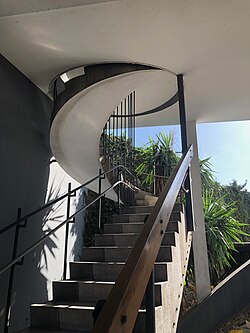
Zevaco's work during this period transitioned into industrial and civic projects, such as the Vincent Timsit Factory (1952) in the Roches Noires district of eastern Casablanca.
Civic and Brutalist Contributions
Zevaco's influence extended to critical infrastructure and public spaces. In collaboration with Dominique Basciano, he designed the Casablanca Tit Mellil Airport (1953) and the Tit Mellil Rehabilitation Center (1960). He also introduced Brutalism—an architectural style characterized by raw, exposed concrete—to the city's educational landscape with the Théophile Gautier School (1960).
His versatility is further evident in the Sidi Harazem Thermal Bath Complex. Here, he blended brutalist forms with traditional local elements, incorporating copper and blue zeliij (traditional Moroccan terra-cotta tilework). Later, in 1974, he renovated United Nations Square, introducing the Kora Ardia (Globe) underground passageway.
The Reconstruction of Agadir
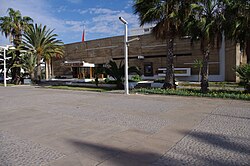
Following the devastating earthquake of 1960, Zevaco collaborated with fellow GAMMA members, including Mourad Ben Embarek and Elie Azagury, to help rebuild Agadir. His contributions to the city's recovery were significant, including the design of the central post office in 1960.
In 1965, Zevaco designed a series of courtyard houses in Agadir. These residences were highly acclaimed for their innovation and eventually earned him the prestigious Aga Khan Award for Architecture.
Global Influences and Late Works
Zevaco remained a student of global trends, often drawing inspiration from Latin American masters via the French magazine L'Architecture d'Aujourd'hui. This influence is clearly visible in two major projects:
- Assuna Mosque (Casablanca): Designed in the 1970s, this modernist structure was inspired by Oscar Niemeyer's Church of Saint Francis of Assisi in Belo Horizonte.
- Agadir Street Market (1975): This project drew inspiration from the work of Pedro Ramírez Vázquez.
Key Facts
- Birth: August 8, 1916, in Casablanca.
- Key Affiliation: Member of GAMMA (Group of Moroccan Modern Architects).
- Notable Award: Aga Khan Award for Architecture for his courtyard houses in Agadir.
- Signature Style: A blend of Brutalism, sculptural concrete, and local Moroccan elements.
- Major Works: Villa Suissa, Tit Mellil Airport, and the Assuna Mosque.
| Project Name | Year | Location | Key Feature/Style |
|---|---|---|---|
| Villa Suissa ("la Pagode") | 1949 | Casablanca | Modernist white villa |
| Vincent Timsit Factory | 1952 | Casablanca | Industrial modernism |
| Tit Mellil Airport | 1953 | Tit Mellil | Civic infrastructure |
| Théophile Gautier School | 1960 | Casablanca | Brutalist architecture |
| Agadir Courtyard Houses | 1965 | Agadir | Aga Khan Award winner |
| Assuna Mosque | 1970s | Casablanca | Niemeyer-inspired modernism |
Frequently Asked Questions
What was Zevaco's relationship with the GAMMA group?
Zevaco was a member of the Group of Moroccan Modern Architects (GAMMA), the Moroccan branch of CIAM. Through this group, he advocated for a form of modernity that respected the local climate and site, opposing the rigid, one-size-fits-all approach of international functionalism.
How did Latin American architecture influence Zevaco?
Zevaco was influenced by architects like Oscar Niemeyer and Pedro Ramírez Vázquez, whom he discovered through the magazine L'Architecture d'Aujourd'hui. This is most evident in the design of the Assuna Mosque and the Agadir Street Market.
What makes Zevaco's early villas "scandalous"?
His early villas were considered scandalous because they broke away from the neo-Moorish style of the colonial administration, instead using bold concrete forms, huge overhangs, and incisive sunscreens.
Which of Zevaco's works won the Aga Khan Award?
Zevaco received the Aga Khan Award for Architecture for his design of courtyard houses in Agadir, completed in 1965.
How did Zevaco incorporate local Moroccan elements into his brutalist designs?
In projects like the Sidi Harazem Thermal Bath Complex, Zevaco combined the raw aesthetic of brutalist concrete with traditional Moroccan materials, specifically copper and blue zeliij tiles.