Yangjaecheon: Seoul's Ecological Gem and Urban Greenway
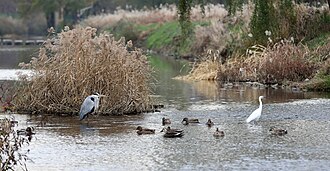
Flowing through the heart of Seoul, Yangjaecheon serves as a vital green artery for the city. This scenic stream stretches through the southern districts, providing a lush escape from the urban landscape. More than just a waterway, it is a testament to successful ecological restoration, transforming from a polluted channel into a thriving habitat for diverse wildlife and a beloved recreational space for residents.
Key Facts
- Total Length: 15.6 km
- Status: 3.75 km designated as Seoul Future Heritage
- Biodiversity: Home to 174 plant species and 42 bird species
- Primary Districts: Gwacheon, Seocho, Gangnam, and Songpa
- Recognition: Selected as an excellent ecological restoration river by the Ministry of Environment in 2005
The Course and Geography of Yangjaecheon
Yangjaecheon originates from the Gwanaksan mountain in Gwacheon. As it travels toward its confluence with the Tancheon, it winds through several key administrative districts. The stream's width varies between 6 and 13 meters, creating a varied landscape of water and bankside greenery.
The stream's journey can be broken down by the districts it traverses:
- Gwacheon: 8.4 km
- Seocho District: 3.7 km (including Yangjae-dong)
- Gangnam District: 3.5 km (including Dogok-dong, Daechi 3-dong, and Irwon 2-dong)
- Songpa District: Flows into Tancheon via Jamsil-dong
A Recessed Urban Design
The stream is designed as a recessed waterway, meaning it sits below the level of the surrounding city. This allows major and minor roads to pass over it via numerous bridges. Flanking the water are tiered ledges that host parallel bike and pedestrian trails, making it an ideal route for commuters and leisure seekers alike. To enhance the visitor experience, the banks are equipped with public exercise equipment, benches, and a variety of seasonal flowers.
Ecological Restoration and Biodiversity
The history of Yangjaecheon is one of recovery. Originally a tributary of the Han River, it became an artificial waterway that eventually fed into the Tancheon watershed. In the 1970s, land consolidation projects in Gaepo-dong led to intense pollution, which worsened as the local population surged. However, a major restoration project between 1995 and 2000 changed its trajectory.
By replacing concrete revetments—hard structures used to prevent erosion—with vegetation revetments made of megaliths, trees, and grasses, the city revived the river's natural state. These natural banks serve multiple purposes: they act as safeguards against floods, control water temperature through shade, and help mitigate eutrophication (the excessive enrichment of water with minerals and nutrients that can lead to oxygen depletion) by absorbing pollutants.
Today, the ecosystem is remarkably diverse, supporting:
- 174 species of plants
- 42 species of birds
- 20 species of fish
- 6 species of mammals
- 6 species of amphibians and reptiles
Cultural Heritage and Local Legend
The stream is deeply connected to the local folklore of Guryongsan mountain. The name Guryong translates to "nine dragons," referring to the mountain's nine valleys, peaks, and wells. Legend tells of ten dragons that attempted to ascend to the sky; one was late and seen by a human, preventing its ascent. As a result, the dragon was destined to become a stream to provide water for people to drink and farm.
This benevolent act is reflected in the name Yangjaecheon. The term Yangjae is written in Chinese characters to mean "a group of talented people," symbolizing the prosperity and happiness the stream brings to the community.
Facilities and Infrastructure
Yangjaecheon is equipped with various facilities that support both the environment and public utility. A specialized water purification facility located between Yeongdong bridges 2 and 3 uses gravel contact oxidation to maintain high water quality, capable of purifying 32,000 m³ of water daily.
| District | Managed Length (km) | Key Areas/Features |
|---|---|---|
| Gwacheon | 8.4 | Originates at Gwanaksan |
| Seocho | 3.7 | Yangjae-dong |
| Gangnam | 3.5 | Dogok-dong, Daechi-dong, Irwon-dong |
| Songpa | Included in total | Jamsil-dong / Tancheon junction |
Public Amenities
- Rice Farming Fields: Used for educational purposes for students and citizens; during the off-season, these areas serve as ice sledding fields.
- Swimming Pools: Two pools are available, located near Yeongdong Bridge 3 and between Yeongdong bridges 4 and 5.
- Bridges: Numerous bridges span the stream, including Gwanak, Gwacheon, Yangjaecheon, and several Yeongdong bridges.
Frequently Asked Questions
What is the significance of the Seoul Future Heritage designation?
The designation recognizes sites that hold cultural, historical, or ecological value for the city. 3.75 km of Yangjaecheon has been officially appointed as Seoul Future Heritage due to its importance.
How was the water quality of Yangjaecheon improved?
Between 1995 and 2000, concrete shores were removed and replaced with vegetation shores. Additionally, water purification facilities were installed to maintain high water quality standards.
Can I cycle along Yangjaecheon?
Yes, the stream features dedicated parallel bike trails located on tiered ledges alongside the pedestrian paths.
What does the name "Yangjae" mean?
The name is derived from Chinese characters meaning "a group of talented people."
Is Yangjaecheon a natural or artificial river?
While it has natural elements today due to extensive restoration, it was originally an artificially created river that eventually flowed into the Tancheon watershed.