WWII in HD: The Extraordinary Lives of Featured Veterans and Correspondents
The documentary series WWII in HD brings history to life by focusing on the personal narratives of those who lived through the conflict. From the front lines of the Pacific to the hedgerows of Europe, these individuals represent the diverse backgrounds and harrowing experiences of the American military effort. Their stories encompass bravery, survival, and the enduring impact of war on the human spirit.
Key Facts
- Jimmie Kanaya was the first American soldier of Japanese descent to become an officer in the U.S. Army.
- Shelby Westbrook, a Tuskegee Airman, was awarded the French Legion of Honor in 2013.
- Roscoe C. Blunt, Jr. was the youngest soldier to receive the Expert Infantry Badge.
- June Wandrey Mann earned eight battle stars while serving in the U.S. Army Nurse Corps.
- Jack Yusen survived days in the ocean after the sinking of the USS Samuel B. Roberts during the Battle off Samar.
Combat Veterans of the Army and Air Forces
The Army and Air Forces saw a wide array of personnel, including those who overcame systemic prejudice to serve their country. Jimmie Kanaya, the son of Japanese immigrants, broke barriers as the first American soldier of Japanese descent to achieve officer rank in the U.S. Army. After being imprisoned in Europe, he continued his distinguished service through the Korean and Vietnam Wars.
Jack Werner, born Hans Werner in Vienna, Austria, fled Nazi Germany due to his Jewish heritage. After moving to Hollywood to pursue acting, he joined the 7th Infantry Division. His service took him from the Battle of Attu to the Battle of Okinawa, following stints at the Battle of Kwajalein and the Battle of Leyte Gulf.
In the skies, Shelby Westbrook served with the 332nd Fighter Group, known as the Tuskegee Airmen (the first African American military aviators in the U.S. Armed Forces). While stationed in Italy at a segregated airbase, Westbrook survived a crash in German-controlled Yugoslavia, escaping with the help of resistance members. He later supported "Operation Dragoon," the Allied invasion of Southern France.
Roscoe C. Blunt, Jr. is remembered for his audacity during the Battle of the Bulge, where he convinced 100 German SS soldiers to surrender to 18 American prisoners. Despite a court-martial for "fraternizing with the enemy"—stemming from a trip to a German laundry—he received a presidential pardon from Bill Clinton in 2001.
Other Notable Army Personnel
- Bert Stiles: A short story author and fighter pilot killed in action; he is buried in the Ardennes American Cemetery.
- Charles Scheffel: A combat infantry officer who suffered two wounds, including the amputation of a trigger finger. He later authored Crack! and Thump.
- Archie Sweeney: One of the first peacetime draftees under the Selective Training and Service Act of 1940, killed in action in 1943.
- Nolen Marbrey: A Private First Class who served during the conflict.
Naval Service and Medical Support
The naval theater presented its own unique perils. Jack Yusen served aboard the USS Samuel B. Roberts, initially escorting transports in the Atlantic before moving to the Pacific. During the Battle off Samar on October 25, 1944, his ship was sunk by a Japanese task force. Yusen survived several days in shark-infested waters before his rescue. Decades later, the wreck of the "Sammy B" was discovered intact by adventurer Victor Vescovo.
Medical personnel played a critical role in survival. June Wandrey Mann served as a first lieutenant in the U.S. Army Nurse Corps. Between 1942 and 1946, she served in Africa, Sicily, Italy, France, and Germany, earning eight battle stars. She later documented her experiences in her book, Bedpan Commando.
War Correspondents and Historians
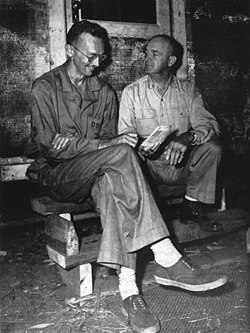
The world learned of the war through the eyes of embedded reporters. Robert Sherrod was a war correspondent for Time and Life magazines, covering the Marines at Attu, Tarawa, Saipan, Iwo Jima, and Okinawa. He later became a prominent editor and author of definitive histories on Marine Corps aviation.
Richard Tregaskis, who was ineligible for the draft due to type 1 diabetes, reported from the Guadalcanal Campaign. His notes became the successful novel Guadalcanal Diary. He later covered the invasions of Sicily and the Italian mainland before a shrapnel injury to the brain forced his retirement from WWII reporting.
Summary of Featured Individuals
| Name | Role/Unit | Key Achievement/Experience |
|---|---|---|
| Jimmie Kanaya | U.S. Army Officer | First American soldier of Japanese descent to become an officer. |
| Shelby Westbrook | Tuskegee Airmen | Awarded French Legion of Honor; escaped from Yugoslavia. |
| Jack Yusen | U.S. Navy | Survived the sinking of the USS Samuel B. Roberts. |
| Roscoe C. Blunt, Jr. | 84th Infantry Division | Youngest Expert Infantry Badge recipient; captured 100 SS soldiers. |
| June Wandrey Mann | Army Nurse Corps | Earned eight battle stars across multiple European theaters. |
| Richard Tregaskis | Frontline Reporter | Author of Guadalcanal Diary. |
Frequently Asked Questions
Who was the first American soldier of Japanese descent to become a U.S. Army officer?
Jimmie Kanaya was the first American soldier of Japanese descent to achieve the rank of officer in the U.S. Army.
What was the significance of Shelby Westbrook's service?
Shelby Westbrook was a fighter pilot with the 332nd Fighter Group (Tuskegee Airmen). He survived a crash in Yugoslavia and was later awarded the French Legion of Honor for his service during the invasion of Southern France.
How did Roscoe C. Blunt, Jr. capture 100 German soldiers?
During the Battle of the Bulge, Blunt was captured by a German SS unit but managed to convince the soldiers that they were surrounded by American troops, leading to their surrender.
What happened to the USS Samuel B. Roberts?
The ship was sunk by a Japanese task force during the Battle off Samar on October 25, 1944. The wreck was recently discovered intact by adventurer Victor Vescovo.
Which featured person wrote a book about the Army Nurse Corps?
June Wandrey Mann wrote Bedpan Commando, which detailed her service in Africa, Sicily, Italy, France, and Germany.