Okinawa History: From Shell Mounds to the Modern Era
The history of Okinawa is a complex narrative of maritime trade, independent kingdomhood, and strategic military importance. Located at the crossroads of East Asia, the islands have evolved from prehistoric hunter-gatherer societies into a pivotal hub for international diplomacy and modern geopolitics.
The Shell Mound Eras
Early Okinawan society is defined by the midden (shell heap) culture, categorized into Early, Middle, and Late Shell Mound periods. The Early period was characterized by hunter-gatherers using wave-like opening Jōmon pottery. Over time, settlements shifted toward the seashore, indicating a growing reliance on fishing. Rice cultivation did not begin until the Middle Shell Mound period.
Evidence of early trade is found in shell arm rings from the Sakishima Islands (Miyakojima and Yaeyama), which were imported by Japan. Conversely, shell axes dating back 2,500 years suggest that these islands were influenced by southeastern-Pacific cultures.
The Gusuku Period and Early Governance
Around the 12th century, agriculture emerged, prompting population centers to move from the coast to higher ground. This transition marked the beginning of the Gusuku period, named after the distinctive Ryukyuan castles or fortresses known as gusuku. These sites, now recognized as UNESCO World Heritage Sites, are interpreted as holy places, fortified dwellings, or seats of power for rulers.
During this era, Okinawa became a vital relay point for East Asian trade, particularly in porcelain. Key rulers like Shunten and Eiso emerged, with the Eiso dynasty successfully repelling a Mongolian invasion attempt in 1291. Cultural developments included the introduction of Hiragana from Japan by Ganjin in 1265 and the rise of Noro, the village priestesses of the Ryukyuan religion.
The Sanzan Era and the Rise of the Ryūkyū Kingdom
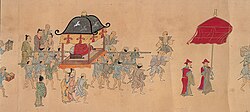
In 1314, the unified territory split into three competing kingdoms: Hokuzan, Nanzan, and Chūzan. This Sanzan period was defined by a struggle for recognition as a vassal state of Ming China. King Satto of Chūzan excelled in this regard, forging ties with China, Korea, and Southeast Asia. In 1392, the Hongwu Emperor of China sent 36 large families from Fujian Province to help increase the population and enhance maritime diplomacy.
The fragmentation ended in 1429 when King Shō Hashi unified the three kingdoms, establishing the Ryūkyū Kingdom with its capital at Shuri Castle. His successors expanded the kingdom to include the Amami Islands. Later, the Second Shō dynasty began under King Shō En in 1469. His son, Shō Shin, further centralized the government, military, and the Noro priestesses, while conquering the Sakishima Islands.
Japanese Influence and the Satsuma Domain
The independence of the kingdom was severely curtailed in 1609 when the Japanese Satsuma Domain invaded, capturing the king and the capital. Ryukyu became a vassal of Satsuma and was forced to cede the Amami Islands. Interestingly, the kingdom maintained a dual status as a tributary to both China and Japan. This arrangement served as a loophole for Japanese trade with China during Japan's period of isolation, when only a few ports like Nagasaki, Tsushima, and Kagoshima were open to the outside world.
Annexation and the Meiji Era
The 18th and 19th centuries saw increased European contact, including visits from Captain Basil Hall (1816) and Commodore Matthew C. Perry (1852). Between 1846 and 1854, Christian missionary Bernard Jean Bettelheim resided at the Gokoku-ji temple in Naha.
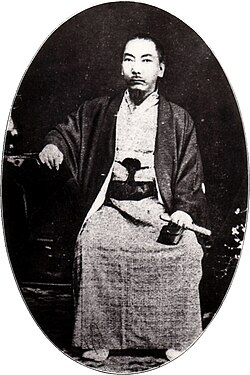
In 1879, the Meiji government formally annexed the Ryukyu archipelago and established Okinawa Prefecture. This led to the abolition of the monarchy, and the last ruler, King Shō Tai, was forced to relocate to Tokyo.
The Pacific War and Its Aftermath
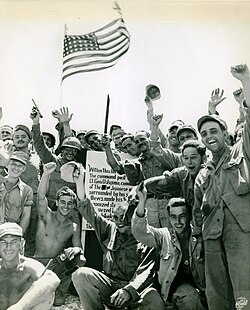
Okinawa was the site of the most brutal ground battle of the Pacific War from April 1 to June 22, 1945. The 82-day conflict resulted in the deaths of approximately 95,000 Imperial Japanese Army troops and 20,195 Americans. The civilian toll was devastating; the Cornerstone of Peace memorial lists 149,193 Okinawans—roughly one-quarter of the population—who were killed or committed suicide.
The extreme casualty rates and the reluctance of Japanese soldiers to surrender shocked American strategists, influencing the decision not to invade the Japanese mainland.
American Occupation and Military Presence
Following Japan's surrender on September 2, 1945, the United States controlled the Ryukyu Islands. While the Amami Islands were returned to Japan in 1953, the rest of the archipelago remained under U.S. control until June 17, 1971. Under the U.S.-Japan alliance, 32 military bases were established on Okinawa Island.
These bases served as critical staging posts for several conflicts, including the Korean War, Vietnam War, and the wars in Afghanistan and Iraq. Admiral Ulysses S. Grant Sharp famously noted that the Vietnam War could not have continued without Okinawa. However, this presence led to significant environmental damage, including fuel spills and PFAS contamination at facilities like Kadena Air Base, as well as social tensions due to crimes committed by service members who were often beyond the reach of local courts.
Social and Political Challenges
The 1970s saw Okinawa become a hub for the "Okinawa System," a narcotics smuggling route where heroin and marijuana from Thailand were moved to the United States. This trade was facilitated by a lack of customs inspections and the involvement of deserters and local smuggling rings.
Tensions peaked in September 1995 following the abduction and rape of a 12-year-old girl by three U.S. service members. The subsequent trial and the sentences of 6.5 to 7 years of hard labor sparked massive anti-base protests across the island.
Okinawa in the 21st Century
In recent years, the People's Republic of China has questioned Japan's sovereignty over Okinawa, citing its history as an independent tributary state, amid tensions over the Senkaku Islands. Culturally, the region suffered a major loss on October 31, 2019, when a fire destroyed 4,200 square meters of Shuri Castle. This was the fifth time the castle had been destroyed, following fires in 1453, 1660, 1709, and the destruction of 1945.
Key Facts
- Gusuku: Distinctive Ryukyuan fortresses listed as UNESCO World Heritage Sites.
- Sanzan Period: A time of three competing kingdoms (Hokuzan, Nanzan, and Chūzan) starting in 1314.
- Dual Tributary Status: After 1609, Ryukyu served as a tributary to both China and the Satsuma Domain of Japan.
- Battle of Okinawa: An 82-day conflict in 1945 resulting in nearly 150,000 civilian casualties.
- U.S. Administration: The islands were under U.S. control from 1945 until their return to Japan in 1971.
| Era/Period | Key Characteristics | Major Events/Figures |
|---|---|---|
| Shell Mound | Hunter-gatherer to early agriculture | Jōmon pottery, shell ring trade |
| Gusuku | Fortress building and maritime trade | Rulers Shunten and Eiso; Noro priestesses |
| Sanzan/Kingdom | Unification and diplomatic expansion | King Shō Hashi; Shuri Castle |
| Satsuma/Meiji | Vassalage and eventual annexation | 1609 invasion; 1879 annexation |
| Modern/U.S. Era | War and military occupation | Battle of Okinawa; 1971 return to Japan |
Frequently Asked Questions
What were the Gusuku?
Gusuku are distinctive Ryukyuan castles or fortresses. They are viewed as having served three primary purposes: as holy sites, as stone-encircled dwellings, or as the castles of ruling lords.
Why was the Ryūkyū Kingdom a tributary to both China and Japan?
After the 1609 invasion by the Satsuma Domain, Ryukyu became a vassal of Japan. However, it maintained its tributary relationship with China because China required this status for formal trade, making the kingdom a useful trade loophole for Japan.
What was the "Okinawa System" in the 1970s?
The "Okinawa System" refers to a global drug smuggling conduit where narcotics, primarily heroin and marijuana from Thailand, were smuggled through Okinawa into the United States.
How many times has Shuri Castle been destroyed?
Shuri Castle has been destroyed five times: in 1453, 1660, 1709, 1945, and most recently in a fire on October 31, 2019.
What was the impact of the Battle of Okinawa on the civilian population?
The battle was devastating, with approximately 149,193 Okinawans—about one-quarter of the civilian population—either killed or driven to suicide.