World's Billionaires: Tracking Global Wealth Trends Through 2026
The landscape of global wealth has undergone a seismic shift over the last few decades. From the early days of the Forbes billionaires list in 1987 to the staggering figures of 2026, the concentration of capital has reached unprecedented levels. What once required a lifetime of industrial dominance is now often achieved through rapid technological scaling and strategic investment.
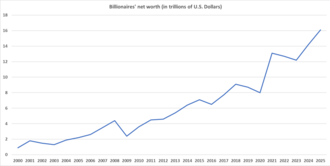
As we analyze the data, we see a clear trajectory: not only is the number of individuals reaching billionaire status increasing, but the total aggregate wealth of this group is growing at an exponential rate.
Key Facts
- 2026 Peak: The number of billionaires reached 3,428, with a combined net worth of US$20.1 trillion.
- Top Wealth: The wealthiest individual in 2026 holds a net worth of US$839 billion.
- Rapid Growth: Total billionaire wealth jumped from US$16.1 trillion in 2025 to US$20.1 trillion in 2026.
- Dominant Nationality: The United States consistently hosts the majority of the world's top 10 wealthiest individuals.
- Long-term Staples: Figures like Warren Buffett (Berkshire Hathaway) and Bill Gates (Microsoft) have remained prominent on the list for decades.
The Evolution of Global Wealth (1987–2026)
The growth of the billionaire class can be categorized into distinct eras. In the late 1980s and early 1990s, wealth was often tied to family dynasties and traditional retail, exemplified by the Walton family's dominance in the early 90s. By the late 90s and early 2000s, the dot-com boom shifted the focus toward software and technology, with Bill Gates and Microsoft becoming synonymous with global wealth.
In recent years, we have entered the era of the centibillionaire—individuals whose net worth exceeds US$100 billion. By 2026, the gap between the top spot and the rest of the list widened significantly, with the number one position reaching a historic US$839 billion.
![World's billionaires. Number and total wealth by year. Trillions of dollars.[3]](/images/fc/f9/fcf9aefd6bba2595a137be733a795a3d45fb7c90d62bb45c7e8eaae99cf9c812.jpg)
Comparative Wealth Growth Table
The following table illustrates the dramatic increase in both the number of billionaires and their combined assets over selected intervals.
| Year | Number of Billionaires | Total Combined Net Worth |
|---|---|---|
| 2000 | 470 | US$898 billion |
| 2010 | 1,011 | US$3.6 trillion |
| 2020 | 2,095 | US$8.0 trillion |
| 2025 | 3,028 | US$16.1 trillion |
| 2026 | 3,428 | US$20.1 trillion |
Analysis of the 2026 Top Rankings
The 2026 rankings reveal a heavy concentration of wealth in the United States. The top five individuals are all U.S. citizens, with the leader holding US$839 billion, followed by individuals with US$257 billion, US$237 billion, US$224 billion, and US$222 billion respectively.
While technology remains a primary driver, the diversity of wealth sources has expanded. However, the persistence of investment legends like Warren Buffett, who remains in the top 10 at age 95 with US$149 billion, demonstrates the enduring power of compound interest and value investing through Berkshire Hathaway.
Frequently Asked Questions
How many billionaires are there in 2026?
As of the 2026 list, there are 3,428 billionaires worldwide, an increase from 3,028 in the previous year.
What is the total combined wealth of all billionaires in 2026?
The total combined net worth of the world's billionaires in 2026 is US$20.1 trillion.
Who has been a consistent presence on the billionaires list?
Warren Buffett of Berkshire Hathaway and Bill Gates of Microsoft have been among the most consistent figures on the list over several decades.
Which country typically has the most billionaires in the top 10?
The United States consistently dominates the top 10 rankings across the recorded years.
How has the total wealth of billionaires changed since 2000?
The total wealth has grown exponentially, rising from US$898 billion in 2000 to US$20.1 trillion in 2026.