Workers' Self-Management: Principles, History, and Global Applications
Workers' self-management, also known as labor management or organizational self-management, is a system of organizational governance where the workforce directs its own work processes. Rather than following a top-down hierarchy imposed by external owners or executives, the employees themselves hold the decision-making power regarding how the organization operates.
This model is a cornerstone of various socialist ideologies, including democratic, libertarian, and market socialism, as well as anarchist and communist traditions. The primary objective is to enhance performance by granting workers greater autonomy, boosting morale, and reducing the feeling of alienation. When combined with employee ownership, self-management aims to eliminate exploitation entirely.
Key Facts
- Definition: A management form based on self-directed work processes by an organization's workforce.
- Core Goal: To improve operational performance and worker well-being through autonomy and the elimination of exploitation.
- Structure: Can range from direct management via assemblies to indirect management through elected specialists.
- Distinction: Self-management refers to control rights (who makes decisions), which is distinct from legal ownership of assets.
- Versatility: It can exist in cooperatives, public organizations, or private companies via co-determination.
How Self-Managed Organizations Operate
An enterprise that utilizes this model is termed a labour-managed firm. Because self-management focuses on control rights rather than just ownership, it can manifest in several different structural variations:
- Direct Management: All worker-members manage the enterprise directly through general assemblies.
- Indirect Management: Workers elect specialist managers or supervisory bodies to handle specific functions.
- Hybrid Models: A combination of self-directed management and elected oversight.
While often paired with employee ownership, self-management can also occur in public sector organizations or within private firms through worker representation on boards of directors, a practice known as co-determination.
Historical Experiments in Self-Management
The Spanish Revolution (1936–1939)
One of the most significant early experiments occurred during the Spanish Revolution. Anarcho-syndicalists advocated for the total control of production by the workers, creating a widespread network of self-managed collectives.
Post-1968 France and the LIP Factory
Following the social unrest of May 1968, the LIP clockwork factory in Besançon became a symbol of autogestión (self-management). In 1973, after management attempted to liquidate the company, workers led by Charles Piaget and supported by the Unified Socialist Party (PSU) claimed the means of production and managed the factory themselves.
The Yugoslav Model
In 1950, Yugoslavia introduced a systemic approach to self-management through the Law on self-management, which established workers' councils. This was intended to reduce bureaucracy and align with the Marxist concept of the "withering away of the state." By the 1963 Constitution, Yugoslavia defined itself as a "socialist self-managed democratic community," transforming state property into social property.
The Empresas Recuperadas Movement in Argentina
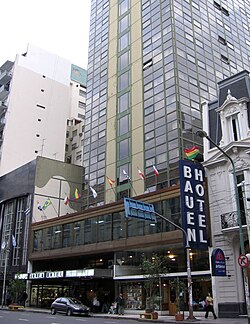
In response to the Argentine economic crisis of 2001, a movement known as empresas recuperadas (recuperated enterprises) emerged. Workers occupied failing companies and converted them into worker cooperatives to save their livelihoods.
Notable examples include the Brukman factory, FaSinPat (formerly Zanon), and the Hotel Bauen. By 2020, approximately 16,000 workers were running nearly 400 such factories. This movement eventually influenced national policy, leading President Cristina Kirchner to sign a new bankruptcy law on June 29, 2011, which facilitates the takeover of companies by their workers.
Global Examples and Modern Applications
Self-management is not limited to revolutionary movements; it is practiced by some of the world's largest and most innovative organizations today.
| Organization | Type/Scale | Key Characteristic |
|---|---|---|
| Mondragón Corporation | Industrial Cooperative | World's largest group of industrial cooperatives. |
| Haier Group Corporation | Global Corporation | World's largest self-managed company. |
| W. L. Gore and Associates | Innovative Private Firm | One of the oldest and largest self-managed companies. |
| The Morning Star Company | Private Company | Fully self-managed operations. |
| Orpheus Chamber Orchestra | Arts Organization | Self-managed musical ensemble. |
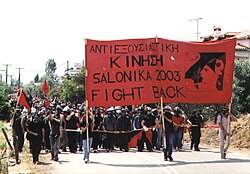
Beyond these corporations, movements for worker defense and management continue to appear during economic crises, such as recent protests in Greece advocating for worker-led management.
Frequently Asked Questions
What is the difference between self-management and employee ownership?
Self-management refers to control rights—who makes the day-to-day and strategic decisions within the organization. Employee ownership refers to who holds the legal title to the assets. While they often coexist, an organization can be self-managed even if it is publicly owned.
Can a large corporation actually be self-managed?
Yes. Examples like the Haier Group and the Mondragón Corporation demonstrate that self-management can scale to thousands of employees and global operations through various structures, such as cooperatives or decentralized management units.
What are the primary benefits of a labour-managed firm?
The primary benefits include increased worker autonomy, higher morale, and a reduction in alienation. Some economic theories suggest that participation in management can increase overall efficiency compared to traditional authoritarian structures.
How did the Argentine bankruptcy law of 2011 change things?
The law signed by President Cristina Kirchner provided a legal framework that makes it easier for workers to take over and manage companies that have gone bankrupt, legitimizing the practice of recuperated factories.
What is the role of workers' councils in self-management?
Workers' councils serve as the representative bodies through which employees exercise their management rights. They can be used to elect managers, oversee operations, or make direct decisions via assembly.