The Legacy of Woncheuk: Bridging Traditions in East Asian Buddhism
In the complex landscape of seventh-century Buddhist philosophy, few figures played as pivotal a role in reconciling divergent doctrines as Woncheuk. A Korean-born monk who achieved great distinction in Tang Dynasty China, Woncheuk acted as a bridge between different schools of thought, creating a unique intellectual synthesis that would influence practitioners from Japan to the Himalayan regions.
Working during a golden age of Buddhist translation and scholarship, Woncheuk navigated the tension between established traditions, offering interpretations that challenged the status quo and provided new depth to the study of the mind.
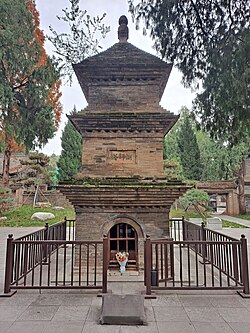
Key Facts
- Origin: Born in Korea; active in seventh-century China.
- Primary Schools: Follower of the Shelun school (Yogacara) and later a student of the renowned Xuanzang.
- Core Doctrine: Advocated for the concept of amalavijñāna (pure consciousness), a ninth consciousness.
- Major Works: Author of significant commentaries on the Heart Sutra, the Samdhinirmocana-sutra, and the Benevolent King Sutra.
- Global Influence: His teachings reached the Tibetan plateau, the Japanese Hosso school, and the Korean Silla kingdom.
Biographical Overview
Woncheuk (c. 613–696) was a scholar of immense reach. In China, he was also known as Ximing Fashi, a name derived from the Xi Ming Temple where he performed much of his exegetical work—the critical explanation or interpretation of religious texts.
His intellectual journey began with the Shelun school, a branch of Yogacara (a school of Buddhist philosophy focused on the nature of consciousness). The Shelun school was unique because it synthesized Yogacara teachings with tathāgatagarbha thought—the doctrine regarding the inherent potential for enlightenment within all beings. A defining feature of this school was the belief in a ninth consciousness, known as amalavijñāna, or "pure consciousness."
Later in his career, Woncheuk became a student of the famous monk Xuanzang and joined his prestigious translation team. While he worked alongside Xuanzang, Woncheuk’s philosophical leanings often diverged from those of Xuanzang and his disciple Kuiji. While the Faxiang school (the disciples of Kuiji) criticized his views, Woncheuk remained dedicated to reconciling the traditions of East Asian Yogacara with the older Shelun perspectives.
Philosophical Contributions and Influence
Woncheuk’s work was not merely academic; it was highly revered by the political elite of his time, including the Tang Emperors Taizong and Gaozong, as well as Empress Wu of Zhou. His ability to weave complex ideas together contributed to several major developments in Buddhist thought:
- Essence-Function Theory: Influencing how the nature of reality and its manifestations are understood.
- Ekayāna (One Vehicle): Contributing to the concept of a single path to enlightenment.
- Huayan School: Providing foundational intellectual support for the development of this major school.
His influence was truly international. His disciple, the Korean monk Dojeung, carried Woncheuk's traditions back to the Silla kingdom in 692. In Japan, the Hosso school of Yogacara relied heavily on his writings, with prominent monks such as Gyosin, Genju, and Gomyo utilizing his works. Furthermore, his commentaries were translated into Tibetan in the ninth century, cementing his status among scholars of Tibetan Buddhism.
Major Extant Works
While Woncheuk wrote a commentary on the Cheng weishi lun, it has not survived to the present day. However, three of his major works remain highly influential:
- Commentary on the Heart Sutra: This holds the distinction of being the first commentary on Xuanzang's translation of the Heart Sutra. Notably, while most scholars interpret the Heart Sutra through the lens of the "Second Turning" (the doctrine of Emptiness), Woncheuk provided a unique interpretation from the Yogacara perspective (the "Third Turning").
- Commentary on the Samdhinirmocana-sutra: This is the largest surviving commentary on this sutra. It was so highly regarded that the eminent Vajrayana scholar Je Tsongkhapa referred to it as "the Great Chinese Commentary."
- Commentary on the Benevolent King Sutra: A significant exegetical work on this Mahayana text.
Summary of Woncheuk's Profile
| Category | Details |
|---|---|
| Lifespan | c. 613–696 |
| Nationality | Korean |
| Primary Location | Tang China (Xi Ming Temple) |
| Key Philosophical Concept | Amalavijñāna (Pure Consciousness) |
| Major Influences | Paramārtha, Xuanzang |
| Regional Impact | China, Korea, Japan, Tibet |
Frequently Asked Questions
How did Woncheuk's view of consciousness differ from his contemporaries?
While the classical Yogacara tradition and the school of Xuanzang focused on eight consciousnesses, Woncheuk followed the Shelun school's view that there is a ninth consciousness, known as amalavijñāna, or pure consciousness.
Why is his commentary on the Heart Sutra considered unique?
Most commentaries treat the Heart Sutra as part of the "Second Turning of the Wheel" (focusing on the Mādhyamika doctrine of Emptiness). Woncheuk, however, interpreted the text from a Yogācāra perspective, offering a rare look at Emptiness through the lens of consciousness studies.
Which Buddhist schools were influenced by his teachings?
His work influenced the development of the Huayan school, the Japanese Hosso school, and had a significant impact on the development of Buddhist thought in Tibet and the Himalayan region.
What is the significance of the "Great Chinese Commentary"?
This title refers to Woncheuk's Commentary on the Samdhinirmocana-sutra, which was bestowed upon his work by the famous Vajrayana scholar Je Tsongkhapa due to its immense scale and importance.
Was Woncheuk's work universally accepted in China?
While he was revered by Chinese Emperors and rulers, his specific interpretations were not without controversy. The Faxiang school, consisting of the disciples of Kuiji, criticized his work because his views often aligned more closely with the Shelun school than with their own.