Won Buddhism: Harmonizing Spiritual Wisdom with Modern Life
In a rapidly changing world where material progress often outpaces spiritual development, Won Buddhism offers a unique path of integration. Originating in Korea, this modern Buddhist tradition seeks to bridge the gap between scientific advancement and personal ethical growth. The name itself, derived from the Korean words won (circle) and bulgyo (Buddhism), can be interpreted as "Consummate Buddhism," reflecting a vision of spiritual wholeness and universal unity.
Unlike traditions that focus solely on withdrawing from the world, Won Buddhism emphasizes interacting with daily life. It encourages practitioners to act in accordance with "appropriate desires" rather than simply attempting to still all impulses. This holistic approach aims to help individuals realize their innate Buddha nature while serving others in a modern, interconnected society.
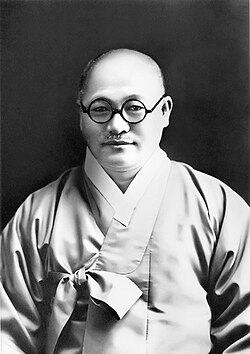
Key Facts
- Founder: Sotaesan (Bak Jungbin, 1891–1943).
- Core Symbol: Il Won Sang (the One Circle Image).
- Primary Goal: To realize innate Buddha nature and save sentient beings through service.
- Key Philosophy: Harmonizing material development with spiritual awakening.
- Global Presence: Over 70 temples and centers across 23 countries.
The Life and Vision of Sotaesan
The foundations of Won Buddhism were laid by Sotaesan, born Bak Jungbin in a small, impoverished village in southwest Korea. After years of intense spiritual inquiry and contemplation—often under harsh physical conditions—Sotaesan experienced enlightenment on April 28, 1916. This significant event is celebrated annually by followers as Great Enlightenment Day.
Sotaesan’s vision was a response to the growing dominance of materialism. He famously advocated for a balance between the physical and spiritual realms, stating, "With this Great Opening of matter, let there be a Great Opening of spirit." His teachings were not intended to replace traditional Buddhism but to reform and modernize it, making its profound truths accessible to a contemporary audience.
Early History and Growth
Following his enlightenment, Sotaesan attracted a dedicated group of disciples. In 1924, the community was known as the Society for the Study of the Buddha-dharma. It was not until 1947, under his successor Jeongsan, that the movement was officially named Wonbulgyo (Won Buddhism). Despite the challenges of the Japanese occupation of Korea, the movement grew steadily, eventually expanding from a small rural order in Iksan to a global presence.
Core Doctrines and Symbols
At the heart of every Won Buddhist temple is the Il Won Sang, or the "One Circle Image." This large circle, placed above the altar, serves as a focal point for meditation. Rather than using traditional statues of the Buddha, practitioners meditate before this symbol, which represents the essence of the enlightened mind, the original nature of all beings, and the unity of the universe.

The Gateway of Faith and Practice
The teachings of Won Buddhism are structured around several foundational pillars designed to guide ethical and spiritual living:
- The Fourfold Grace: Gratitude toward Heaven-and-Earth, Parents, Fellow Beings, and the Laws.
- The Four Essentials: Developing self-power, educating others' children, venerating the public-spirited, and requiting grace through service.
- The Threefold Study: Cultivating the spirit through mindfulness and meditation, making right choices in action, and practicing unremitting Seon (meditation) in both action and rest.
Summary of Won Buddhist Principles
| Category | Key Components | Purpose |
|---|---|---|
| The Fourfold Grace | Heaven-and-Earth, Parents, Fellow Beings, Laws | Cultivating gratitude and interconnectedness |
| The Four Essentials | Self-power, Education, Public Service, Requiting Grace | Practical application of spiritual values |
| The Threefold Study | Spirit, Action, Seon (Meditation) | Method for cultivating original nature |
Modern Practice and Equality
Won Buddhism is distinguished by its commitment to gender equality and social progress. Unlike many traditional monastic orders, Won Buddhist clerics—known as gyomunim—do not shave their heads, and both men and women hold equal status. Women can be elected as masters and serve on the Supreme Dharma Council, the religion's highest decision-making body.
In 2019, the Supreme Dharma Council furthered this commitment to equality by passing a resolution ensuring equal marriage access for all ministers, regardless of gender. This reflects the founder's original mission to abolish discrimination and promote a community built on service and mutual respect.
Frequently Asked Questions
Is Won Buddhism a new religion or a reformed version of traditional Buddhism?
Scholars and practitioners view it as both. It is a modern movement that reforms traditional Buddhist principles to meet contemporary needs, while also incorporating elements of Confucianism and Taoism to create a unique, syncretic practice.
What is the significance of the circle in Won Buddhism?
The circle, or Il Won Sang, symbolizes the unity of the world, the original nature of all sentient beings, and the enlightened mind of the Buddha.
How does Won Buddhism view the relationship between science and spirituality?
Won Buddhism seeks to harmonize scientific and economic progress with personal development and ethical values, ensuring that material advancement does not come at the cost of the human spirit.
Do Won Buddhist practitioners live like traditional monks?
While there is a priesthood, there is no wide distinction between the laity and the clergy. Clerics (gyomunim) do not shave their heads and are encouraged to engage deeply with the realities of modern life.
What is the main goal of a practitioner?
The primary goal is to realize one's own innate Buddha nature and to serve all sentient beings by performing beneficial work and practicing selfless service to the public.