Wolverhampton Wanderers FC: A Legacy of Triumph and Resilience
Known affectionately as Wolves or The Old Gold, Wolverhampton Wanderers Football Club is a cornerstone of English football. From its early days in the 19th century to its modern battles in the professional leagues, the club has experienced the highest peaks of domestic glory and the challenging depths of financial instability. Today, the club continues to build its future from the historic Molineux Stadium.
Key Facts
- Founded: 1879
- Home Ground: Molineux Stadium (Capacity: 31,750)
- Current League: EFL Championship (2025–26 season)
- Major Honours: 3 First Division titles, 4 FA Cups, and 2 League Cups
- Ownership: Fosun International
- Executive Chairman: Nathan Shi
A Journey Through History
Formation and Early Success (1879–1950)
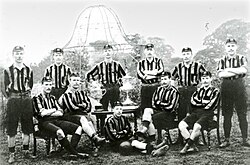
Founded in 1879, Wolves quickly established themselves as a force in the early years of the Football League. The club's early ambition was rewarded with an FA Cup victory in 1893, marking the beginning of a tradition of cup success.
The Golden Era of Stan Cullis (1950–1960)
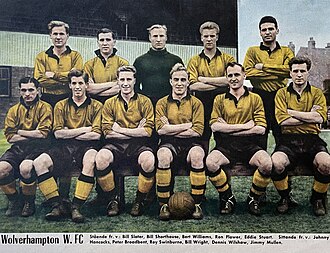
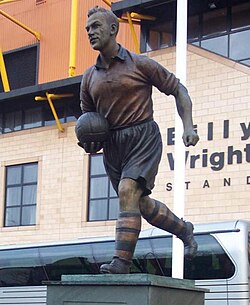
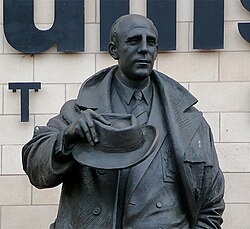
The 1950s represented a zenith for the club under the leadership of Stan Cullis. During this era, Wolves became a dominant power in English football, securing three First Division championships (1953–54, 1957–58, and 1958–59) and another FA Cup in 1960. This period also saw the rise of legendary captain Billy Wright, whose influence on the pitch remains immortalized today.
Turbulence and Recovery (1960–2016)
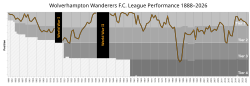
Following the Cullis era, the club enjoyed further cup success in the 1970s, winning the League Cup twice. However, the 1980s brought a severe financial crisis and a steep decline, leading the club to drop as low as the Fourth Division. The late 80s and 90s saw a recovery phase, bolstered by the goals of Steve Bull and the investment of Sir Jack Hayward.
The Fosun Era and Modern Transitions (2016–Present)
In 2016, the club was acquired by Fosun International. This ownership sparked a rapid ascent back to the Premier League in 2018 under manager Nuno Espírito Santo, who also led the team back into European competition for the first time in 39 years. Despite this resurgence, the club faced a period of managed decline, resulting in relegation to the Championship for the 2026 season.


Molineux Stadium
Molineux Stadium has been the home of Wolves since 1889. With a current capacity of 31,750, the ground has undergone several major renovations between 1924 and 2012 to modernize its facilities. The stadium features stands named after club legends, including the Billy Wright, Sir Jack Hayward, Stan Cullis, and Steve Bull stands.
Club Statistics and Honours
Wolves' history is marked by a diverse array of trophies across different tiers of the English football pyramid.
| Competition | Titles/Wins | Years |
|---|---|---|
| First Division (Tier 1) | 3 Champions | 1953–54, 1957–58, 1958–59 |
| FA Cup | 4 Winners | 1892–93, 1907–08, 1948–49, 1959–60 |
| League Cup | 2 Winners | 1973–74, 1979–80 |
| Lower League Titles | Multiple | 1931–32, 1976–77, 2008–09, 2017–18 (Tier 2) |
Frequently Asked Questions
Who is the current head coach of Wolves?
The current head coach is César Peixoto.
What is the capacity of Molineux Stadium?
Molineux Stadium can accommodate 31,750 spectators.
Which legendary player has a statue outside the stadium?
Both Billy Wright and Stan Cullis have statues located outside Molineux Stadium.
Who owns Wolverhampton Wanderers FC?
The club is owned by Fosun International, with Nathan Shi serving as the executive chairman.
What is the club's record victory?
The club's record win is a 14–0 victory against Crosswell's Brewery in the FA Cup 2nd round on November 13, 1886.