Wolverhampton Wanderers FC: A Legacy of English Football Excellence
Known affectionately as Wolves or The Old Gold, Wolverhampton Wanderers Football Club stands as one of the most storied institutions in English football. From its early days as a founding member of the Football League to its modern era of continental competition, the club has experienced the highest peaks of sporting glory and the deepest challenges of financial instability.
Based at the historic Molineux Stadium, Wolves has consistently shaped the landscape of the game, producing legendary players and pioneering tactical approaches that influenced football far beyond the borders of the West Midlands.
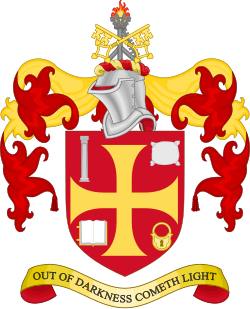
Key Facts
- Founded: 1879
- Home Ground: Molineux Stadium (Capacity: 31,750)
- Major Honours: 3 First Division titles, 4 FA Cups, and 2 League Cups.
- Current Ownership: Fosun International
- Notable Legends: Billy Wright and Stan Cullis
A Journey Through History
Formation and Early Success (1879–1950)
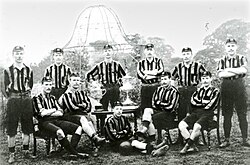
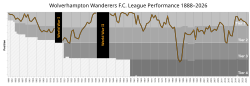
Founded in 1879, Wolverhampton Wanderers quickly established themselves as a force in the early years of organized football. The club's early ambition was rewarded with an FA Cup victory in 1893, marking the beginning of a tradition of cup success.
The Golden Era of Stan Cullis (1950–1960)
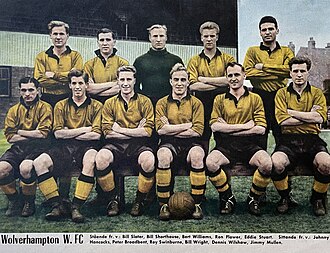
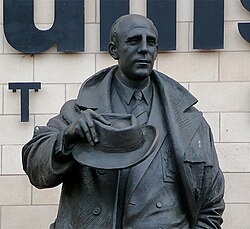
The 1950s represented the zenith of the club's domestic dominance under the leadership of manager Stan Cullis. During this period, Wolves secured three First Division championships (1953–54, 1957–58, and 1958–59) and another FA Cup in 1960. This era was characterized by a powerful, direct style of play and the leadership of captain Billy Wright.
Turbulence, Decline, and Recovery (1960–2016)
Following the Cullis era, the club enjoyed further cup success in the 1970s, winning the League Cup twice (1974 and 1980). However, the 1980s brought severe financial crises and a dramatic slide down the league pyramid, eventually falling to the Fourth Division by 1986.
The club began a slow recovery through the late 80s and 90s, aided by the investment of Sir Jack Hayward. This period saw the rise of legendary goalscorer Steve Bull and a gradual climb back toward the top flight, though the club continued to experience a cycle of promotions and relegations.

The Fosun Era and Modern Day (2016–Present)
In 2016, the club was acquired by Fosun International. This ownership sparked a rapid ascent, led by manager Nuno Espírito Santo, who guided Wolves back to the Premier League in 2018 and returned the club to European competition for the first time in 39 years.

Despite recent struggles leading to relegation from the Premier League in 2026, the club continues to compete in the EFL Championship, striving to return to the top tier of English football.
Molineux Stadium
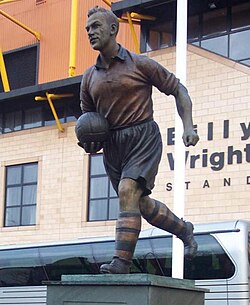
Molineux Stadium has been the home of the Wanderers since 1889. The ground has undergone several major renovations (1924–34, 1978–79, and 1991–93) and an expansion in 2011–12 to reach its current capacity of 31,750. The stadium features stands named after club icons, including the Billy Wright and Stan Cullis stands.
Club Overview and Statistics
The following table summarizes the club's primary achievements and current status.
| Category | Details |
|---|---|
| Current League | EFL Championship (2025–26) |
| Executive Chairman | Nathan Shi |
| Head Coach | César Peixoto |
| Tier 1 Experience | 71 Seasons |
| Record Win | 14–0 vs Crosswell's Brewery (1886) |
| Highest Attendance | 61,315 vs Liverpool (1939) |
Frequently Asked Questions
Who is the most successful manager in Wolves' history?
Stan Cullis is widely regarded as the most successful manager, leading the club to three First Division titles and an FA Cup during the 1950s.
What is the significance of the nickname "The Old Gold"?
The nickname refers to the club's traditional home colors, which have remained a defining characteristic of the team's identity throughout its history.
How many times has Wolves won the FA Cup?
Wolverhampton Wanderers have won the FA Cup four times, with victories in 1893, 1908, 1949, and 1960.
Who owns Wolverhampton Wanderers currently?
The club is owned by Fosun International, with Nathan Shi serving as the executive chairman.
What is the capacity of Molineux Stadium?
Molineux Stadium currently has a capacity of 31,750 spectators.