Wolf Conservation Status and Population Dynamics in Europe
The recovery of the wolf across the European continent is one of the most significant wildlife success stories of recent decades. Once decimated to isolated relict populations due to livestock predation concerns, wolves have seen a dramatic resurgence. Central to this recovery is the concept of favourable conservation status—a state where a population is no longer threatened with extinction and is capable of long-term survival.
Defining this status is not merely about counting heads; it involves a complex interplay of population size, genetic health, and connectivity between different regions. In Europe, these standards are guided by the Large Carnivore Initiative for Europe (LCIE) and the International Union for Conservation of Nature (IUCN).
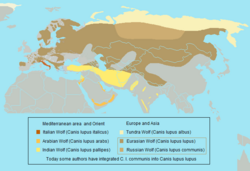
Key Facts
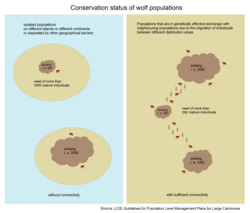
- Minimum Viable Population: Isolated populations generally require at least 1,000 adult animals to ensure survival.
- Connectivity Benefit: If populations are genetically linked, as few as 250 mature wolves may be sufficient for a "Least Concern" classification.
- Migration Capacity: Some wolves have been tracked traveling over 1,000 kilometers within a few months via satellite telemetry.
- Genetic Influence: Research suggests genetic diversity can be influenced by other populations up to 850 km away.
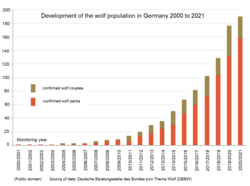
- German Population: As of the 2020/21 monitoring year, 157 wolf packs were registered in Germany.
Population Genetics and Viability
For a wolf population to be truly viable, it must possess both a sufficient number of individuals and a steady flow of genes between groups. This prevents inbreeding depression—the reduced biological fitness in a given population as a result of inbreeding.
The Role of Connectivity
Connectivity refers to the ability of wolves to migrate between different populations, ensuring genetic exchange. According to IUCN guidelines, while an isolated group needs 1,000 sexually mature individuals, a population of more than 250 adults may be sufficient if immigrants provide a demographic and genetic boost.
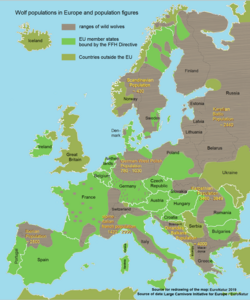
Measuring Genetic Variation
Experts Ilka Reinhardt and Gesa Kluth suggest that to conserve 95% of genetic variation, a population would need at least 100 reproducing wolf packs. For instance, the combined population of Western Poland (at least 95 packs) and Germany (five packs of the same sub-population) would meet the criteria for a favourable conservation status, even without further external exchange.
Developments in European Distribution
Since the Bern Convention of 1979 came into force in 1982, strict protections have allowed wolves to expand their range rapidly. This expansion is driven by the wolf's innate instinct for long-distance migration.
Current monitoring shows a highly dynamic metapopulation (a group of spatially separated populations of the same species which interact at some level). Evidence of this includes:
- Frequent migration between Poland and Germany.
- Wolves from the Carpathians moving into the German-Western Polish population.
- Alpine wolves migrating into Bavaria and Baden-Württemberg.
- Dinarides-Balkans wolves reaching the German Alpine region.
Legal Frameworks and EU Commitments
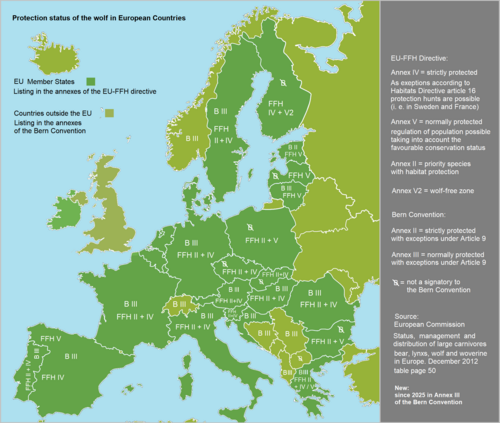
EU Member States are required to monitor priority species and report data to the European Commission and the IUCN. This data informs the Habitats Directive, which governs the protection levels of species.
Currently, wolves are often listed under Annex IV (strictly protected). However, there are ongoing discussions regarding a transition to Annex V (protected), which would allow for more flexible management. The EU plans to consider this move in March 2025.
A critical aspect of this legal framework is Article 16.1.c of the Habitats Directive, which allows for derogations in the interest of public safety or to protect pastoral farming. This is intended to preserve species-appropriate free-range husbandry, which itself supports biodiversity in open-land biotopes.
Conservation Summary
| Metric | Isolated Population | Connected Population |
|---|---|---|
| Minimum Mature Adults | 1,000+ | 250+ |
| Conservation Status | Higher risk of inbreeding | "Least Concern" potential |
| Genetic Target | N/A | 100+ reproducing packs (for 95% variation) |
| Migration Range | Limited | Up to 850 km genetic influence |
Frequently Asked Questions
What is a "favourable conservation status" for wolves?
It is a definition used to describe a wolf population that is no longer threatened with extinction and possesses the necessary numbers and genetic diversity to ensure long-term survival.
Why is connectivity important for wolf populations?
Connectivity allows for the exchange of genes between different populations, which prevents inbreeding depression and reduces the minimum number of individuals required to maintain a healthy, viable population.
How far can wolves migrate to maintain genetic diversity?
Satellite telemetry has shown wolves traveling over 1,000 km in a few months, and genetic analysis suggests that populations can influence the genetic diversity of others up to 850 km away.
What is the difference between Annex IV and Annex V of the Habitats Directive?
Annex IV designates species as "strictly protected," while Annex V designates them as "protected." Moving a species from Annex IV to Annex V allows for more flexible management and potential legal killings under specific conditions.
How many wolf packs are currently in Germany?
According to monitoring data from the 2020/21 period, there were a total of 157 registered wolf packs in Germany.