Wisconsin State Assembly
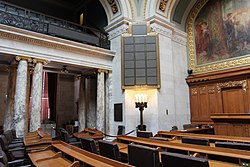
The Wisconsin State Assembly serves as the lower house of the Wisconsin Legislature. Operating alongside the smaller Wisconsin Senate, the Assembly forms the legislative branch of the state government. Based in the west wing of the Wisconsin State Capitol in Madison, this body is responsible for drafting and voting on legislation that affects millions of residents across the state.
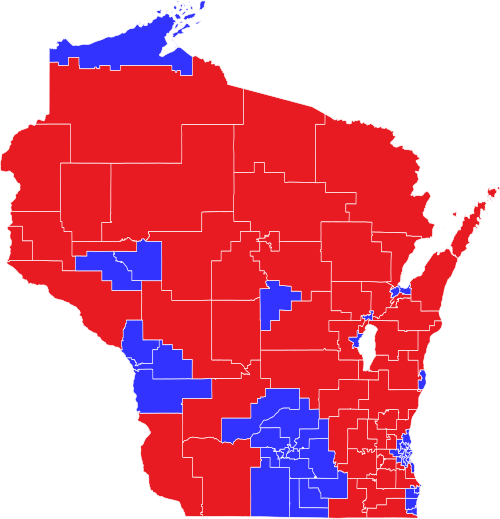
Historically, the Assembly has been characterized by strong party alignment. The Republican Party has maintained control for 28 of the past 30 years, with the only exceptions occurring between 2009 and 2010.
Key Facts
- Total Seats: 99 representatives.
- Term Length: 2 years.
- Current Leadership: Speaker Robin Vos (R).
- Constitutional Limit: Membership must be between 54 and 100 members.
- Salary: $57,408 per year plus per diem allowances.
- Meeting Place: State Assembly Chamber, Wisconsin State Capitol, Madison.
Structure and Authority
The authority of the Assembly is derived from Article IV of the Wisconsin Constitution. Since 1973, the state has been divided into 99 districts, with representatives apportioned based on population data from the decennial census. This specific number ensures a 3:1 ratio with the Wisconsin Senate, which currently consists of 33 members (each Senate district comprises three neighboring Assembly districts).
Members are elected every two years during the fall elections. If a seat becomes vacant between general elections, a special election may be held to fill the position.
Historical Evolution
Wisconsin's legislative roots date back to 1787 under the Northwest Ordinance. Before becoming a state, the territorial assembly met in Burlington for three sessions before relocating to the permanent capital in Madison. Early legislative work included establishing the court system, defining county borders, and standardizing the spelling of "Wisconsin."
Upon achieving statehood on May 29, 1848, the Assembly began with 66 members. Over the next century, the body expanded to 82 seats (1852), 97 seats (1856), and finally 100 seats (1861). It was not until the 1971 redistricting act that the size was reduced to 99 to comply with federal equal representation requirements.
Redistricting and Legal Challenges
In recent decades, the Assembly has been at the center of debates regarding gerrymandering—the practice of manipulating district boundaries to favor one political party. Critics and experts have previously identified Wisconsin as one of the most gerrymandered states in the U.S. This led to significant legal battles, including Whitford v. Gill, which reached the U.S. Supreme Court.
A pivotal shift occurred on December 22, 2023, when the Wisconsin Supreme Court ruled in Clarke v. Wisconsin Elections Commission that existing gerrymandered districts were unconstitutional, necessitating new maps for the 2024 elections.
Compensation and Benefits
Representatives earn an annual salary of $57,408. To support their duties, they receive a per diem (a daily allowance for expenses) for travel, set at $155.70 for overnight stays and $77.85 for day visits. Additionally, representatives are provided $12,000 over a two-year term to cover general office expenses, including printing and postage.
Assembly Overview
| Category | Details |
|---|---|
| Current Majority | Republican (54 seats) |
| Current Minority | Democratic (44 seats) / Independent Democrat (1 seat) |
| Speaker | Robin Vos (R) |
| Minority Leader | Greta Neubauer (D) |
| Last Election | November 5, 2024 |
| Next Election | November 3, 2026 |
Frequently Asked Questions
How many members serve in the Wisconsin State Assembly?
There are currently 99 members in the Assembly, representing 99 distinct districts across the state.
How long is the term for a State Assembly representative?
Representatives are elected to two-year terms.
What is the relationship between the Assembly and the Senate?
The Assembly is the lower house, and the Senate is the upper house. The Senate's size is tied to the Assembly's; it must be between one-fourth and one-third the size of the Assembly. Currently, three Assembly districts combine to form one Senate district.
Who leads the Wisconsin State Assembly?
The Assembly is led by the Speaker, a position held by Robin Vos since January 7, 2013.
Where does the Assembly meet?
The Assembly meets in the State Assembly Chamber located in the west wing of the Wisconsin State Capitol in Madison, Wisconsin.