Wisconsin Historical Society: A Legacy of Preservation and Public History
The preservation of a state's identity depends on the diligence of those who save its stories. For the Wisconsin Historical Society (WHS), this mission began with a cautionary look at Massachusetts, where a long delay in forming a historical society led to the permanent loss of early colonial records. Determined to avoid a similar fate, Wisconsin's early leaders began advocating for a formal institution in 1845 to safeguard the territory's burgeoning history.
The Formative Years (1846–1853)
The society's origins were humble and somewhat fragmented. Initial efforts began in late 1846 during the state constitution convention, where A. Hyatt Smith was named the first president. However, this early iteration saw little activity. It wasn't until January 1849, after Wisconsin achieved statehood, that the society was revived in the Senate chamber under President Governor Dewey and corresponding secretary Increase A. Lapham.
The society's primary goal was to preserve materials for a complete history of Wisconsin, including the history and antiquities of Native American tribes. Despite these ambitions, the organization struggled to make significant strides until 1853, when the state legislature provided a charter and $500 in funding. This milestone led to the appointment of Lyman Draper as corresponding secretary and the adoption of a comprehensive constitution.
Unlike many contemporary institutions that restricted membership to the social elite, the WHS was designed to be inclusive, open to anyone willing to pay their dues.
Early Growth and the Era of Lyman Draper
Under Lyman Draper's leadership, the society transitioned from a conceptual organization to a powerhouse of preservation. Draper aggressively solicited donations of letters, newspapers, pamphlets, and narratives from early settlers and public figures. In 1855, the society began publishing the Wisconsin Historic Collections every three years to share these findings with the public.
Draper's foresight extended to current events; at the onset of the Civil War, he urged soldiers to keep diaries and requested war relics from army officers. By 1866, the society occupied the entire second floor of the Wisconsin State Capitol's South Wing. A major acquisition occurred in 1875 with the Perkins Collection, which added 9,000 stone and copper Native American artifacts to the archives. By 1876, the society boasted the largest library west of Washington, D.C., attracting up to 35,000 visitors annually.
Expansion Under Reuben Gold Thwaites
In 1887, Reuben Gold Thwaites took the helm, bringing a systematic approach to collection. He traveled the state to fill archival gaps and sent staff to external libraries to copy Wisconsin-related documents. Thwaites also pioneered a partnership with the University of Wisconsin (UW), opening the society's resources to students.
Thwaites' tenure was marked by the influence of a group of key female assistants—Annie Nunns, Mary Stuart Foster, and Iva Welsh—whose impact was so significant it became known as "The Matriarchy." He also embraced Progressive Era ideals by encouraging the creation of a network of local historical societies, with Green Bay and Ripon becoming the first affiliates in 1899.
The society's physical growth mirrored its intellectual expansion. After years of storing materials in basements and the state capitol, the society moved into a dedicated Neoclassical Revival building constructed between 1896 and 1900. Designed by Ferry & Clas, the Bedford sandstone structure featured a massive two-story reading room shared with the UW library.

This move proved providential; Thwaites had warned that the state capitol was a "fire-trap," and indeed, most of the capitol burned down in 1904. Following the fire, the legislature tasked the society with the official preservation and distribution of state records.
Evolution Through the Mid-20th Century
Following Thwaites' death in 1913, Milo Quaife led the society through the challenges of World War I. He expanded public outreach by launching the Wisconsin Magazine of History in 1917, a quarterly publication written for laypeople rather than academics. He was succeeded by Joseph Schafer, who attempted a statewide historical survey inspired by the English Domesday Book.
By the 1940s, under Edward Alexander and Clifford Lord, the society shifted its focus toward community support and education. This era saw the introduction of Badger History magazine for students and the launch of the "Historymobile" in 1954—a traveling museum that brought exhibits to various parts of the state.

The society also expanded its physical footprint by opening permanent historic sites, starting with Villa Louis in 1952. To manage growing archives, the society began utilizing microfilm and collecting national-level archives from entities such as NBC and the McCormick family.
Modernization and Public Engagement
From the 1960s onward, the WHS expanded into new media and social documentation. It produced programming for Wisconsin Public Radio and public television and began documenting the Civil Rights movement. The society also established Area Research Centers to keep local documents accessible within their respective communities.
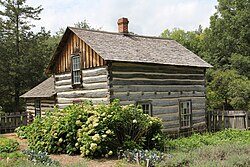
In the 1970s, the society opened Old World Wisconsin, a living history museum depicting the daily lives of diverse settlers.
The 1980s brought further expansion and technological leaps. The society moved its museum into the former Wolff, Kubly & Hirsig hardware store on Capitol Square in 1986 and began computerizing its collections. By 1993, the catalog was available online, followed by the launch of wisconsinhistory.org in 1997.
In 2001, the institution rebranded as the Wisconsin Historical Society, though "State Historical Society of Wisconsin" remains its legal name. Today, the society continues to support education through National History Day and the Badger Biographies series. As of 2024, a new museum building is under construction on the Capitol Square site, scheduled to open in 2027.
Key Facts
- Founded: Initial efforts began in 1846; revived in 1849.
- Inclusive Mission: Unlike other state societies, it was open to all members who paid dues.
- Major Collections: Includes the Perkins Collection (9,000 artifacts) and archives from NBC and MTM Enterprises.
- Educational Outreach: Publishes the Wisconsin Magazine of History and Badger History.
- Historic Sites: Manages various living history museums, including Villa Louis and Old World Wisconsin.
- Digital Transition: Online catalog launched in 1993; website launched in 1997.
| Era/Leader | Key Achievement | Major Milestone |
|---|---|---|
| Lyman Draper (1853+) | Aggressive collection of pioneer narratives | Largest library west of DC by 1876 |
| Reuben G. Thwaites (1887+) | Academic integration and local networks | New Neoclassical building (1896-1900) |
| Milo Quaife (1913+) | Public-facing publications | Launch of Wisconsin Magazine of History (1917) |
| Alexander & Lord (1940s+) | Community and youth outreach | Opening of Villa Louis (1952) |
| Modern Era (1970s-Present) | Digital archives and living history | Old World Wisconsin (1970s); New Museum (2027) |
Frequently Asked Questions
Why was the Wisconsin Historical Society founded?
It was founded to prevent the loss of early state history, inspired by the fact that Massachusetts had waited 170 years after the Pilgrims' arrival to form its own society, resulting in lost records.
What is "The Matriarchy" in WHS history?
"The Matriarchy" refers to the long period of significant influence held by assistants Annie Nunns, Mary Stuart Foster, and Iva Welsh during Reuben Gold Thwaites' leadership.
What is the difference between the official name and the brand name?
The official legal name is the "State Historical Society of Wisconsin," but the institution rebranded as the "Wisconsin Historical Society" (WHS) in 2001 for public use.
How does the society support local history today?
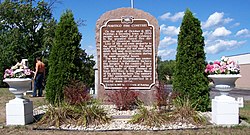
The WHS supports local history through Area Research Centers, guiding the placement of roadside historical markers, and partnering with elementary and middle schools through textbooks and magazines.
Where is the society's museum located?
The museum is located on Capitol Square in Madison, currently occupying a converted hardware store, with a new facility planned to open in 2027.