Wired Magazine: A History of the Digital Revolution's Totem
Launched in 1993, Wired emerged not merely as a publication, but as a cultural symbol of the digital age. While most computer magazines of the era focused strictly on hardware and software, Wired was conceived to explore the social, economic, and political dimensions of technology. This holistic approach aimed to capture the spirit of the "Digital Visionaries," blending high-tech analysis with lifestyle sensibilities.
The magazine was the brainchild of American expatriates Louis Rossetto and Jane Metcalfe. While working in Amsterdam on a technology publication called Electric Word, they developed a vision for a magazine that treated the "language industries"—the people and ideas behind the tech—as the primary story. This philosophy earned them a reputation as "The Least Boring Computer Magazine in the World" via the Whole Earth Review.
The Struggle for Seed Capital
The path to publication was fraught with rejection. Rossetto and Metcalfe spent 12 months pitching to venture capitalists and established publishers, but their concept was considered too radical. At the time, a strict divide existed in publishing: computer magazines didn't carry lifestyle ads, and lifestyle magazines didn't carry tech ads. Wired intended to bridge this gap.
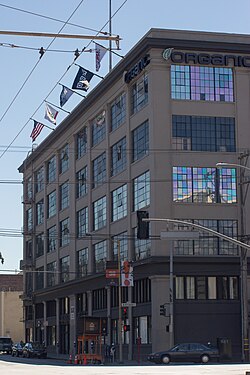
The breakthrough occurred at the February 1992 TED Conference. After seeing a prototype, Nicholas Negroponte, founder of the MIT Media Lab, became the first investor. Shortly thereafter, software entrepreneur Charlie Jackson provided additional funding. With seed capital initially provided by Dutch entrepreneur Eckart Wintzen, the founders moved their operations to the SoMa district of San Francisco.
Launching the Digital Vision
Wired officially launched as a quarterly on January 6, 1993. The first issues were distributed by hand at Macworld Expo in San Francisco and the Consumer Electronics Show (CES) in Las Vegas. The timing coincided with President Bill Clinton taking office and Vice President Al Gore promoting the "Information Superhighway."
The magazine was visually striking, utilizing a high-end six-color press typically reserved for annual reports to produce bold, fluorescent, and metallic designs. The editorial team included executive editor Kevin Kelly, creative director John Plunkett, and managing editor John Battelle. They successfully attracted pioneering advertising campaigns from industry giants like Apple, Intel, Sony, Calvin Klein, and Absolut.
![Cover of the June 1997 issue.[21] The main article was about Apple Computer's NeXT acquisition, Steve Jobs' return as an "advisor" to then-CEO Gil Amelio, and Apple's dire straits at the time.[22] It depicts the iconic Apple logo with a stylized "crown of thorns". The tagline "Pray" is a nod to the company's Apple evangelists and "devout" followers.](/images/27/66/276698154945059bd3259cd4d1f6d5f988288076bf18fd4609c92772b5ab8edf.jpg)
Rapid Growth and Critical Acclaim
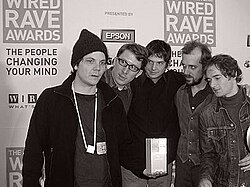
Strong demand quickly pushed the publication from a quarterly to a bi-monthly, and finally to a monthly schedule by September 1993. The magazine gained critical prestige, winning a National Magazine Award for General Excellence in 1994 and continuing to receive nominations throughout Rossetto's tenure as editor.
Hotwired and the Birth of Web Advertising
Recognizing that the World Wide Web was the future of media, Wired Ventures launched Hotwired on October 27, 1994. This was the first website to feature original content and Fortune 500 advertising. Most notably, Hotwired invented the banner ad, bringing brands like AT&T, Volvo, and MCI to the web.
The web division was a powerhouse of innovation, employing forty engineers to build custom edit and ad-serving software. By the end of 1995, Hotwired ranked sixth among all websites for revenue, surpassing established names like CNN and ESPN. The company later expanded into a suite of sites and launched the search engine HotBot in 1996.
Financial Volatility and Ownership Shifts
Despite its cultural success, Wired Ventures faced significant financial turbulence. In 1996, the company attempted an Initial Public Offering (IPO) with a valuation of $293 million. However, market volatility led to the withdrawal of the IPO, leaving the company cash-strapped.
To survive, Wired focused on its core US magazine and web businesses, shutting down its UK magazine, TV operation, and book publishing arm (HardWired). In March 1998, founders Rossetto and Metcalfe lost control of the company to investors Providence Equity Capital and Tudor Investment Corporation.
The company was eventually split: Condé Nast purchased Wired magazine for $90 million in 1998, while the web division, Wired Digital, was sold to Lycos in 1999 for $285 million. The two entities were finally reunited in 2006 when Condé Nast repurchased Wired Digital from Lycos.
Modern Era and Controversies
Under the leadership of various editors, including Chris Anderson and more recently Katie Drummond, Wired transitioned toward more mainstream and political coverage. This shift sparked public friction, notably with Elon Musk, who criticized the publication's political leanings during the second Trump administration.
The magazine has also faced challenges regarding the rise of artificial intelligence. In August 2025, an investigation by Jacob Furedi revealed that several articles written by a freelancer named Margaux Blanchard were AI-generated, leading Wired and Business Insider to remove the content.
Key Facts
- Founded: 1993 by Louis Rossetto and Jane Metcalfe.
- Innovation: Invented the web banner ad via Hotwired in 1994.
- Early Investors: Nicholas Negroponte and Charlie Jackson.
- Ownership: Currently owned by Condé Nast.
- Key Milestone: Won National Magazine Award for General Excellence in 1994.
- Global Reach: Launched editions in Japan, Germany, and the UK.
| Period | Key Milestone | Primary Focus/Owner |
|---|---|---|
| 1993 | Launch | Quarterly print; Rossetto & Metcalfe |
| 1994 | Hotwired Launch | First Fortune 500 web ads |
| 1998 | Ownership Change | Acquired by Condé Nast |
| 2006 | Brand Reunification | Condé Nast repurchases Wired Digital |
| 2025-26 | Modern Transition | Political focus; Italian print edition ceases |
Frequently Asked Questions
Who founded Wired magazine?
Wired was founded by Louis Rossetto and Jane Metcalfe, who conceived the idea while working in Amsterdam before moving the operation to San Francisco.
What is Wired's most significant contribution to the internet?
Through its website Hotwired, the company invented the banner ad, creating the first viable model for Fortune 500 advertising on the web.
Why did the 1996 IPO fail?
The IPO was withdrawn due to extreme market volatility and a downturn that made the $293 million valuation difficult to close, despite the company's strong revenue from Hotwired.
How did the magazine's content change over time?
Originally focused on the intersection of technology and culture, the magazine later moved toward more mainstream coverage and, in recent years, has increased its focus on politics and government.
What happened with the AI-generated articles in 2025?
After an investigation by Jacob Furedi found that articles by freelancer Margaux Blanchard were AI-generated, Wired removed the offending content from its platform.