Wikisource: The Multilingual Digital Library of Free Textual Sources
In the vast landscape of the internet, finding reliable, primary-source texts can often be a challenge. Wikisource, an online wiki-based digital library operated by the Wikimedia Foundation, serves as a massive repository for free-content textual sources. While many digital archives focus on modern publications, Wikisource was originally conceived as an archive to store important historical texts, providing the foundational evidence needed to support encyclopedic knowledge.

Today, the project has evolved far beyond its initial scope. It has become a general-content library that hosts a diverse array of media, including comics, film, and audiobooks. By leveraging the power of a wiki—a website that allows collaborative editing by its users—Wikisource enables a global community to transcribe, proofread, and organize the world's written heritage.
Key Facts
- Launched: November 24, 2003 (originally as Project Sourceberg).
- Owner: Wikimedia Foundation.
- Scale: Over 9.4 million articles across 83 active language subdomains.
- Content Type: Primarily free-content text, including translations and annotations.
- Core Mission: To host all forms of free text in many languages.
The Evolution of a Digital Archive
The journey of Wikisource began during a period of intense debate within the Wikipedia community regarding the inclusion of primary-source materials. To resolve disputes over whether original documents should be hosted on Wikipedia itself, the concept of Project Sourceberg was proposed. The name was a playful nod to Project Gutenberg, a well-known digital library of public domain books.
The project officially launched on November 24, 2003. Shortly after, the name was changed to Wikisource to better reflect its identity. While early discussions involved skepticism about how the project would complement existing archives like Project Gutenberg, Wikisource found its niche by acting as a collaborative interface for linking primary sources directly to encyclopedic entries.

From Icebergs to the Free Library
The visual identity of Wikisource has changed significantly over the years. The original logo featured an iceberg, a nod to the project's early name, Project Sourceberg. In 2006, the project transitioned to a stylized vector iceberg to ensure the logo could scale properly for digital use. Alongside this visual shift came the adoption of the project's slogan: "The Free Library."
How Wikisource Works: Annotations and Translations
One of the unique aspects of Wikisource is how it handles annotations—notes or comments added to a text to provide context or explanation. Unlike its sister project, Wikibooks, where annotations are the primary focus, Wikisource ensures that the original text remains the central objective. Annotations on Wikisource are strictly supplementary.
The project also thrives on user-generated translations. A notable example is the English Wikisource's Wiki Bible project, which aims to create a "laissez-faire translation" of the Bible. This collaborative approach allows for a wide variety of linguistic perspectives to be represented in the digital archive.
The Role of Proofreading
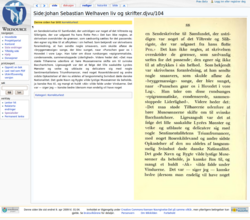
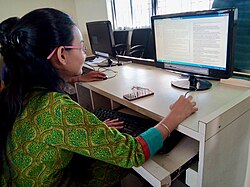
Because Wikisource relies on user contributions, the quality of the text is maintained through rigorous proofreading. This is especially important when dealing with OCR (Optical Character Recognition)—the automated process of converting images of text into machine-readable text. While OCR is efficient, it often produces errors that require human intervention to correct.
Global Reach and Language Structure
Wikisource is a truly multilingual endeavor. To accommodate different linguistic needs, the project uses language subdomains. This structure allows each language to host its own unique collection of texts on a dedicated wiki. For example, the Hebrew version of Wikisource was created specifically to handle the complexities of right-to-left text editing.
As of August 2026, the project boasts 83 active language subdomains. While some languages have large, established communities, others are "locally incubated" on the main wikisource.org site, which acts as a coordination hub and a home for languages that do not yet have their own dedicated subdomain.
| Rank | Language | Wiki Code | Total Articles | Total Edits |
|---|---|---|---|---|
| 1 | Chinese | zh | 5,646,478 | 7,882,538 |
| 2 | Polish | pl | 1,355,554 | 4,150,921 |
| 3 | English | en | 4,835,427 | 16,178,285 |
| 4 | French | fr | 4,780,944 | 15,953,450 |
| 5 | German | de | 710,148 | 4,969,791 |
Institutional Recognition and Criticism
Wikisource has gained recognition from major institutions. The National Archives and Records Administration (NARA) has facilitated the upload of high-quality scans to the platform, increasing the visibility of historical documents. Similarly, Wikimedia France partnered with the Bibliothèque nationale de France to add thousands of public domain texts to the French Wikisource.
However, the project has not been without criticism. Some scholars have expressed concerns regarding the reliability of user-generated translations and the lack of expert oversight in a collaborative environment. These debates highlight the ongoing tension between the democratization of knowledge and traditional academic scholarship.
Frequently Asked Questions
What is the difference between Wikisource and Wikipedia?
Wikipedia is an encyclopedia that provides commentary and summaries of topics, whereas Wikisource is a library that hosts the original source texts themselves. Wikipedia tells you about a subject; Wikisource provides the document that proves it.
Can I contribute to Wikisource?
Yes! Anyone can contribute by transcribing texts, proofreading existing entries, or providing translations. Many users help improve the accuracy of texts that were originally processed via OCR.
Is the content on Wikisource reliable?
Wikisource relies on community proofreading to ensure accuracy. While it is a highly respected resource used by organizations like the National Archives, it is always wise to cross-reference critical information, as it is a user-generated platform.
What are "text-units" in Wikisource?
Text-units are a way to measure the volume of content within the project. For example, the English Wikisource passed the milestone of 100,000 text-units in early 2008.
How does Wikisource handle different languages?
Wikisource uses separate subdomains (such as en.wikisource.org for English) to allow different language communities to manage their own libraries and specific formatting needs, such as right-to-left text for Hebrew.