Wife: Historical Evolution, Legal Rights, and Cultural Perspectives
A wife is a woman in a marital relationship. While the core definition remains constant, the social, legal, and cultural expectations associated with the role have shifted dramatically across centuries and geographies. A woman remains a wife until the marriage is legally dissolved through divorce or terminated by death, at which point she is referred to as a widow.
The status of a wife is not static; it is defined by the intersection of law, religion, and community standards. From the rigid structures of ancient Rome to the gender-neutral statutes of the modern era, the rights and obligations of a wife continue to evolve.

Etymology and Linguistic Origins
The word "wife" originates from the Proto-Germanic wībam, which simply meant "woman." In Old English (wīf) and Middle English (wif), the term was used to describe any woman, regardless of her marital status. This original meaning is still preserved in modern English compound words such as midwife, goodwife, and spaewife.
Similar linguistic roots appear in other Germanic languages, including the Modern German Weib (woman) and Danish viv (wife). However, in some languages, the term has evolved to carry different connotations; for example, the Dutch wijf is generally considered pejorative.
Key Facts
- Legal Evolution: Many European countries, including France, Spain, Greece, and Switzerland, only established full gender equality in marriage during the 1980s.
- Ancient Roman Law: In Rome, the legal age of consent for marriage was 12 for girls and 14 for boys.
- Economic Exchanges: Traditional marriages often involve a dowry (brought by the bride) or a bride price (paid by the groom).
- Western Patterns: Historically, Western women married later (mid-to-late 20s) compared to other traditional civilizations.
- Legal Status: A feme sole was an unmarried woman in the West who had the right to own property and enter contracts independently.
Legal Rights and Gender Equality
The legal standing of wives has been a central point of social debate since the 19th century, notably highlighted in John Stuart Mill's 1869 work, The Subjection of Women. Historically, husbands held primary control over marital property, inheritance, and the upbringing of children.
During the 20th century, many nations moved toward gender-neutral laws. However, some jurisdictions still maintain patriarchal structures. For example, Article 1105 of the Civil Code of Iran designates the husband as the exclusive head of the family.
Cultural and Historical Perspectives
Antiquity and Ancient Rome
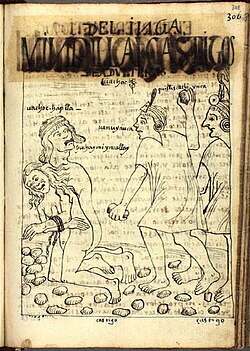
In ancient Rome, the Lex Papia Poppaea encouraged marriage and childbearing through rewards and penalties. While noble women often married as young as 12, those in lower classes typically married later in their teens. Interestingly, Roman law recognized a wife's property as legally separate from her husband's, a concept that persisted in parts of Europe and colonial Latin America.
Western and Christian Traditions
Christian cultures, guided by the New Testament, traditionally emphasized monogamy and viewed marriage as a lifelong bond. In the medieval period, the Roman Catholic Church allowed individuals over the age of 12 (for women) and 14 (for men) to marry without parental consent, leading to the rise of clandestine marriages.
For women who chose not to marry, the convent offered a path to become a "bride of Christ," ensuring economic survival and protection. Alternatively, some remained as non-religious spinsters. In the 19th and early 20th centuries, roughly 10–15% of non-clerical Western women never married.

Global Traditions and Exchanges
Marriage customs often involve the exchange of goods or currency to solidify the union between families. These include:
- Dowry: Assets brought to the husband by the bride or her family.
- Bride Price: Payments made by the groom or his family to the bride's family.
- Dual Exchange: Systems where both payments are exchanged between families.

Religious Perspectives
Abrahamic Faiths
In Christianity, biblical teachings suggest marriage is a union joined by God. The New Testament instructs husbands to love their wives as Christ loved the Church and to treat them with honor, while wives are encouraged to respect their husbands.
In Judaism, the Hebrew Bible records women in significant leadership roles. Examples include Deborah, who was both a wife and a Prophetess/Judge, and Esther, who served as Queen consort and Queen regnant of the Jewish people in Persia.

Other Cultural Contexts
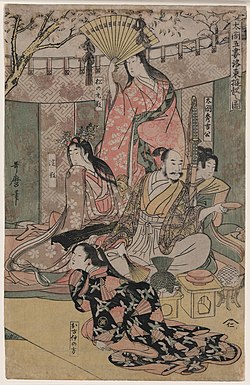
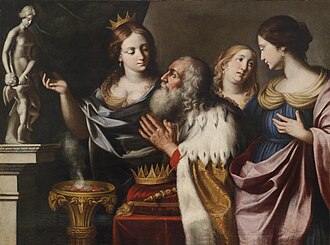
Marriage structures vary widely across Asia and other regions, ranging from the monogamous ideals of the West to historical instances of polygyny, such as that seen in the courts of Samurai Toyotomi Hideyoshi or the biblical account of King Solomon.
Summary of Marital Status and Transitions
| Status/Term | Definition/Condition | Legal/Social Context |
|---|---|---|
| Wife | Woman in a marital relationship | Active marriage |
| Widow | Woman whose partner has died | Termination by death |
| Divorcee | Woman whose marriage is legally dissolved | Termination by judgment |
| Feme Sole | Unmarried woman (Historical West) | Right to own property/contracts |
Contemporary Dynamics
The 1970s marked a shift in domestic dynamics as second-wave feminism challenged the traditional model of the male breadwinner and female domestic laborer. Since the 1980s, research has indicated a decreasing correlation between a wife's higher income and higher rates of divorce, reflecting a shift toward more equitable partnerships.
![Percentage of births to unmarried women, selected countries, 1980 and 2007.[14]](/images/f0/d3/f0d30c6d3de312af6459b20a0115edc8ec3e1d90d363efcdafbac925c9846041.png)
Frequently Asked Questions
What is the etymological meaning of the word "wife"?
Originally, the word derived from the Proto-Germanic wībam and simply meant "woman," regardless of whether she was married.
How did ancient Roman law handle a wife's property?
Ancient Roman law recognized that a wife's property was legally separate from her husband's property.
What is the difference between a dowry and a bride price?
A dowry is brought to the husband by the bride or her family, whereas a bride price is paid by the husband or his family to the bride's family.
When did full gender equality in marriage become law in many European countries?
Many European nations, including France, Spain, Greece, and Switzerland, established full legal equality between spouses during the 1980s.
What was a "feme sole" in historical Western society?
A feme sole was an unmarried woman who possessed the legal right to own property and enter into contracts in her own name.