Wieliczka Salt Mine: A Journey Through Poland's Underground Salt Cathedral
Deep beneath the town of Wieliczka, near Kraków in southern Poland, lies one of the most extraordinary industrial achievements in human history. The Wieliczka Salt Mine is not merely a site of former resource extraction, but a subterranean city carved entirely from rock salt. From its origins in the Neolithic era to its status as a UNESCO World Heritage Site, the mine represents centuries of engineering, art, and endurance.
For hundreds of years, this site produced sodium chloride (table salt) continuously, operating as one of the world's oldest active salt mines until 1996. Today, it serves as a breathtaking museum and a testament to the skill of the miners who transformed grey, granite-like salt deposits into a sprawling network of chapels and galleries.
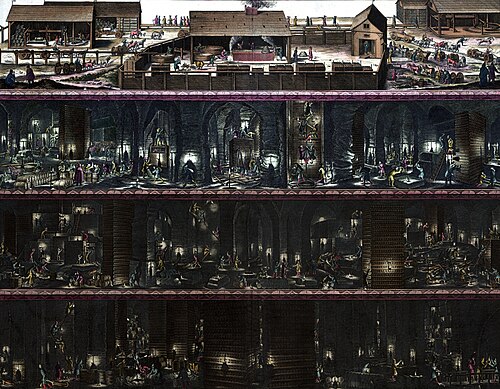
Key Facts
- UNESCO Status: Inscribed as a World Heritage Site in 1978.
- Scale: Reaches a depth of 327 metres (1,073 ft) with over 287 kilometres (178 miles) of passages.
- Production: Commercial salt mining operated from the 13th century until 1996.
- Key Attraction: St. Kinga's Chapel, a massive underground cathedral carved from salt.
- Visitor Volume: Approximately 1.2 million people visit annually.
A History of Salt and Sovereignty
The history of the mine is intertwined with the development of the Polish state. While salt was produced from brine (saltwater) as early as the Neolithic period, formal documentation dates back to 1044. By the 13th century, miners began sinking shafts to extract solid rock salt, leading to the construction of the Saltworks Castle.
King Casimir III the Great played a pivotal role in the mine's expansion, providing privileges to miners and establishing a hospital nearby in 1363. The scale of construction was so immense that it is said he turned a "Poland of wood into a Poland of stone," referring to the vast amounts of timber used for scaffolding and supports.
By 1871, the mine was among the most productive globally. At the time, three distinct qualities of salt were identified: Green salt (opaque with clay), Spiza salt (sandy and crystalline), and Szybik salt (the purest crystalline form).
The 20th century brought darker chapters. During World War II, the occupying German forces used the mine as an underground manufacturing facility for war materials, forcing Jewish concentration camp prisoners from Plaszow and Mielec into hard labour between August and October 1944.
Architectural Wonders and Mining Technology
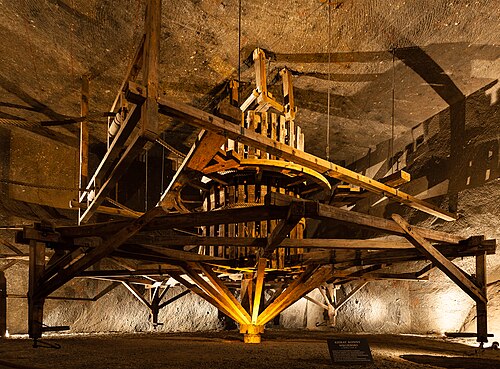
The mine is a labyrinth of horizontal passages and chambers. Unlike the white crystals often associated with salt, the rock here is naturally grey, resembling unpolished granite. Throughout the mine, visitors can see the evolution of extraction technology, from the Hungarian and Saxon horse treadmills used for hauling salt to the machine drills and blasting techniques introduced in the late 1890s.

The most striking features are the artistic contributions of the miners. They carved numerous statues and four complete chapels out of the salt walls. The most famous, St. Kinga's Chapel, features intricate salt-crystal chandeliers and walls designed to resemble the wooden churches of early Poland.
Visiting the Underground World
Modern tourism at Wieliczka is divided into three primary experiences:
- The Tourist Route: A 2.2-kilometre journey through the first three levels, featuring St. Kinga's Chapel and underground brine lakes.
- The Museum Route: Located on the 3rd level, this 1.5-kilometre trail showcases a European-scale collection of horse mills and monumental chambers like the Maria Teresa and Saurau chambers.
- The Miners' Route: A 2-kilometre immersive experience where visitors wear uniforms and helmets, navigating unimproved galleries with limited light and emergency CO2 scrubbing masks.
The mine has attracted a prestigious list of visitors over the centuries, including Nicolaus Copernicus, Fryderyk Chopin, and former U.S. President Bill Clinton.
| Feature | Detail |
|---|---|
| Maximum Depth | 327 metres (1,073 ft) |
| Total Passage Length | Over 287 kilometres (178 miles) |
| UNESCO Inscription | 1978 (Extended 2008, 2013) |
| Total Area | 970 ha (2,400 acres) |
| Annual Visitors | ~1.2 million |
Cultural Influence and Legacy
The mine's atmospheric depths have inspired countless artists and writers. Bolesław Prus used his visits to the mine to help shape the Labyrinth scenes in his historical novel Pharaoh. The site has also served as a filming location for the movie On the Silver Globe and the television series Spellbinder: Land of the Dragon Lord.
Legend also plays a role in the mine's identity. Princess Kinga of Hungary is said to be the patron saint of the miners; according to legend, she threw her engagement ring into a Hungarian salt mine, only for it to be discovered years later within a lump of salt in Poland, signaling the location of the deposit.
Frequently Asked Questions
Why did commercial mining stop in 1996?
Commercial salt extraction was discontinued due to a combination of falling global salt prices and issues with mine flooding.
What is the significance of St. Kinga's Chapel?
It is the most famous of the mine's four chapels, entirely carved from rock salt, including its ornate chandeliers and walls that mimic traditional Polish wooden architecture.
Was the mine ever in danger?
Yes, it was on the UNESCO List of World Heritage in Danger from 1989 to 1998. This was caused by humidity issues resulting from artificial ventilation systems installed in the late 19th century, which threatened the salt sculptures.
What is the difference between the Tourist and Museum routes?
The Tourist Route focuses on the artistic and scenic highlights (like the chapels and lakes) across the first three levels, while the Museum Route is located on the 3rd level and focuses on the history of mining technology and massive chambers.
Who is Princess Kinga?
Princess Kinga was a Hungarian princess who married Bolesław V the Chaste. Legend credits her with bringing salt mining to the region after her engagement ring was miraculously found in a salt deposit in Poland.