Western Television History: From Singing Cowboys to Neo-Westerns
The Western is more than just a genre; it is a cornerstone of American entertainment. Long before the glow of the television screen, the myth of the American frontier was cemented through radio broadcasts and cinema. From the early days of "singing cowboys" to the gritty realism of modern neo-Westerns, the genre has evolved to reflect changing societal values and storytelling techniques.
Radio and Film Antecedents
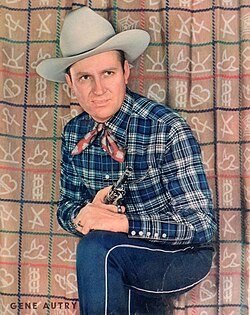
Before television became a household staple, the Saturday Afternoon Matinee on the radio introduced audiences to the rugged landscapes of the West. In cinema, stars like John Wayne, Tom Mix, and Audie Murphy became idols for young viewers. This era also saw the rise of "singing cowboys"—performers who blended music with action—including Gene Autry, Roy Rogers, and Dale Evans.
These stars often shared the spotlight with animal companions, most notably Roy Rogers' horse, Trigger, who achieved stardom in his own right. The genre also provided early opportunities for diverse performers; Herbert Jeffreys starred in films for African American audiences during the era of segregation, and Bill Pickett, a real-life rodeo performer, appeared in early Western cinema.
The Golden Age: 1940s through Early 1960s
As television popularity exploded in the late 1940s, Westerns became a primary source of entertainment. The first TV Western, Hopalong Cassidy, debuted on June 24, 1949, utilizing edited footage from William Boyd's films. While early shows targeted children, the 1955 debuts of The Life and Legend of Wyatt Earp and Gunsmoke shifted the focus toward adult audiences, sparking a massive boom in popularity.
By March 1959, the genre's dominance was absolute: eight of the top ten television shows were Westerns. This era produced legendary series such as Bonanza, The Rifleman, and Have Gun – Will Travel. The commercial impact was staggering, with an estimated $125 million in Western-themed toys sold in 1959 alone.
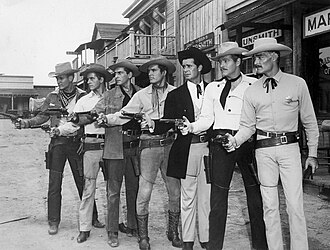
The global reach of these shows was equally impressive. Bonanza became a premier American export, reaching 400 million viewers across 82 countries. However, this saturation led to criticism. Newton Minow, in his "Television and the Public Interest" speech, criticized the "vast wasteland" of television, arguing that the glut of violent, juvenile Westerns crowded out high-quality news and cultural programming.
Production challenges also emerged. The high cost of livestock—with horses costing up to $100 per day compared to $22.05 for a human extra—pushed the industry toward longer, hour-long formats and the adoption of color filming in the early 1960s.
The Transition and Modernization: Late 1960s to 1980s
By the late 1960s, traditional Westerns began to fade. A combination of viewer burnout, demographic shifts, and pressure from parental groups regarding violence led major networks to stop airing new traditional Westerns by 1969. The era officially closed in 1975 with the finales of Death Valley Days and Gunsmoke.
However, the genre did not die; it evolved. Producers began blending Western themes with other genres to keep the format fresh:
- Science Fiction & Espionage: The Wild Wild West introduced elements of what would later be called steampunk.
- Satire: F Troop poked fun at the conventions of the genre.
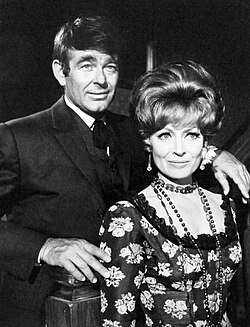
- Crime Drama: McCloud fused the sheriff archetype with modern big-city police work.
- Family Drama: Little House on the Prairie focused on frontier settlement and family life.
- Martial Arts: Kung Fu featured a Shaolin monk as an itinerant traveler.
The Renaissance: 1990s to the Present
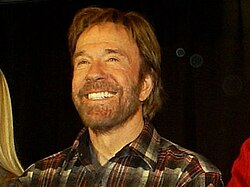
The 1990s saw a return to the genre through TV movies and specialized series. Dr. Quinn, Medicine Woman brought a dramatic focus to the frontier, while Walker, Texas Ranger transitioned the Western spirit into a modern crime drama starring Chuck Norris.
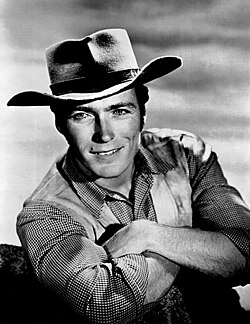
In the 2000s and 2010s, the neo-Western—a story with Western themes set in a contemporary time—gained prominence. Examples include Justified, Longmire, and the massive hit Yellowstone. The genre also expanded into the "space Western," most notably with Firefly and The Mandalorian, the latter of which draws direct inspiration from the persona of Clint Eastwood.
Today, the genre survives through dedicated networks like Grit, INSP, and MeTV, which keep classic series in rotation for new generations.
Key Facts
- First TV Western: Hopalong Cassidy (June 24, 1949).
- Peak Popularity: In March 1959, 8 of the top 10 US shows were Westerns.
- Global Reach: Bonanza was watched by 400 million people in 82 countries.
- Longest Running: Gunsmoke led the pack with a 20-year run.
- Modern Evolution: The genre has evolved into neo-Westerns (e.g., Yellowstone) and space Westerns (e.g., The Mandalorian).
| Era | Primary Focus | Key Examples |
|---|---|---|
| Early TV (1949-1955) | Children's programming & B-movies | Hopalong Cassidy, The Lone Ranger |
| Golden Age (1955-1965) | Adult-oriented dramas & Prime-time hits | Gunsmoke, Bonanza, Rawhide |
| Hybrid Era (1965-1980s) | Genre-blending (Sci-Fi, Comedy, Family) | The Wild Wild West, Little House on the Prairie |
| Modern Era (1990s-Present) | Neo-Westerns & Space Westerns | Yellowstone, The Mandalorian, Justified |
Frequently Asked Questions
Why did traditional Westerns disappear in the late 1960s?
A combination of factors led to their decline, including viewer burnout from a glut of similar shows, pressure from parental advocacy groups regarding violence, and shifting demographic preferences.
What is a neo-Western?
A neo-Western is a contemporary story that utilizes the themes, character archetypes, and moral conflicts of the traditional Western genre but is set in a modern time period, such as Yellowstone or Justified.
Which TV Western had the most international success?
Bonanza was the most popular American television export, reaching an estimated 400 million viewers across 82 different countries.
How did production costs affect the length of Western episodes?
High costs, particularly the daily expense of horses (up to $100), contributed to the transition from 30-minute action series to hour-long formats in the early 1960s.
What is a "space Western"?
A space Western is a subgenre that blends science fiction with Western tropes, featuring characters like lone gunslingers or frontiersmen operating on the edges of a galactic frontier, as seen in Firefly and The Mandalorian.