Gunfighters: From Old West Legends to Modern Pop Culture Icons
The image of the gunfighter—the fast-drawing, pistol-wielding frontiersman—has transcended its historical roots to become a global symbol of American identity. Representing a blend of adventure, frontier justice, and idealized violence, the "gunslinger" is no longer confined to the dusty trails of the 19th century. Today, this archetype persists as a mark of skill and accuracy, influencing everything from military training to futuristic cinema.
The Living Legacy of the Gunslinger
The influence of the gunfighter extends into practical application and modern sport. The quick draw—the ability to draw and fire a weapon with extreme speed—has historically influenced pistol drills and tactical techniques used by American law enforcement and military communities.
For those looking to relive the American frontier, cowboy action shooting offers a way to engage with history through performance and sport. Participants adopt personas from the late 1800s, complete with period-accurate clothing and aliases. This sport began in Southern California in the early 1980s and has since grown into an international activity overseen by several sanctioning bodies.
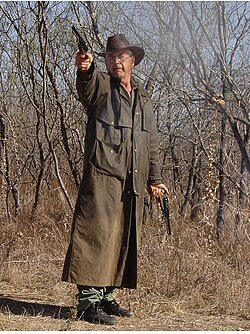
Major Sanctioning Organizations
- Single Action Shooting Society (SASS)
- Western Action Shootists Association (WASA)
- National Congress of Old West Shooters (NCOWS)
Gunfighters in Popular Culture
The gunslinger archetype is highly versatile, frequently appearing in genres far removed from the traditional Western. This is often seen in space Westerns (science fiction set in space with Western themes), steampunk, and contemporary settings.
Science Fiction and Fantasy
In the Star Wars universe, Han Solo embodies the gunfighter through his low-slung holster and his famous under-the-table quick draw. Similarly, Roland Deschain from The Dark Tower series blends the detached, heroic morality of "Spaghetti Western" characters—such as the "Man with No Name"—with a world filled with fantasy monsters.
Comic Books and Manga
Comic books have long embraced the ruthless bounty hunter. DC Comics' Jonah Hex is a prime example, known for a strict personal code of honor and the ability to outgun enemies across different time periods. Marvel Comics features the Two-Gun Kid, a revolver expert who has assisted superheroes like She-Hulk.
Japanese media has also integrated these themes. Yasuhiro Nightow's Trigun features Vash the Stampede, a pacifist gunslinger, contrasted with the violent, weapon-toting priest Nicholas D. Wolfwood. Other notable examples include Cowboy Bebop and Kino's Journey, which explore the "knight-errant" aspect of the gunslinger.
Neo-Westerns and Modern Media
The Neo-Western—a modern story that utilizes Western themes—continues this trend. Characters like Raylan Givens in Justified maintain the moral ambiguity and fast-draw skills of an Old West sheriff, while Anton Chigurh in No Country for Old Men mirrors the traits of a hunted outlaw.
Digital Frontiers and Sports
Video games have provided a sophisticated platform for reimagining the gunfighter. Titles such as Gun (featuring Colton White) and the Red Dead Redemption series (featuring John Marston and Arthur Morgan) have been praised for their ambitious and cohesive world-building. Other examples include the character Caleb in Blood and Blood II: The Chosen, as well as the "Gunfighter" callsign for Apache Helicopters in Medal of Honor.
Interestingly, the term has even migrated to professional sports. NFL quarterback Brett Favre was nicknamed "The Gunslinger," a nod to his Southern roots and his risky, high-velocity throwing style.
Key Facts
- Origin of Sport: Cowboy action shooting began in Southern California in the early 1980s.
- Tactical Influence: The quick draw popularized by gunfighters influenced US military and law enforcement pistol drills.
- Genre Blending: The gunfighter archetype is central to "space Westerns" and "Neo-Westerns."
- Cultural Reach: The image appears across global media, including American comics, Japanese manga, and AAA video games.
| Medium | Example Character | Key Trait/Theme |
|---|---|---|
| Film/Sci-Fi | Han Solo | Low-slung holster, subtle draw |
| Literature | Roland Deschain | Detached heroism, monster hunting |
| Comics | Jonah Hex | Personal code of honor, bounty hunting |
| Anime | Vash the Stampede | Pacifist gunslinger |
| Video Games | Arthur Morgan | Sophisticated reimagining of the Old West |
| Sports | Brett Favre | Risky, quick-throwing play style |
Frequently Asked Questions
What is cowboy action shooting?
It is a sport where participants dress as characters from the late 1800s and use period-appropriate firearms to complete shooting courses, blending historical reenactment with competitive skill.
What are the main organizations that sanction cowboy action shooting?
The primary organizations include the Single Action Shooting Society (SASS), the Western Action Shootists Association (WASA), and the National Congress of Old West Shooters (NCOWS).
How has the gunfighter influenced modern law enforcement?
The techniques associated with the "quick draw" have influenced the development of pistol drills and firearm handling techniques within American law enforcement and military communities.
What is a Neo-Western?
A Neo-Western is a contemporary story that incorporates the themes, moral codes, and character archetypes (such as the outlaw or the sheriff) typically found in traditional Westerns.
Which video games are known for their gunfighter protagonists?
Notable examples include Red Dead Redemption (John Marston and Arthur Morgan), Gun (Colton White), and Blood (Caleb).