Western Culture: The Evolution of a Global Civilization
Western culture, often referred to as Western civilization or Occidental culture, is a cohesive yet internally diverse heritage rooted in the histories of Europe and the Mediterranean. Rather than being defined by strict geographical borders, the "West" encompasses a broad array of social norms, ethical values, political systems, and technologies. At its core, this civilization grew from the classical era of ancient Greece and Rome, expanded through the influence of Christianity, and eventually circulated globally via colonization and globalization.
Key Facts
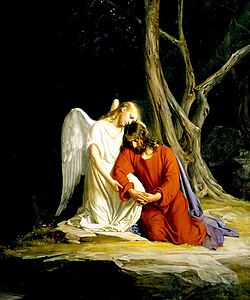
- Foundations: Rooted in the classical cultures of ancient Greece and Rome, with early influences from ancient Egypt and Phoenician city-states.
- Religious Influence: Christianity, particularly the Catholic Church, served as a dominant cultural and institutional force for centuries.
- Intellectual Milestones: The creation of the modern university, the hospital system, and natural law are credited to medieval Christianity.
- Global Expansion: Spread worldwide through the Renaissance, the encounter with the Americas, and the Industrial Revolution.
- Core Pillars: Defined by a blend of Greco-Roman philosophy, Christian ethics, and scientific advancement.
The Foundations of Antiquity

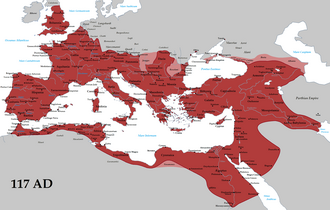
The bedrock of Western civilization lies in the classical era. Ancient Greece introduced pivotal concepts such as democracy—a system of government by the people—and a deep focus on spiritual and political freedom. This was further expanded by the Roman Empire, which established vast administrative and legal frameworks across Europe and the Mediterranean basin.
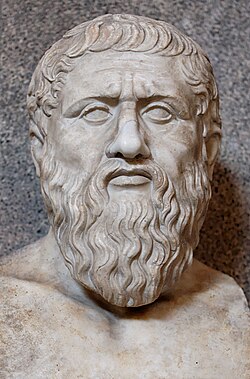
The Hellenistic period played a crucial role in syncretism, the blending of different beliefs and cultures. By merging Greek, Roman, and Near-Eastern influences, this era fostered major advances in science, engineering, and literature. This cultural melting pot also shaped Hellenistic Jewish culture, providing the environment from which the earliest Christians and the Greek New Testament emerged.
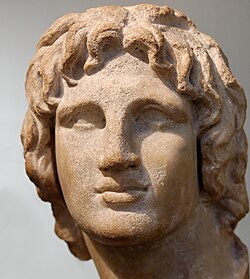
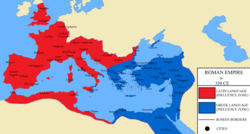
As the Roman Empire reached its peak, it integrated diverse territories, creating a unified zone of influence that facilitated the eventual spread of Christianity. This transition from pagan antiquity to a Christianized Europe ensured that the Church would remain the central pillar of Western society for over a millennium.
From the Dark Ages to the High Middle Ages
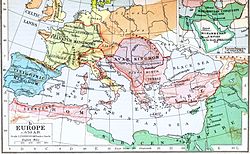
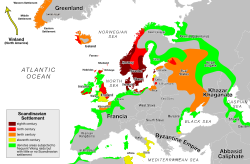
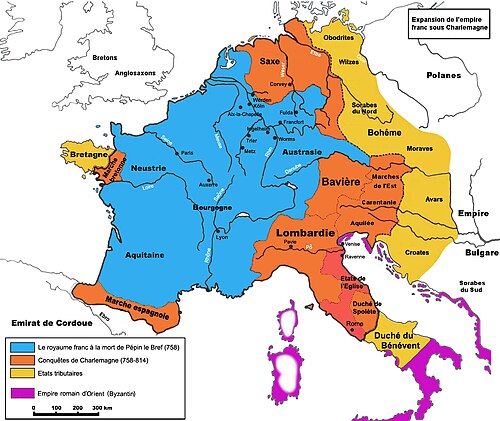
The fall of the Western Roman Empire ushered in the Early Middle Ages, a period marked by deurbanization, depopulation, and the collapse of long-distance trade. Europe faced centuries of instability due to invasions from Vikings, Muslims, and Magyars.
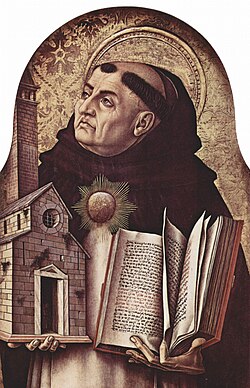
However, this instability eventually gave way to gradual recovery and several "medieval renaissances." In the 12th century, the translation of ancient Greek and Roman texts from the Islamic world back into Latin revitalized intellectual life in central and western Europe. This sparked the growth of scholasticism, a method of critical thought that dominated medieval universities.
![A doctor of philosophy of the University of Oxford, in full academic dress. The typical dress for graduation are gowns and hoods or hats adapted from the daily dress of university staff in the Middle Ages, which was in turn based on the attire worn by medieval clergy.[134]](/images/85/fb/85fbb4aaf4ac8661831f427a7647e3e6de05c6934cdc29ddd275a27b0a744e5f.jpg)
During this era, medieval Christianity established institutions that remain fundamental today, including the modern university and the hospital system. Scholars also developed natural law—the philosophy that certain rights are inherent by virtue of human nature—which laid the groundwork for modern international law.
The Renaissance and the Early Modern Era
The Renaissance marked a profound shift toward humanism, a philosophical outlook that emphasized human potential and achievements over divine intervention. This period was accelerated by the invention of the movable type printing press, which democratized knowledge and fueled the Reformation.
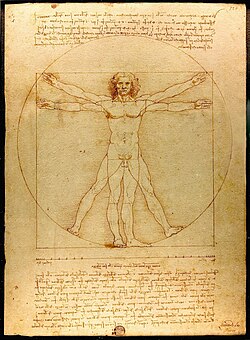
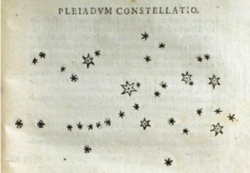
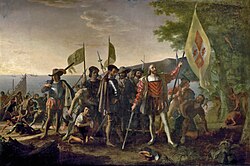
The encounter with the Americas expanded the Western horizon, leading to a new era of exploration and global trade. This period of discovery was accompanied by the Scientific Revolution, where figures like Galileo challenged existing paradigms through observation and mathematics, fundamentally changing how humanity understood the universe.
The Industrial Revolution and the Post-Industrial Age
The transition to the modern era was propelled by the Industrial Revolution, centered in Great Britain. The development of the steam engine, fueled by coal and constructed from iron, shifted production from hand tools to complex machinery, triggering unprecedented economic growth and urbanization.
![A Watt steam engine. The steam engine, made of iron and fueled primarily by coal, propelled the Industrial Revolution in Great Britain and the world.[95]](/images/13/2c/132c40ea3d9a1e5d3535f26d2f1faffad5fd8e53731f7c009b4e939c452f4837.jpg)
This technological leap led to the post-industrial era, characterized by the rise of global capitalism, the establishment of constitutional governments, and the expansion of scientific inquiry into space and atomic physics. The United States Constitution became a primary example of the political evolution of Western values during this time.

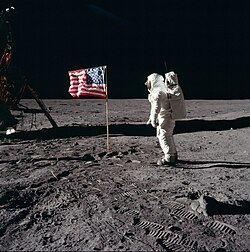
From the first moon landing to the digital age, the West has continued to export its technological and social frameworks globally, while continuing to evolve internally through diverse cultural expressions in art, music, and philosophy.
Summary of Western Cultural Evolution

| Era | Primary Influence | Key Contributions |
|---|---|---|
| Classical Antiquity | Greece & Rome | Democracy, Philosophy, Roman Law |
| Early Middle Ages | Christianity & Tribal Kingdoms | Preservation of faith, monasticism |
| High Middle Ages | Scholasticism & The Church | Universities, Hospitals, Natural Law |
| Renaissance | Humanism | Printing Press, Fine Arts, Exploration |
| Industrial Era | Science & Technology | Steam Engine, Capitalism, Urbanization |
Frequently Asked Questions
![Notre-Dame, the most iconic Gothic cathedral,[58] built between 1163 and 1345](/images/a8/8c/a88c28319ebafbf97dc6652c3dca8bf4935734a0cb11f894250bd79c21e9e940.jpg)


![Medieval Christians believed that to seek the geometric, physical and mathematical principles that govern the world was to seek and worship God. Detail of a scene in the bowl of the letter 'P' with a woman with a set-square and dividers; using a compass to measure distances on a diagram. In her left hand she holds a square, an implement for testing or drawing right angles. She is watched by a group of students. In the Middle Ages, it is unusual to see women represented as teachers, in particular when the students appear to be monks. She is most likely the personification of Geometry, based on Martianus Capella's famous book De Nuptiis Philologiae et Mercurii [5th c.], a standard source for allegorical imagery of the seven liberal arts. Illustration at the beginning of Euclid's Elementa, in the translation attributed to Adelard of Bath.](/images/9a/92/9a928647f149ae9a370b65520406db284161525ea1e18756439ed1a27303844e.jpg)


What exactly defines "Western culture"?
Western culture refers to the social norms, ethical values, and political systems rooted in European and Mediterranean histories, specifically the legacies of ancient Greece, ancient Rome, and their Christian successors.
How did the Islamic world influence the West?
During the Middle Ages, the Islamic world preserved and translated ancient Greek and Roman texts. When these were translated into Latin in the 12th century, they returned to Europe and helped spark the growth of scholasticism and the Renaissance.
What is the significance of natural law in Western history?
Developed largely within medieval Christianity, natural law is the idea that certain rights and moral values are inherent to human nature. This concept eventually became a cornerstone for the development of modern international law.
Was Western culture developed in isolation?
No. Scholars acknowledge that Western culture was stimulated and influenced by other civilizations, including ancient Egypt, the Phoenician city-states, and various Near-Eastern cultures.
What role did the printing press play in the evolution of the West?
The movable type printing press allowed for the rapid spread of ideas, which was essential for the success of the Reformation and the widespread adoption of humanist philosophy during the Renaissance.