Welsh Innovations: A Legacy of Global Scientific and Social Breakthroughs
From the fundamental symbols of mathematics to the architecture of the modern internet, Wales has been a powerhouse of ingenuity. The contributions of Welsh thinkers, scientists, and reformers have not only shaped the identity of their homeland but have fundamentally altered the course of global history, medicine, and technology.
Key Facts
- Mathematics: Robert Recorde invented the equals sign (=) and introduced the plus sign (+) to English speakers in 1557.
- Technology: Donald Davies conceived packet switching in 1965, a cornerstone of the modern Internet.
- Healthcare: Aneurin Bevan founded the National Health Service (NHS) in 1948.
- Physics: Brian Josephson is the only Welsh person to win a Nobel Prize in Physics (1973).
- Industry: Sir Pryce Pryce-Jones pioneered the mail-order industry in 1861.
Foundations of Mathematics and Science
The intellectual footprint of Wales is evident in the very way we write math. In 1557, Robert Recorde, a physician and mathematician, invented the equals sign (=) and introduced the plus sign (+) to the English-speaking world.
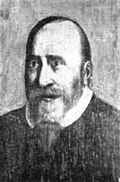
Later, in 1706, mathematician William Jones popularized the use of the Greek letter π (Pi) to represent the ratio of a circle's circumference to its diameter, a symbol now universal in geometry.
Early Industrial and Physical Breakthroughs
The Industrial Revolution was fueled by Welsh ingenuity. In 1794, Philip Vaughan patented the first design for the ball bearing, reducing friction in machinery. By 1837, David Thomas advanced iron smelting by using a hot blast to smelt iron ore with anthracite coal.
In the realm of physics, Sir William Grove described the first crude hydrogen fuel cells in 1838, utilizing copper, iron, porcelain, and a sulphate of copper solution. Much later, in 1973, Brian Josephson received the Nobel Prize in Physics for predicting the Josephson effect, a breakthrough in quantum tunnelling.
Revolutionizing Medicine and Public Health
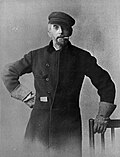
Wales has a profound history of medical advancement, ranging from surgical tools to systemic healthcare reform. Hugh Owen Thomas, often called the father of orthopaedic surgery, developed the Thomas splint. This device was critical during World War I, where it helped reduce mortality rates from 80% to 8%.
Other significant medical milestones include:
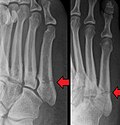
- Radiography: In 1896, Robert Jones and Oliver Lodge produced the first published clinical radiograph in The Lancet. Robert Jones also identified the "Jones fracture" of the fifth metatarsal.
- Ophthalmology: Tudor Thomas pioneered corneal grafting in 1934, leading to the establishment of an eye bank in 1955.
- Women in Medicine: Frances Elizabeth Hoggan became the first British woman to receive a medical doctorate from a European university and the first female doctor registered in Wales.
Social Reform and Systemic Change
The drive for a fairer society is a recurring theme in Welsh history. Robert Owen, a founder of utopian socialism, campaigned for improved factory conditions and coined the slogan "Eight hours' labour, Eight hours' recreation, Eight hours' rest" by 1817.
This spirit of collective care culminated in 1948 when Aneurin Bevan founded the National Health Service (NHS). Bevan based this national system on the local medical subscriptions used by miners and steelworkers in Tredegar.

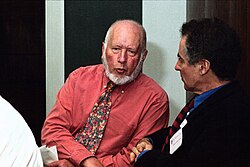
Furthering the cause of health equity, GP Julian Tudor-Hart proposed the "Inverse Care Law" in 1971, noting that the availability of quality medical care often varies inversely with the population's need for it.
Technological and Engineering Milestones
Welsh inventors have consistently looked toward the future. In 1861, Sir Pryce Pryce-Jones revolutionized retail by creating the first mail-order catalogues, allowing customers to order woollen goods by post for delivery via railway.

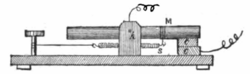
Communication and transport also saw major leaps. David Edward Hughes invented the adjustable carbon rod microphone in 1878, while Walter and Tom Davies of Llanelli invented the spare wheel in 1904 to combat frequent tyre punctures on primitive roads.
The Digital Age and Modern Engineering
The modern internet owes much to Donald Davies, who conceived packet switching in 1965. This method of breaking data into small packets for transmission is the dominant basis for global computer networks today.
In more recent decades, Welsh innovation has continued with the development of the Rigid Inflatable Boat (RIB) at Atlantic College in the 1960s, and the 2020 creation of the Covid Emergency Ventilator by Dr. Rhys Thomas and his team to prevent ICU admissions.
Summary of Welsh Innovations
| Year | Innovator | Innovation/Contribution | Field |
|---|---|---|---|
| 1557 | Robert Recorde | Equals (=) and Plus (+) signs | Mathematics |
| 1838 | Sir William Grove | Hydrogen fuel cell | Physics/Chemistry |
| 1861 | Sir Pryce Pryce-Jones | Mail-order shopping | Commerce |
| 1948 | Aneurin Bevan | National Health Service (NHS) | Public Health |
| 1965 | Donald Davies | Packet switching | Computing |
| 1973 | Brian Josephson | Josephson effect | Quantum Physics |
Frequently Asked Questions
Who invented the equals sign?
The equals sign (=) was invented by the Welsh physician and mathematician Robert Recorde in 1557.
What is the "Inverse Care Law"?
Proposed by Dr. Julian Tudor-Hart in 1971, it is the observation that the availability of good medical care tends to vary inversely with the need for it in the population served.
How did Wales contribute to the development of the Internet?
Donald Davies conceived of packet switching in 1965, which became the fundamental basis for data communications in computer networks and heavily influenced the ARPANET project.
What was the impact of the Thomas splint?
Developed by Hugh Owen Thomas, the splint was widely used during World War I and is credited with reducing mortality rates for certain fractures from 80% to 8%.
Who is the only Welsh person to win a Nobel Prize in Physics?
Brian Josephson won the Nobel Prize in Physics in 1973 for his prediction of the Josephson effect.