Welfare State: Principles, History, and Global Impact
A welfare state is a system of government where the state, or a network of social institutions, takes primary responsibility for the economic and social well-being of its citizens. This model is built upon the core principles of equal opportunity, the equitable distribution of wealth, and a public commitment to support those unable to provide for their own basic needs.
While the goal of promoting citizen well-being is universal, the application varies significantly across different regions. Most welfare states operate through a mix of public and private partnerships, where private entities may help administer or deliver specific programs. Furthermore, these services are often managed at various levels of government, from local municipalities to national administrations.
Key Facts
- Core Purpose: To protect and promote the social and economic well-being of citizens.
- Economic Model: Often described as a mixed economy characterized by state interventionism.
- Historical Catalysts: World War I, the Great Depression, and World War II accelerated the expansion of welfare systems.
- Early Foundations: Public pensions and social insurance began appearing in industrializing Western nations in the 1880s.
- Poverty Impact: Data shows a significant decrease in both absolute and relative poverty rates in countries with established welfare systems.
The Evolution of the Welfare State
The modern capitalist welfare state is viewed as a form of state interventionism. Unlike a planned economy, it does not rely on central economic planning but instead intervenes in the market to ensure a social safety net. The trajectory of these states was heavily influenced by global crises; the devastation of the two World Wars and the economic collapse of the Great Depression created the political will to develop the comprehensive systems seen after 1945.
Early and Global Foundations
While modern systems are often associated with the 20th century, the concept of state-supported well-being has roots in ancient civilizations, including India, China, Rome, and the Islamic Caliphates. In the modern era, the United States saw early philosophical justifications from sociologist Lester Frank Ward, often called the "father of the modern welfare state," though the U.S. developed a more limited system in the 1930s.
The British Model
The United Kingdom provides a landmark example of welfare evolution. A pivotal moment occurred in 1909 when Chancellor of the Exchequer David Lloyd George introduced the "People's Budget" to fund essential welfare reforms, which was subsequently passed by the House of Lords in 1910.
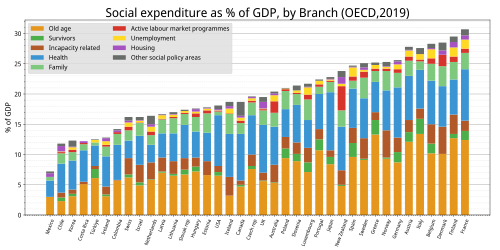
Global Variations and Models
Welfare states are not monolithic; they range from the comprehensive "Nordic model" in Northern Europe to more limited systems in North America and varying structures across Latin America and the Middle East. Some regions, such as the Middle East, have developed "oil welfare states" funded by natural resource wealth.
Universal Basic Income (UBI)
In recent years, discussions have shifted toward Universal Basic Income (UBI)—a periodic cash payment delivered to all on an individual basis without means test—as a potential replacement for traditional welfare. For example, political scientist Charles Murray proposed a UBI plan for the United States, suggesting that by 2020, such a system could have cost approximately $1 trillion less than existing welfare programs.
Measuring the Impact on Poverty
The primary metric for the success of a welfare state is its ability to reduce poverty. Comparative data from 1960 to 1997 demonstrates a sharp decline in poverty rates across various developed nations following the implementation of welfare measures.
| Country | Absolute Poverty (Pre-Welfare) | Absolute Poverty (Post-Welfare) | Relative Poverty (Pre-Welfare) | Relative Poverty (Post-Welfare) |
|---|---|---|---|---|
| Sweden | 23.7% | 5.8% | 14.8% | 4.8% |
| Norway | 9.2% | 1.7% | 12.4% | 4.0% |
| Denmark | 26.4% | 5.9% | 17.4% | 4.8% |
| France | 36.1% | 9.8% | 21.8% | 6.1% |
| United Kingdom | 16.8% | 8.7% | 16.4% | 8.2% |
| United States | 21.0% | 11.7% | 17.2% | 15.1% |
Debates and Criticisms
Despite the benefits, welfare states face ongoing criticism. Common arguments include the risk of welfare fraud and the "free rider problem," where individuals may rely on state support rather than seeking employment. In the U.S., the "welfare queen" stereotype has been used in political discourse to criticize the system, though researchers note this often intersects with race, gender, and class biases.
Additionally, the relationship between social spending and economic outcomes remains debated. A Norwegian study (1980–2003) suggested a negative correlation between welfare spending and student achievement, yet many of the highest-performing countries in the PISA tests are established welfare states.
Frequently Asked Questions
What is the difference between a welfare state and a planned economy?
A welfare state operates within a mixed economy, using state intervention to provide social services and safety nets while maintaining market mechanisms. A planned economy, by contrast, involves the state controlling the actual production and distribution of goods and services.
Who is considered the father of the modern welfare state in the U.S.?
The sociologist Lester Frank Ward (1841–1913) is recognized by historians, including Henry Steele Commager, as the father of the modern welfare state due to his early philosophical justifications for the system.
How did the World Wars affect the welfare state?
World War I, World War II, and the intervening Great Depression acted as catalysts that expanded the scope of welfare states, leading to the development of the most comprehensive forms of social protection after 1945.
Can Universal Basic Income (UBI) replace traditional welfare?
Some theorists, such as Charles Murray, argue that UBI could be a more cost-effective alternative to traditional welfare programs by providing a flat payment to all citizens and reducing administrative overhead.
Does welfare spending negatively impact education?
The evidence is mixed. While one Norwegian study found a negative correlation between spending and student achievement, many top-ranking OECD countries in education (via PISA tests) are comprehensive welfare states.