OECD Development Assistance Committee: Shaping Global Aid and Poverty Reduction
The Organisation for Economic Co-operation and Development (OECD) Development Assistance Committee (DAC) serves as the primary global forum for discussing aid, development, and poverty reduction in developing nations. Often described as the "venue and voice" of the world's major donor countries, the DAC coordinates international efforts to ensure that financial and technical assistance effectively supports the growth of lower-income economies.
The committee operates within the Development Co-operation Directorate (DCD), which acts as its Secretariat, providing the administrative and analytical support necessary to manage global aid standards.
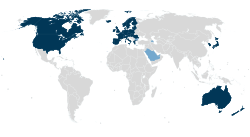
Key Facts
- Membership: Comprises 33 members (including the European Union), seven participants, and various observers.
- Core Metric: Established the concept of Official Development Assistance (ODA) to standardize how aid is measured.
- Primary Goal: To enhance the capacity of developing countries to participate in the global economy.
- Leadership: Chaired since March 2023 by Mr. Carsten Staur.
- Key Milestone: South Korea became the first major ODA recipient to transition into a major DAC donor member in 2010.
History and Evolution
The DAC began its journey on January 13, 1960, as the Development Assistance Group (DAG) under the Organisation for European Economic Co-operation (OEEC). From its first meeting in Washington, D.C., the group focused on creating accurate and comparable data reporting for aid flows. By September 1961, following a Ministerial Resolution, the DAG was officially renamed the Development Assistance Committee (DAC) as the OECD superseded the OEEC.
The early 1960s marked a pivotal era for the institutional framework of global aid. During this time, the World Bank established the International Development Association (IDA) to provide loans on easier terms. Simultaneously, major donor nations created their own dedicated agencies, such as the United States Agency for International Development (USAID) in 1961, the French Development Agency (AFD), and the Canadian International Development Agency (CIDA).
The Rise of ODA and Burden-Sharing
In the 1960s, the DAC addressed the issue of "burden-sharing" to ensure member states contributed equitable shares of aid relative to their Gross National Income (GNI). This led to the adoption of the Official Development Assistance (ODA) concept in 1969. ODA distinguishes official transactions intended to promote economic and social development from other official flows, such as military assistance.
Functions and Subsidiary Bodies
The DAC focuses on how international cooperation can empower developing countries to integrate into the global economy. To achieve this, it utilizes several specialized subsidiary bodies:
- DAC Network on Development Evaluation (EVALNET): Focuses on increasing the effectiveness of development programs.
- Working Party on Development Finance Statistics: Manages the data and reporting of aid flows.
- Specialized Networks: Including GENDERNET (gender), ENVIRONET (environment), GOVNET (governance), and INCAF (conflict and fragility).
- Advisory Group on Investment and Development (AGID): A joint body with the OECD's Investment Committee.
Major Achievements and Modern Initiatives
One of the DAC's most significant modern shifts was the move toward untied aid. In 2000, members agreed to stop requiring that aid recipients buy goods and services from the donor country, specifically for Least Developed Countries (LDCs). By 2008, 80% of total ODA (excluding administrative costs) was provided untied.
Aid Effectiveness and Global Partnerships
The DAC has been central to improving the quality of aid through several landmark agreements:
- Paris Declaration on Aid Effectiveness (2005): A commitment to make aid more efficient and aligned with recipient needs.
- Accra High Level Forum (2008): A review of the Paris Declaration commitments.
- Busan Partnership for Effective Development Co-operation (2011): An expansion of previous frameworks that established the Global Partnership for Effective Development Co-operation.
External evaluations, such as the Commitment to Development Index by the Center for Global Development, continue to rank DAC members on their "development-friendliness" across indicators like trade, migration, and technology.
Understanding ODA Statistics
The DAC's calculation of ODA is the gold standard used by the United Nations and the World Bank. However, it is important to note that ODA only includes government sources; private aid from NGOs (which accounts for roughly 10-15% of total aid) is tracked separately as Net Private Grant.
To qualify as ODA, loans must be concessional, meaning they are provided on significantly easier terms than commercial loans. Specifically, they must have a "grant element" of at least 25%.
| Category | Composition | Examples/Details |
|---|---|---|
| Members | 33 Members | Includes the European Union |
| Participants | 7 Participants | Non-OECD countries authorized to attend |
| Observers | Various Organizations | World Bank, IMF, WHO, UNDP, African Development Bank |
| Associates | Selected Countries | Romania |
Frequently Asked Questions
What is the difference between ODA and other official flows?
Official Development Assistance (ODA) specifically refers to government transactions aimed at promoting the economic development and welfare of developing countries. Other official flows (OOF) include transactions that do not meet these criteria, such as military assistance.
What does "untied aid" mean?
Untied aid is development assistance that does not require the recipient country to spend the funds on goods or services produced by the donor country, allowing recipients to buy locally or from the most competitive global provider.
Who is eligible to be an ODA recipient?
Countries are eligible if they have a per capita Gross National Income (GNI) of less than $11,455. However, members of the G8, the EU, or countries with a firm EU accession date are excluded.
How is a loan considered "concessional" by the DAC?
A loan is considered concessional if it has a mathematically computed "grant element" of at least 25%, meaning the terms are significantly more favorable than those found in commercial lending.
What is the role of the Development Co-operation Directorate (DCD)?
The DCD serves as the Secretariat for the DAC, providing the necessary administrative framework and operational support within the OECD to carry out the committee's mandate.