Weezer: The Evolution of a Power Pop Powerhouse
Since their emergence in the early 1990s, Weezer has remained one of the most influential forces in alternative rock. Blending the raw energy of pop-punk with the melodic sensibilities of power pop—a genre characterized by strong melodies and driving guitar sounds—the band has navigated a career marked by critical peaks, experimental shifts, and a dedicated global following.
Key Facts
- Active Years: 1992–present (with a hiatus from 1997 to 2000).
- Core Members: Rivers Cuomo, Patrick Wilson, Brian Bell, and Scott Shriner.
- Primary Genres: Alternative rock, power pop, pop rock, and pop-punk.
- Defining Works: The self-titled "Blue Album" (1994) and "Pinkerton" (1996).
- Alternative Name: Occasionally referred to as "Goat Punishment" (1998–2000, 2002, 2022).
The Early Years and the Blue Album Era
Formed in 1992, Weezer quickly established a unique identity in the alternative scene. The band's debut, the self-titled Weezer (commonly known as the Blue Album), released in 1994, became a cornerstone of 90s rock. During the recording of this album, Brian Bell replaced Jason Cropper on guitar.
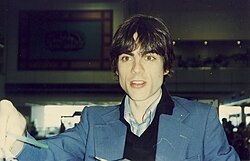
Following the success of their debut, the band released Pinkerton in 1996. While more raw and emotionally abrasive than its predecessor, it eventually earned a cult following. However, the period following the Pinkerton tour saw significant changes, including the departure of co-founder and bassist Matt Sharp.
![Matt Sharp, pictured with the Rentals in 2007, co-founder of Weezer, left the band after the Pinkerton tour.[53]](/images/ac/c1/acc1cb80e6cba7f3e55b611913def634878cb9a95afd3b2d2e921e9dcfefce22.jpg)
Hiatus and the Millennium Comeback
Between 1997 and 2000, the band entered a period of hiatus. During this time, frontman Rivers Cuomo spent time in Thailand and focused on personal projects.
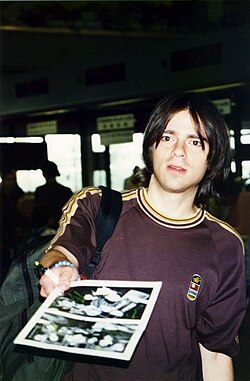
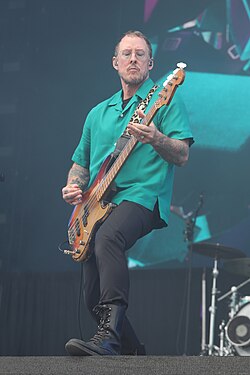
The band returned in 2001 with the Green Album, signaling a shift toward a more polished, concise pop sound. This was followed by Maladroit in 2002, which balanced their pop sensibilities with heavier rock elements. The early 2000s also saw a transition in the rhythm section, with Mikey Welsh serving as bassist from 1998 to 2001 before being succeeded by Scott Shriner.

Mid-Career Evolution and Experimentalism
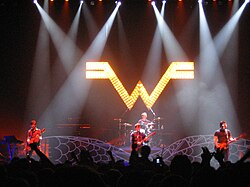
From 2003 to 2013, Weezer explored various sonic territories. Make Believe (2005) and the Red Album (2008) showcased a move toward more structured pop-rock. The band continued to experiment with Raditude (2009) and Hurley (2010), often leaning into a more playful, "geek rock" aesthetic.


Modern Era and Concept Albums
The 2010s and 2020s have been characterized by a prolific release schedule. The band returned to their roots with Everything Will Be Alright in the End (2014) and the White Album (2016), followed by the synth-heavy Pacific Daydream (2017). In 2019, they released both the Teal Album and the Black Album, the latter being a collection of cover songs.
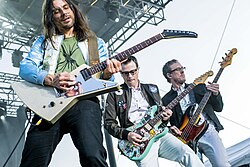
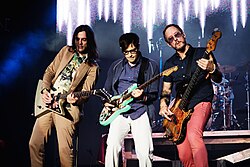
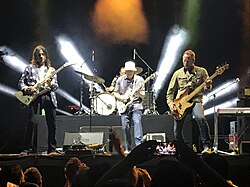
Recent years have seen the band embrace conceptual projects, including OK Human and Van Weezer (both 2021), and the seasonal SZNZ EP series in 2022. As of 2026, the band is touring in support of the Gold Album.


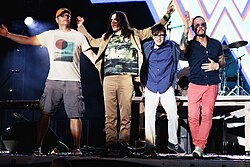
Band Composition and Discography
The current lineup consists of Rivers Cuomo (lead vocals, guitar, keyboards), Brian Bell (guitar, keyboards, vocals), Scott Shriner (bass, keyboards, vocals), and Patrick Wilson (drums). The band has also utilized touring musicians such as Josh Freese on drums.
| Album Color/Name | Release Year | Notable Era |
|---|---|---|
| Blue Album | 1994 | Formation/Breakthrough |
| Pinkerton | 1996 | Pre-Hiatus |
| Green Album | 2001 | Comeback |
| Red Album | 2008 | Mid-Career |
| White Album | 2016 | Modern Era |
| Black Album | 2019 | Covers Project |
| Gold Album | 2026 | Current |
Frequently Asked Questions
Who are the current members of Weezer?
The current members are Rivers Cuomo, Brian Bell, Patrick Wilson, and Scott Shriner.
What is the "Blue Album"?
The "Blue Album" is the common name for Weezer's self-titled debut studio album released in 1994.
Why did the band go on hiatus?
The band entered a hiatus from 1997 to 2000 following the tour for their second album, Pinkerton.
What genres does Weezer play?
Weezer is primarily associated with alternative rock, power pop, pop rock, and pop-punk, and is often cited as a pioneer of "geek rock."
Who replaced Matt Sharp on bass?
After Matt Sharp left in 1998, Mikey Welsh played bass until 2001, after which Scott Shriner joined the band.