Madama Butterfly: The Evolution and Legacy of Puccini's Masterpiece
Madama Butterfly is one of the most enduring works by the Italian composer Giacomo Puccini. A poignant tale of love, betrayal, and cultural clash, the opera tells the story of Cio-Cio-San, a young Japanese girl who marries a U.S. naval officer, only to face a heartbreaking destiny. From its disastrous premiere to its status as a global staple, the journey of this opera is as dramatic as the plot itself.
Key Facts
- Composer: Giacomo Puccini
- Librettists: Luigi Illica and Giuseppe Giacosa
- World Premiere: February 17, 1904, at La Scala, Milan
- Language: Italian
- Based on: The short story by John Luther Long and the novel Madame Chrysanthème by Pierre Loti
- Standard Version: The fifth revision (SC 74.E) is the most frequently performed today
Origins and Literary Foundations
The opera's narrative is rooted in a blend of literary sources. It is based on the 1898 short story "Madame Butterfly" by John Luther Long, which was inspired by accounts from Long's sister, Jennie Correll, and the 1887 semi-autobiographical French novel Madame Chrysanthème by Pierre Loti. Before it became an opera, Long's story was adapted into a one-act play by David Belasco. Puccini encountered this play in London in 1900, sparking the inspiration for his musical composition.
The Struggle for Success: Five Versions
Puccini was a meticulous craftsman who revised Madama Butterfly five times to perfect its pacing and emotional impact. These versions are cataloged as SC 74 with letter suffixes.
The Initial Failure (SC 74.A)
The original two-act version premiered on February 17, 1904, at La Scala in Milan. Despite a cast featuring Rosina Storchio, Giovanni Zenatello, and Giuseppe De Luca, the production was poorly received. This failure was attributed largely to a late completion by Puccini, which left the cast with insufficient rehearsal time.
The Path to the Standard Version
Puccini quickly revised the work, splitting the long second act into two separate acts and introducing the Humming Chorus as a bridge. This second version (SC 74.B) premiered on May 28, 1904, in Brescia and was a resounding success, featuring Solomiya Krushelnytska in the lead role.
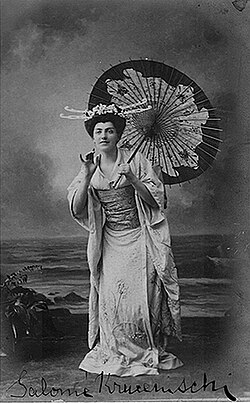
Further refinements followed: SC 74.C premiered at the Metropolitan Opera in 1907, followed by SC 74.D. Finally, in 1907, Puccini completed the fifth version (SC 74.E), known as the "Standard Version," which remains the definitive edition for modern opera houses.
Global Performance History
Once the revisions secured its success, Madama Butterfly spread rapidly across the globe. The first performance outside Italy took place in Buenos Aires on July 7, 1904, conducted by Arturo Toscanini. It reached London's Royal Opera House in 1905 and the United States in 1906.
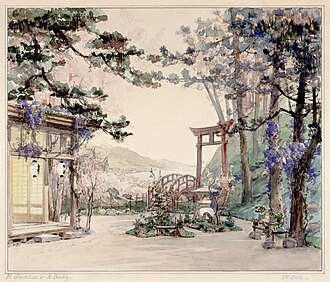
The Metropolitan Opera's 1907 premiere featured legendary performers like Enrico Caruso as Pinkerton and Geraldine Farrar as Cio-Cio-San. The opera has been a staple at the Met ever since, with the exception of a hiatus from 1942 to 1945 due to World War II hostilities between the U.S. and Japan.
In Japan, the singer Tamaki Miura gained international fame for her portrayal of Cio-Cio-San between 1915 and 1920. Today, memorials to both Miura and Puccini stand in the Glover Garden in Nagasaki, the city where the opera is set.
Plot Synopsis: Act I
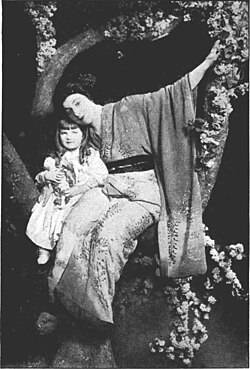
Set in 1904 Nagasaki, the story begins with B.F. Pinkerton, a U.S. naval officer, renting a house for himself and his bride, Cio-Cio-San (known as "Butterfly"). The 15-year-old girl marries Pinkerton for love and convenience, having secretly converted from Buddhism to Christianity. However, Pinkerton views the marriage as temporary, intending to find a "proper" American wife later.
The wedding is interrupted by Butterfly's uncle, a bonze (a Buddhist monk), who curses her for her conversion. This leads her relatives and guests to renounce her, leaving her alone with Pinkerton.
Production Summary
| Category | Details |
|---|---|
| Composer | Giacomo Puccini |
| Premiere Date | February 17, 1904 |
| Premiere Venue | La Scala, Milan |
| Key Roles | Cio-Cio-San (Soprano), Pinkerton (Tenor), Suzuki (Mezzo) |
| Setting | Nagasaki, Japan |
Cultural Adaptations and Influence
The story of Butterfly has transcended the opera house, inspiring numerous adaptations across different media:
- Film: From the 1922 silent color film The Toll of the Sea starring Anna May Wong to the 1954 Technicolor screen adaptation.
- Theater: David Henry Hwang's 1988 play M. Butterfly, which explores themes of gender and diplomacy.
- Music: The rock band Weezer based their 1996 album Pinkerton loosely on the opera.
- International Versions: Sao Krua Fah, a Thai adaptation set in Chiang Mai.
Frequently Asked Questions
Why was the first premiere of Madama Butterfly a failure?
The premiere at La Scala in 1904 was poorly received primarily because Puccini completed the work so late that the singers and orchestra did not have adequate time to rehearse.
What is the "Standard Version" of the opera?
The Standard Version is the fifth revision (SC 74.E), completed by Puccini in 1907. It is the version most commonly performed by opera companies today.
Who is Cio-Cio-San?
Cio-Cio-San is the protagonist of the opera, a 15-year-old Japanese girl whose name means "Butterfly." She is the tragic figure who marries an American officer in hopes of a lifelong partnership.
Where is the opera set?
The opera is set in the port city of Nagasaki, Japan, in the year 1904.
How many versions of the opera did Puccini write?
Puccini wrote five distinct versions of the opera, designated by the Schickling catalog as SC 74.A through SC 74.E.