Wayuunaiki: The Language of the Wayuu People
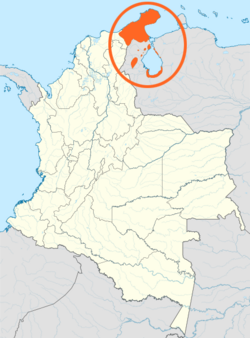
Wayuunaiki (also known as Guajiro) is the most widely spoken language within the Arawakan family. It serves as the primary means of communication for the Indigenous Wayuu people, who inhabit the Guajira Peninsula and the regions surrounding Lake Maracaibo, spanning the border between northwestern Venezuela and northeastern Colombia.
The term Wayuunaiki literally translates to "the people's speech," derived from wayuu (human being/people) and the suffix -naiki (from anüiki, meaning speech, word, or language).
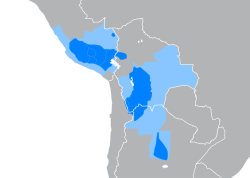
Key Facts
- Native Speakers: Approximately 420,000 speakers (based on 2008–2012 data).
- Geographic Range: Guajira Peninsula and Lake Maracaibo (Colombia and Venezuela).
- Language Family: Arawakan (Northern Ta-Arawakan).
- Writing System: Latin script.
- Official Regulation: Regulated by the Centro Etnoeducativo Kamusuchiwoꞌu.
Demographics and Distribution
The Wayuu people are a significant ethnic group, with censuses from 2011 and 2019 estimating their population at around 790,000. In terms of language distribution, estimates from 2012 indicated roughly 300,000 speakers in Venezuela and 120,000 in Colombia as of 2008.
While the language remains vibrant, some reports suggest a trend where a mixed Wayuu-Spanish hybrid is replacing pure Wayuunaiki in certain areas, though this remains a point of academic discussion among linguists.
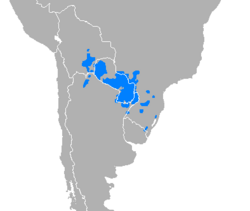
Modern Preservation and Technology
Efforts to maintain the language in a bilingual environment have led to significant educational milestones. The Kamusuchiwoꞌu Ethno-educative Center (Centro Etnoeducativo Kamusuchiwoꞌu) spearheaded the creation of the first illustrated Wayuunaiki-Spanish dictionary to support bilingual education.
Furthermore, the language has entered the digital age. In December 2011, the Wayuu Taya Foundation, in collaboration with Microsoft, released the first dictionary of technology terms in Wayuunaiki, the result of a three-year project involving linguists and tech professionals.
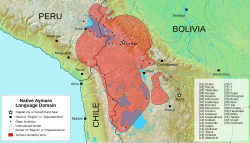
Dialects and Linguistic Variations
Wayuunaiki is primarily divided into two main dialects: Wüinpümüin (spoken in the northeast) and Wopumüin (spoken in the southwest). These dialects are mutually intelligible, meaning speakers of one can easily understand the other.
The primary differences between the two are found in pronouns and their respective prefixes. For example, Wüinpümüin uses jia for the 3rd person feminine pronoun and jaya for the second person plural, whereas Wopumüin uses shia for the 3rd person feminine and jia for the second person plural.
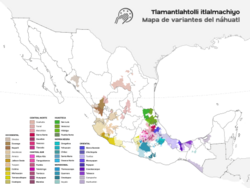
Phonology and Sound System
The sound system of Wayuunaiki consists of a specific set of vowels and consonants. Vowels include front (i, e), central (ü, a), and back (u, o) sounds, all of which can be short or long. Notably, the vowels ⟨e⟩ and ⟨o⟩ are more open than their English counterparts.
The consonant inventory includes plosives, fricatives, a lateral flap (⟨l⟩), and a trill (⟨r⟩). A distinctive feature of the language is the length of plosive (p, t, k) and nasal (m, n) consonants; when these are long, they are written as double letters (e.g., pp, tt, kk).
Stress and Nasalization
Accentuation typically falls on the second syllable. However, if a word begins with a long vowel, a consonant followed by a long vowel, or a closed syllable, the accent shifts to the first syllable. While nasalization occurs phonetically—particularly near nasal consonants or for emphasis in words like aa (yes)—it is not considered a phonemic distinction.
Grammar and Structure
Wayuunaiki is an agglutinative language, meaning it builds complex words by attaching multiple suffixes to a root. It employs a sophisticated system of gender and number classification.
Nouns and Pronouns
Nouns use suffixes to indicate number and gender: -kana for plural, -kai for masculine singular, and -kat for non-masculine singular. This classification system extends to pronouns and verb conjugations.
| Distance/Position | Masculine | Non-masculine | Plural |
|---|---|---|---|
| Adjacent to speaker | chi | tü | na |
| Adjacent to hearer | chira | türa | nala |
| Not adjacent | chisa | tüsa | nasa |
| Far away | chia | tia | naya |
Verbal System
The language features a complex verbal system with ten distinct tenses, ranging from the "present-past" to the "remote past." Verbs are conjugated based on gender, tense, and number using a system of "triads" (categories A through J) that determine the gender inflection of the verb.
The basic word order is typically VSO (Verb-Subject-Object), although the language is flexible and allows for other arrangements depending on the context.
Morphology and Word Formation
Wayuunaiki distinguishes between alienable and inalienable nouns. Alienable nouns require possessive suffixes, while inalienable nouns are viewed as inherently possessed and use pronoun-derived prefixes instead.
New words are often formed by combining nouns or prepositions with verbs. For instance, the infinitive of a verb is created by adding an indefinite prefix and lengthening the final vowel. Specific affixes can also be added to change the meaning, such as -ira for causative or -ee for desiderative (expressing a want or desire).
Numerals and Basic Vocabulary
Numerals in Wayuunaiki always precede the noun they modify. Below are the numbers one through ten:
- 1: wanee
- 2: piama
- 3: apünüin
- 4: pienchi
- 5: jarai
- 6: aipirua
- 7: akaraishi
- 8: mekiisat
- 9: mekie ꞌ etsat
- 10: po ꞌ loo
Common Phrases
Learning basic greetings provides a glimpse into the melodic nature of the language:
- Good morning: (Anasü) wattaꞌa maat/lü
- Good afternoon: (Anasü) Aliika
- Good night: (Anasü) Aipaꞌa
- How are you? (singular): Jamaya pia?
- Thank you: Anayaawatsü saaꞌu
Frequently Asked Questions
What is the difference between Wayuunaiki and Guajiro?
They are the same language. Wayuunaiki is the native name used by the Wayuu people, while Guajiro is the name often used in Spanish and English contexts.
Where is Wayuunaiki spoken?
It is spoken primarily on the Guajira Peninsula and around Lake Maracaibo, in the border regions of northwestern Venezuela and northeastern Colombia.
Is Wayuunaiki an endangered language?
While it has a significant number of speakers (over 400,000), it is categorized as "vulnerable" by some linguistic standards, and there are ongoing efforts to promote bilingual education to ensure its survival.
What does "Wayuunaiki" mean?
The word literally means "the people's speech," combining wayuu (people) and -naiki (speech/language).
How does the grammar of Wayuunaiki work?
It is an agglutinative language that uses a complex system of prefixes and suffixes to indicate gender, number, tense, and mood, typically following a Verb-Subject-Object (VSO) word order.