Waterways: Navigating the Global Network of Inland and Maritime Routes
A waterway is any navigable body of water used for transport. While the concept seems simple, distinguishing between different types of waterways is essential for understanding how goods and people move across the globe. From the vast expanses of the open ocean to the narrow canals of a city, these routes form the backbone of global trade and regional connectivity.
The primary distinction in water transport lies between maritime shipping routes and inland waterways. Maritime routes cross oceans and seas where navigability is generally assumed. In these areas, engineering is typically only required to create channels—deepened paths that allow deep-sea ships to reach seaports—or ship canals, which provide shortcuts across an isthmus.
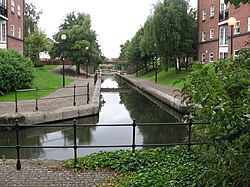
Defining Inland and Maritime Waterways
While most maritime routes are in open water, some seaports are located inland. The routes leading to these ports are termed maritime waterways (such as the Seine Maritime or the Seeschiffahrtsstraße Elbe), as they accommodate larger seagoing vessels.
In contrast, inland waterways consist of navigable rivers and canals designed specifically for inland water craft. These are significantly smaller in dimension than maritime routes and are tailored for regional transport.
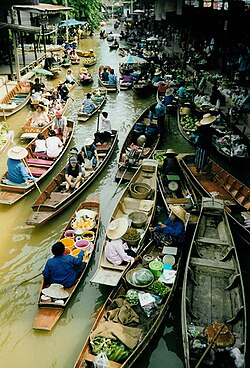
Criteria for Navigability
For a body of water to be considered navigable, it must meet several technical requirements to ensure the safe passage of vessels:
- Depth: It must be deep enough to accommodate the design draft (the vertical distance between the waterline and the bottom of the hull) of the intended vessels.
- Width: It must be wide enough to allow the passage of vessels based on their beam (the widest part of the ship).
- Obstacle Management: It must be free of rapids and waterfalls, or provide engineering solutions to bypass them, such as canal locks (devices used for raising and lowering boats between water levels) or boat lifts.
- Current: The water flow must be mild enough for vessels to make headway upstream without excessive difficulty.
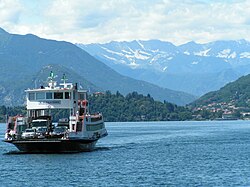
- Wave Height: On lakes, waves must remain within the design limits of the vessel class.
The Evolution and Classification of Waterways
Waterways have been central to human civilization since prehistoric times. One of the most significant engineering feats in history is the Grand Canal in China, a UNESCO World Heritage Site and the oldest known waterway system in the world.
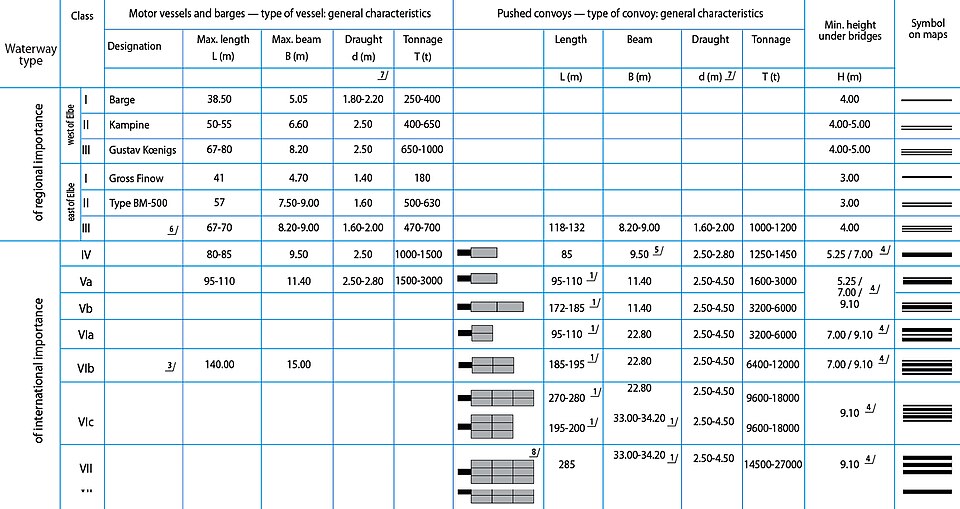
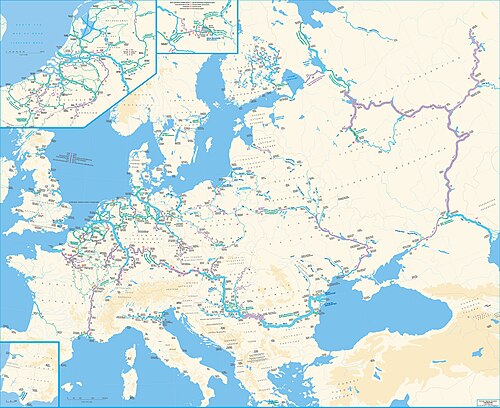
To manage the diversity of water routes, the European Conference of Ministers of Transport established a classification system in 1953. This system, later expanded to include push-towing developments, categorizes waterways into different classes (I through VII). This standardization is managed by the UN Economic Commission for Europe (UNECE) to help organize transport across the continent's varied geography.
Future Goals and Sustainability
In June 2021, the European Commission introduced a 35-point action plan to revitalize inland waterway transport. Aligned with the European Green Deal and the Sustainable and Smart Mobility Strategy, the plan aims to shift more freight from roads to rivers and canals.
The specific targets include:
- Increasing inland canal and short-sea shipping by 25% by 2030.
- Increasing this figure to 50% by 2050.
- Achieving a full transition to zero-emission barges by 2050.
Key Facts
- Grand Canal (China): The oldest and one of the largest engineering waterway projects globally.
- European Targets: A goal to increase inland shipping by 50% by 2050 to reduce emissions.
- Classification: European waterways are categorized from Class I to VII by the UNECE.
- Navigability: Depends on depth (draft), width (beam), current speed, and the absence of obstacles.
| Waterway Type | Primary Characteristics | Examples |
|---|---|---|
| Maritime Shipping Routes | Cross oceans/seas; minimal engineering except for channels. | Open ocean routes, Ship canals |
| Maritime Waterways | Inland routes that accommodate seagoing ships. | Seine Maritime, Loire Maritime |
| Inland Waterways | Rivers and canals for smaller inland craft. | European Class I-VII network |
| Major Global Waterways | Critical strategic transit points. | Suez Canal, Panama Canal, St. Lawrence Seaway |
Frequently Asked Questions
What is the difference between a channel and a ship canal?
A channel is typically a dredged path in the sea that provides enough depth for deep-sea shipping to approach a port. A ship canal is an engineered waterway designed to provide a shortcut across an isthmus.
What makes a waterway "navigable"?
A waterway is navigable if it has sufficient depth for a vessel's draft, sufficient width for its beam, manageable currents, acceptable wave heights, and a way to bypass obstacles like waterfalls via locks or lifts.
What is the purpose of the European waterway classification?
The classification (Classes I to VII) provides a uniform standard to describe the characteristics of various waterways across Europe, accounting for differences in size and the ability to support push-towing.
How does the European Green Deal affect waterways?
The European Green Deal seeks to reduce emissions by moving more goods via inland waterways and short-sea shipping, with a target of 50% growth by 2050 and a total shift to zero-emission barges.