Water Hyacinth: From Invasive Aquatic Pest to Sustainable Resource
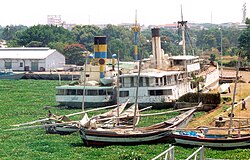
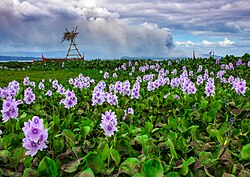
The water hyacinth (Pontederia crassipes) is a floating aquatic plant known for its striking appearance and its ability to rapidly dominate freshwater ecosystems. While it may appear beautiful, this species is one of the most prolific invasive plants in the world, capable of forming massive, dense mats that choke waterways, disrupt local economies, and alter aquatic habitats.
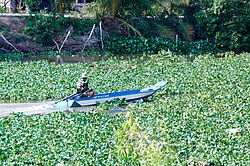
Under ideal conditions, water hyacinth populations can double in size every 6 to 18 days. This rapid growth allows it to clog rivers, lakes, and canals, creating significant challenges for navigation, fishing, and water management.
Key Facts
- Scientific Name: Pontederia crassipes (formerly Eichhornia crassipes).
- Growth Rate: Can double its population size every 6–18 days under ideal conditions.
- Temperature Preference: Thrives in 25–30 °C (77–86 °F) environments.
- Primary Threats: Frost and high salinity (above 15% of seawater) can kill the plant.
- Management Methods: Includes chemical herbicides, physical harvesting, and biological control.
Biological Profile and Habitat
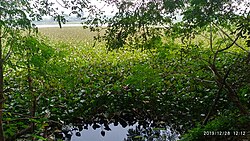
The water hyacinth is a monocot belonging to the family Pontederiaceae. It is characterized by its inflated petioles (leaf stalks), which provide the buoyancy necessary for its floating lifestyle. To survive, the plant requires specific environmental conditions.
Temperature and Salinity Tolerance
The plant's growth is highly dependent on water temperature. While its minimum growth temperature is 12 °C (54 °F), it reaches its optimum growth between 25–30 °C (77–86 °F). It cannot tolerate water temperatures exceeding 34 °C (93 °F), and frost will kill the leaves. Furthermore, the plant is sensitive to salt; in brackish water, it exhibits epinasty (downward bending of leaves) and chlorosis (yellowing due to lack of chlorophyll) before eventually dying.
Scientific Classification
| Rank | Classification |
|---|---|
| Kingdom | Plantae |
| Clade | Tracheophytes (Vascular plants) |
| Clade | Angiosperms (Flowering plants) |
| Order | Commelinales |
| Family | Pontederiaceae |
| Genus | Pontederia |
| Species | P. crassipes |
Global Spread and Invasive History
The history of the water hyacinth's spread is a mix of intentional cultivation and accidental introduction. In the United States, the plant was featured in plant catalogs as early as 1864 and was offered in various states by 1895. It was introduced to Florida in 1890, where it quickly accumulated massive biomass, clogging the St. Johns River.
In Africa, the plant may have been introduced to Egypt during the era of Muhammad Ali in the late 18th or early 19th century, though it was not recognized as a major invasive threat until 1879. Today, it remains a significant ecological concern across various continents, including Asia and South America.
Methods of Control
Managing water hyacinth infestations requires a multi-faceted approach, as no single method is a universal solution.
Chemical Control
Herbicides such as 2,4-D, glyphosate, and diquat are commonly used. When 2,4-D is applied to the leaves, it inhibits the growth of new tissue and triggers cellular apoptosis (programmed cell death). In regions like Louisiana, tens of thousands of acres of aquatic weeds are treated annually using these chemical methods.
Physical and Biological Control
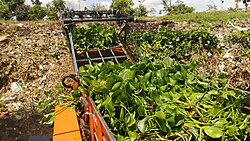
Physical control involves the mechanical removal of the plants. Specialized aquatic weed harvesters can collect the plants via conveyor belts and unload them on the shore.
Potential Benefits and Uses
Despite its reputation as a pest, researchers are exploring ways to turn this invasive biomass into a valuable resource. This process of turning a problem into a solution involves several emerging fields:
- Bioenergy: The plant can be used to produce biogas, with reports suggesting significant yields per kilogram of dry weight.
- Phytoremediation: This is the use of plants to clean up contaminated water. Water hyacinth is effective at removing heavy metals (such as arsenic, cadmium, and lead) and other pollutants from wastewater.
- Agriculture and Industry: The biomass can be used for composting, making paper, weaving products, and even developing bioplastics.
Frequently Asked Questions
How fast does water hyacinth grow?
Under ideal environmental conditions, water hyacinth populations can double in size every 6 to 18 days.
Can water hyacinth survive in salt water?
No. The plant does not tolerate salinity levels greater than 15% of seawater. In brackish water, the plant will suffer from chlorosis and eventually die.
What is phytoremediation?
Phytoremediation is a process where plants are used to remove, transfer, or stabilize contaminants in soil or water. Water hyacinth is particularly noted for its ability to absorb heavy metals and nutrients from polluted water.
How is water hyacinth controlled chemically?
Common herbicides like 2,4-D, glyphosate, and diquat are sprayed directly onto the leaves to alter the plant's physiology and induce death.
Can water hyacinth be used for energy?
Yes, the plant has potential as a source of bioenergy, specifically through the production of biogas during decomposition.