Water Conservation: Social, Industrial, and Agricultural Solutions
As global demand for fresh water continues to outpace supply, implementing comprehensive conservation strategies has become a necessity. With over 40% of the world's population living in regions where water demand exceeds availability, the challenge is compounded by population growth and climate change. Addressing this crisis requires a multi-faceted approach, combining social behavioral changes, technological innovation in homes and businesses, and a complete overhaul of agricultural irrigation practices.
Key Facts
- Agricultural irrigation accounts for 70% of global fresh water use.
- Water metering alone can reduce water consumption by 20% to 40%.
- Drip irrigation can save up to 30,000 gallons of water per year compared to traditional spray systems.
- Industrial water use varies significantly by economy, accounting for roughly 59% of usage in high-income countries compared to 8% in low-income countries.
- Modern shower heads can reduce flow from 5-10 gallons per minute to just 2.5 gallons per minute.
Social and Residential Solutions
Water conservation programs are typically launched at the local level by regional governments or municipal utilities. These initiatives often focus on public outreach and financial incentives. One common strategy is the implementation of tiered water rates, where the cost per unit of water increases as consumption rises, discouraging waste.
In arid climates, cities frequently promote xeriscaping—a landscaping method that uses native, drought-tolerant plants to minimize the need for supplemental watering. Because residential use constitutes the majority of urban outdoor water consumption in regions like California, outreach to households is critical.
The Role of Water Metering
Universal water metering is a fundamental goal for conservationists. While adoption varies—with some estimates suggesting fewer than 30% of UK households are metered—the impact is significant. Beyond providing a financial incentive to save, meters help utilities identify and localize leaks. Recently, smart water meters have emerged as a powerful tool; a study in Valencia, Spain, demonstrated that providing consumers with real-time feedback and physical rewards for savings significantly increased conservation rates.
Home Technology and Behavioral Changes
While many believe that changing behavior (such as taking shorter showers) is the most effective path, research from US household logging studies suggests that retrofitting fixtures—such as replacing old toilets and washers—is more efficient. Modern innovations include:
- Dual-flush toilets: Offering full and half-flush options to reduce waste.
- Water recycling showers: Semi-closed systems using pumps and filters to reuse both water and heat, as seen in the VIRTUe LINQ house.
- Greywater cycling: Using water in stages (e.g., using shower water for toilet flushing), a method common in Earthships.
- Low-flow fixtures: Faucet aerators and energy-efficient shower heads.
Commercial and Industrial Applications
Businesses can adopt many of the same technologies used in homes, such as low-flush toilets and rainwater harvesting. However, specific commercial needs require specialized tools like waterless urinals, waterless car washes, and water-saving steam sterilizers for healthcare facilities.
Industrial sectors, particularly in high-income countries, represent a massive opportunity for savings. Experts emphasize that while adding efficient hardware is helpful, the maintenance and inspection of existing systems are the primary drivers of long-term success. Companies are encouraged to establish water conservation plans with clear benchmarks for employees.
One highly effective industrial tool is the rain sensor. These devices detect precipitation and automatically pause irrigation schedules, resuming only after the rain has stopped to prevent unnecessary water loss.
Agricultural Water Management
Agriculture is the largest consumer of fresh water. To understand its impact, researchers distinguish between blue water (liquid water above and below ground) and green water (water used and evaporated by rainfed agriculture). While both are renewable, only blue water is typically assessed in management plans.
Irrigation Methods and Efficiency
The goal of efficient irrigation is to maximize crop production while minimizing losses from runoff, subsurface drainage, and evaporation. There are three primary methods of delivery:
- Flood Irrigation: The oldest method, often resulting in uneven distribution.
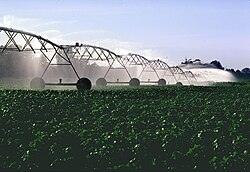
- Overhead Irrigation: Utilizing center-pivot or lateral-moving sprinklers for more controlled distribution.
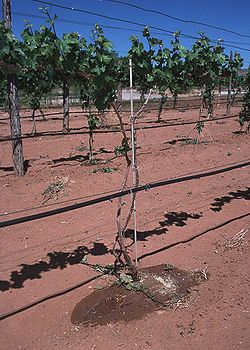
- Drip Irrigation: The most efficient method, delivering water directly to the roots. Although more expensive, it is becoming more accessible for home gardeners.
Optimizing Existing Systems
Since replacing entire systems is costly, many farmers focus on maximizing current efficiency. This includes chiseling compacted soils, creating furrow dikes to stop runoff, and using soil moisture sensors. Additionally, the 2011 UNEP Green Economy Report highlights that increasing soil organic matter through mulching and green manures improves the soil's water-holding capacity. In China, the use of plastic mulch—thin sheets with holes for plants—has been used to reduce soil moisture evaporation.
Water Reuse and Treatment
When supply cannot meet demand, water reuse becomes essential. This involves treating wastewater to ensure it is safe for drinking or irrigating food crops. Several technologies are employed to achieve this:
| Method | Primary Use/Function | Key Limitation/Challenge |
|---|---|---|
| Seawater Desalination | Creating fresh water from oceans | High energy consumption |
| Sand Filtration | Removing pathogens from water | Ineffective against viruses; requires large area |
| Wastewater Recycling | Irrigation and potable reuse | Requires strict pathogenic virus reduction |
The removal of pathogens is the highest priority in recycling. While sand filtration is effective against bacteria and protozoa, further research is required to develop more accurate methods for assessing and removing pathogenic viruses to ensure public safety.
Frequently Asked Questions
What is the most effective way to save water at home?
While behavioral changes like shorter showers help, studies indicate that the most efficient method is replacing old appliances with water-saving technology, such as retrofitting washers and installing low-flush toilets.
How does water metering reduce consumption?
Metering reduces use by increasing consumer awareness and providing a direct financial incentive to avoid waste. According to the US EPA, metering alone can lower consumption by 20% to 40%.
What is the difference between blue and green water in agriculture?
Blue water refers to the liquid water found in rivers, lakes, and aquifers (above and below ground), whereas green water is the moisture from precipitation that is used and evaporated by rainfed crops.
Why is drip irrigation considered superior to flood irrigation?
Drip irrigation delivers water directly to the plant roots, which minimizes losses from evaporation and runoff. It can save up to 30,000 gallons of water per year compared to systems that spray water in all directions.
What are the challenges associated with seawater desalination?
The primary challenge is that desalinating seawater requires significantly more energy than treating fresh water, leading to ongoing research into less energy-intensive methods.