Dual Flush Toilets: How This Water-Saving Technology Works
In the quest for sustainable living, small changes in household technology can lead to massive environmental benefits. One of the most impactful innovations in modern sanitation is the dual flush toilet. Unlike traditional single-flush models, this system allows users to choose the amount of water required for each flush, significantly reducing unnecessary water consumption.
The core logic behind the design is simple: liquid waste requires much less water to clear than solid waste. By providing two distinct flush volumes, the dual flush mechanism ensures that water is used efficiently based on the specific needs of the moment.
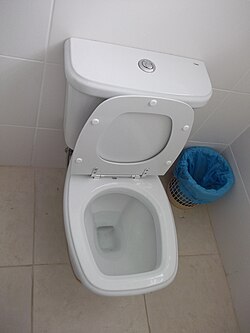
Key Facts
- Purpose: Reduces water usage by offering different flush volumes for liquid and solid waste.
- Mechanism: Relies on gravity rather than siphoning, allowing for a lower waterline and less water per flush.
- Global Adoption: Widely used in Australia, New Zealand, Singapore, Sweden, and Israel.
- Efficiency Standards: In the US, WaterSense-labeled toilets must average less than 4.8 litres (1.28 US gallons) per flush.
- Maintenance Note: While efficient, these mechanisms can be more prone to leaks than traditional siphons.
The Evolution of Dual Flush Technology
The concept of a dual-volume flush has a long history of development. The system was first introduced in 1960 by the Japanese manufacturer TOTO. Their early version featured two levers and a built-in hand-washer that reused its water for flushing, though it did not achieve commercial success at the time.
In 1976, American industrial designer Victor Papanek proposed the dual flush system in his influential book, Design for the Real World. However, the first practical, successful implementation arrived in 1980, designed by the Australian company Caroma. Their initial model utilized flush volumes of 11 and 5.5 litres. By 1994, a redesign further optimized efficiency, cutting usage down to just 6 and 3 litres.
How the Mechanism Functions
Dual flush toilets differ fundamentally from traditional siphon-flush toilets. While siphon toilets use a vacuum effect to pull water through the bowl, dual flush models rely on gravity. This reliance on gravity means the waterline in the bowl is considerably lower, which contributes to the overall reduction in water usage.
Common Flush Types
There are several ways the dual flush function is delivered to the user:
- Push-Button: The most common method, featuring two buttons on the cistern. A smaller button delivers a lesser amount of water (e.g., 3 litres), while a larger button delivers a greater amount (e.g., 6 litres). These models often feature a larger 10 cm trapway to ensure the bowl clears efficiently.
- Lever: Some models use a siphon valve operated by a lever. A full flush (≤ 6L) is achieved by a standard press, while a half-flush (≤ 3L) is achieved by holding the lever down or releasing it immediately.
- Tipping Bucket: In these cisterns, a dual flush can be achieved by rotating a lever halfway, typically providing a 2.5/5 litre flush.
Advantages and Environmental Impact
The primary benefit of dual flush technology is the reduction of running costs and environmental footprint. In Australia, the technology was heavily promoted through the "Target 155" campaign. Innovations by companies like Caroma have pushed efficiency to high levels, achieving WELS (Water Efficiency Labelling and Standards) ratings of 4 and 5 stars.
Because of these benefits, many governments offer incentives. For example, in parts of Australia—including Victoria, New South Wales, the ACT, and South Australia—owners may qualify for rebates when replacing old toilets with high-efficiency dual flush models.
Considerations and Disadvantages
Despite the benefits, there are trade-offs to consider. The initial purchase price of a dual flush toilet is typically higher than a standard model, and installation can add to the cost. However, for existing toilets, the flushing mechanism can often be retrofitted for approximately US$30.
In the United States, the Energy Policy Act (effective 1994) mandates that toilets use no more than 6 litres (1.6 US gallons) per flush. To earn the WaterSense label from the EPA, a toilet must be even more efficient, averaging below 4.8 litres (1.28 US gallons) across two reduced flushes and one full flush. This means a toilet with a 6.1L full flush must have a reduced flush of 4.2L or less to meet the standard.
One potential drawback is maintenance. Dual flush mechanisms are more complex and may be more likely to develop leaks than traditional siphons. In some instances, such as reported by Thames Water in the UK, leaks and user confusion over which button to press can potentially offset some of the water savings.
Summary of Dual Flush Specifications
| Standard/Region | Full Flush Volume | Reduced Flush Volume | Notes |
|---|---|---|---|
| Early Caroma Design | 11 Litres | 5.5 Litres | First practical implementation |
| 1994 Redesign | 6 Litres | 3 Litres | Significant efficiency jump |
| US EPA WaterSense | Up to 6.1L (1.6 gal) | Must be ≤ 4.2L (1.12 gal) | Averages < 4.8L (1.28 gal) |
| Common US Combo | 6.1 Litres | 4.2 Litres | Meets WaterSense standards |
Frequently Asked Questions
How do I know which button to press?
Generally, the smaller button is intended for liquid waste to conserve water, while the larger button is used for solid waste to ensure a thorough flush.
Can I convert my old toilet to a dual flush?
Yes, in many cases, it is possible to replace the internal flushing mechanism of an existing installation through retrofitting, which can cost around US$30.
What is the WaterSense label?
The WaterSense label is a US Environmental Protection Agency (EPA) program that identifies fixtures that are at least 20% more efficient than the federal mandate.
Why are dual flush toilets more expensive?
The dual flush mechanism is more complex than traditional single-flush or siphon-flush mechanisms, which results in a higher initial purchase price.
Do all dual flush toilets save water?
Not necessarily. To meet high-efficiency standards like WaterSense, the average of two reduced flushes and one full flush must meet specific low-volume criteria. Some models may not meet these high-efficiency thresholds.