Volcanic Islands: Origins, Habitability, and Natural Hazards
A volcanic island is an island formed through volcanic activity. In geological terms, these are often referred to as high islands to distinguish them from low islands. While low islands are created by sedimentation or the uplifting of coral reefs—which frequently form atop sunken volcanoes—high islands are defined by their volcanic origins and typically greater elevation.
These landmasses vary significantly in scale. Some volcanic islands are mere islets or rocks, rising no more than 1 metre (3 ft 3 in) above sea level. Conversely, some low islands, such as Nauru, Niue, Banaba, Henderson Island, and Makatea, can rise over 50 metres (160 ft) above sea level.
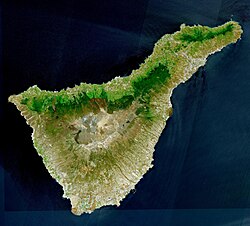
The Geological Origin of Volcanic Islands
Volcanic islands typically emerge in specific geological settings, most commonly rising above a hotspot (a stationary plume of magma) or a subduction zone (where one tectonic plate is forced beneath another). Because of these origins, high and low islands are often found in close proximity. This is particularly evident in the South Pacific Ocean, where low islands frequently exist as fringing reefs surrounding larger volcanic islands.
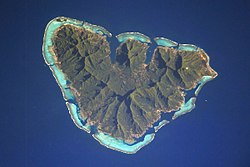
Habitability and Landscape
Most volcanic islands range in size from 1 to 104 square kilometres (0.4 to 40 sq mi). A critical factor in their habitability is the presence of fresh groundwater, which is common in larger volcanic islands but often absent on low islands. This makes volcanic islands generally more suitable for human settlement.
The topography of these islands is often dramatic, emerging from the deep ocean abyss with mountainous interiors and varying summit elevations. Many are covered in dense tropical forests, which often restrict human settlement to the coastal regions. On larger islands, rivers may be present; while these provide water, they also introduce flood hazards and transport sediment downstream, which shapes the coastline and contributes to erosion. Additionally, tall volcanic islands are frequently protected by barrier or fringing reefs, which create calm lagoons.
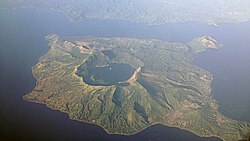
Key Facts
- Formation: Volcanic islands typically form over hotspots or subduction zones.
- Distinction: "High islands" are volcanic, whereas "low islands" result from sedimentation or coral reef uplifting.
- Habitability: Volcanic islands are more likely to be habitable due to the presence of fresh groundwater.
- Geography: Interiors are often mountainous and forested, pushing human populations toward the coasts.
- Protection: Many are surrounded by fringing or barrier reefs that form lagoons.
Natural Hazards and Risk Mitigation
Due to their unique geography, volcanic islands are susceptible to various natural disasters, which are expected to intensify with climate change. These hazards include:
- Volcanic eruptions and earthquakes
- Tsunamis and landslides
- Severe weather events, such as typhoons and hurricanes
To improve societal safety, researchers emphasize nature-based solutions. These strategies leverage natural ecosystems to reduce the impact of hazards. Examples include restoring mangroves and coral reefs to act as buffers against storm surges and tsunamis, and maintaining natural water catchments to mitigate the risk of flooding.
| Feature | Volcanic (High) Islands | Low Islands |
|---|---|---|
| Primary Origin | Volcanic activity (Hotspots/Subduction) | Sedimentation or Coral Reef uplifting |
| Fresh Water | Usually present (groundwater) | Often absent |
| Topography | Mountainous, rough interiors | Flat, low elevation |
| Habitability | Higher potential for settlement | Lower potential |
Frequently Asked Questions
What is the difference between a high island and a low island?
High islands are of volcanic origin and typically feature mountainous terrain and fresh groundwater. Low islands are formed from sedimentation or the uplifting of coral reefs and generally lack significant elevation and fresh water.
Where do volcanic islands usually form?
They normally form above geological hotspots or subduction zones, where magma can reach the ocean floor and build up over time.
Why is settlement often concentrated on the coasts of volcanic islands?
The interiors of volcanic islands are often characterized by rough, mountainous landscapes and dense tropical forests, making the coastal areas more practical for development.
What are nature-based solutions for island hazards?
Nature-based solutions involve using natural ecosystems to protect populations, such as restoring mangroves and coral reefs to block tsunamis and storm surges, or using natural catchments to prevent floods.
Are all volcanic islands large?
No. While some are substantial, others are classified as islets or rocks because they rise no more than 1 metre (3 ft 3 in) above sea level.