Understanding Viruses: Structure, Classification, and Impact
Viruses are among the most diverse and enigmatic entities on Earth. While often discussed in the context of disease, they are complex biological agents that play fundamental roles in evolution, ecology, and even modern biotechnology. From the microscopic bacteriophages that inhabit bacterial colonies to the large-scale pandemics that shape human history, viruses exist in nearly every environment imaginable.
The Origins of Viruses
Scientists have proposed three primary hypotheses to explain how viruses first emerged. The regressive hypothesis suggests that viruses were once small cells that gradually lost the genes necessary for independent life. The cellular origin hypothesis proposes that viruses evolved from genetic elements that escaped from larger cells. Finally, the co-evolution hypothesis suggests that viruses and their hosts have evolved together over vast periods of time.
Viral Structure and Genomes
At its most basic level, a virus consists of genetic material encased in a protective protein shell called a capsid. Depending on the species, this capsid can take various shapes, such as helical (rod-like), icosahedral (a geometric shape with 20 faces), prolate (elongated icosahedral), or complex structures. Some viruses are also enveloped, meaning they are wrapped in a lipid membrane stolen from a host cell.
The genetic material, or genome, is where viruses show their greatest diversity. Unlike most life forms, viral genomes can consist of either DNA or RNA. These genomes can be linear or circular, and they may be single-stranded (ss) or double-stranded (ds). Furthermore, RNA viruses can be categorized by their "sense": positive sense (+), which can be directly translated into proteins, or negative sense (−), which must first be converted into a complementary strand.
As of January 2021, the NCBI virus genome database has recorded more than 193,000 complete genome sequences. This vast library reflects the millions of different types of viruses that exist, with 16,215 species currently defined.
The Viral Life Cycle
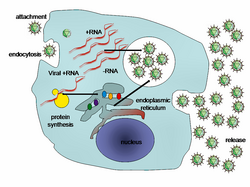
While the specific methods vary, most viruses follow a general six-stage replication cycle to propagate. This process involves attaching to a host cell, injecting or entering the cell, replicating the viral genome, synthesizing viral proteins, assembling new virus particles, and finally, releasing those particles to infect new cells.
Classifying the Virosphere
Because of their immense variety, scientists use several systems to categorize viruses. The International Committee on Taxonomy of Viruses (ICTV) uses a hierarchical system similar to biological taxonomy, moving from broad Realms (such as Riboviria) down through Kingdoms, Phyla, Classes, Orders, and Families, eventually reaching the specific Genus and Species.
The Baltimore Classification
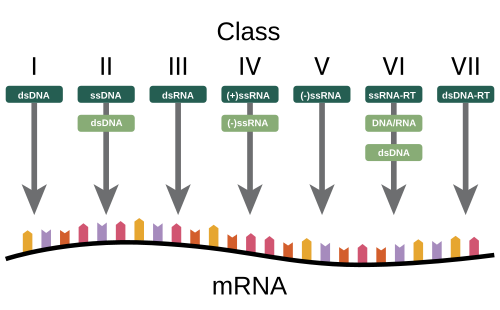
A widely used scientific method for classification is the Baltimore Classification. This system organizes viruses based on their method of mRNA synthesis (the process of creating messenger RNA to produce proteins). This system divides viruses into seven distinct groups, ranging from double-stranded DNA viruses to retroviruses that use an RNA-to-DNA intermediate.
Evolution and Mutation
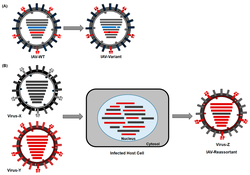
Viruses are highly prone to change through genetic mutation and recombination. One key mechanism is antigenic drift, where small, gradual mutations accumulate in the genome, leading to new variants. A more dramatic process is antigenic shift, where two different viruses infect the same cell and swap genetic segments, potentially creating an entirely new subtype.
Host Range and Ecological Roles
Viruses are not limited to humans; they infect every branch of life. This includes animals, plants, archaea, and bacteria. In aquatic ecosystems, viruses are major players, influencing the flow of energy and nutrients through the food chain.
Plant and Bacterial Viruses
In the plant kingdom, viruses can cause significant agricultural issues, such as the mild mottle virus found in peppers.

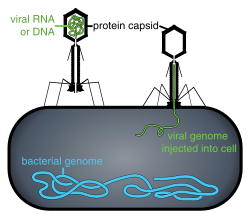
One of the most well-studied groups of viruses are bacteriophages—viruses that specifically infect and replicate within bacteria. These can be seen attaching themselves to bacterial cell walls to inject their genetic material.

Human Disease and Public Health
In humans, viral infections can range from mild illnesses to severe, life-threatening diseases. Viruses are responsible for various types of infections and can even contribute to the development of certain cancers.
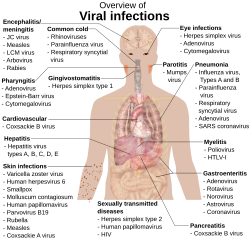
Major outbreaks, such as those caused by the Ebola or Marburg viruses, can lead to epidemics and pandemics. Historical examples, such as the 1918 influenza virus, demonstrate the profound impact viruses can have on global populations.
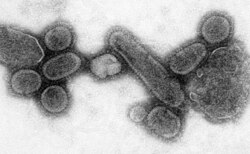
Modern science continues to study highly infectious strains, such as the H5N1 influenza virus, to better understand and prepare for potential threats.

Prevention and Treatment
Humanity has developed several ways to defend against viral infections. The immune system provides a natural defense, often using antibodies to coat viruses and prevent them from attaching to and infecting cells.
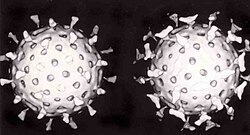
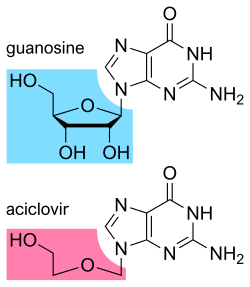
Beyond natural immunity, medical science utilizes vaccines to prime the immune system and antiviral drugs to interfere with the viral replication cycle. For example, drugs like acyclovir are used to treat specific viral infections by targeting their unique biological processes.
Summary of Viral Classification
| Class | Genome Type | Example Viruses |
|---|---|---|
| I | dsDNA (double-stranded DNA) | Adenoviruses, Herpesviruses |
| II | ssDNA (single-stranded DNA) | Parvoviruses |
| III | dsRNA (double-stranded RNA) | Reoviruses |
| IV | (+)ssRNA (positive-sense single-stranded RNA) | Coronaviruses, Picornaviruses |
| V | (−)ssRNA (negative-sense single-stranded RNA) | Orthomyxoviruses, Rhabdoviruses |
| VI | ssRNA-RT (RNA with DNA intermediate) | Retroviruses |
| VII | dsDNA-RT (DNA with RNA intermediate) | Hepadnaviruses |
Key Facts
- There are over 16,215 defined species of viruses.
- As of 2021, more than 193,000 complete genome sequences have been recorded.
- Viruses can have DNA or RNA genomes, which can be single-stranded or double-stranded.
- The Baltimore Classification categorizes viruses based on how they produce mRNA.
- Antigenic drift and antigenic shift are two primary ways viruses evolve.
Frequently Asked Questions
What are the three main hypotheses regarding the origin of viruses?
The three hypotheses are the regressive hypothesis (viruses evolved from small cells), the cellular origin hypothesis (viruses evolved from genetic elements escaping cells), and the co-evolution hypothesis (viruses and hosts evolved together).
How does the Baltimore Classification work?
The Baltimore Classification system organizes viruses into seven groups based on their method of mRNA synthesis, which is determined by the type of nucleic acid they possess (DNA or RNA) and their strandedness.
What is the difference between antigenic drift and antigenic shift?
Antigenic drift refers to the gradual accumulation of small mutations in a virus's genome, while antigenic shift is a sudden, major change caused by the reassortment of genetic segments between different viruses.
Can viruses infect organisms other than humans?
Yes, viruses infect a vast range of hosts, including animals, plants, bacteria (via bacteriophages), archaea, and various organisms in aquatic ecosystems.
What is a capsid?
A capsid is the protective protein shell that surrounds and encases a virus's genetic material.