Vespidae: The Diverse World of Social and Solitary Wasps
The family Vespidae represents one of the most diverse and widespread groups of insects on Earth. Comprising nearly 5,000 species, these wasps are found globally and exhibit a fascinating range of behaviors, from solitary hunters to highly organized eusocial societies. Eusociality refers to a complex social structure characterized by cooperative brood care, a division of labor, and reproductive castes.
From the common yellowjacket to the specialized potter wasp, members of this family play critical roles in our ecosystems. While some species are viewed as pests, many serve as vital pollinators or natural predators that help control insect populations.
Key Facts
- Species Count: Nearly 5,000 recognized species.
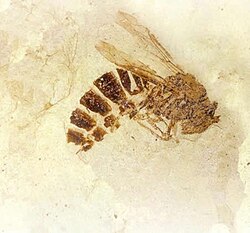
- Temporal Range: Fossil records date back to the Aptian age of the Early Cretaceous.
- Social Structures: Includes eusocial, facultatively eusocial, subsocial, and solitary species.
- Dietary Roles: Acts as both effective pollinators and predators of pest insects.
- Nest Construction: Uses materials ranging from mud to paper made from chewed plant fibers.
Classification and Subfamilies
The Vespidae belong to the order Hymenoptera and the superfamily Vespoidea. The family is divided into several distinct subfamilies, each with unique social behaviors and physical characteristics.
Eusocial Subfamilies
The subfamilies Polistinae (paper wasps) and Vespinae (yellowjackets and hornets) are composed entirely of eusocial species. In these colonies, a queen leads a group of female workers who possess varying degrees of sterility. In temperate climates, these colonies are typically annual, with new queens and males (drones) produced in late summer to hibernate through the winter.
Solitary and Facultatively Eusocial Subfamilies
Most other subfamilies are primarily solitary, meaning individuals live and hunt alone. These include:
- Eumeninae: Commonly known as potter wasps.
- Masarinae: Known as pollen wasps.
- Stenogastrinae: Known as hover wasps, which are facultatively eusocial (meaning they can live either socially or solitarily depending on the circumstances).
- Other subfamilies: Euparagiinae, Gayellinae, and Zethinae.
Life Cycles and Nutritional Strategies
The way Vespidae interact with their food is highly specialized. In the eusocial Polistinae and Vespinae subfamilies, adults often do not consume prey directly. Instead, they catch prey and premasticate it (chew it into a soft mass) to feed to their larvae. In a remarkable display of cooperation, the larvae then produce a clear, amino acid-rich liquid that the adults consume, providing essential nutrition for the colony.
Nest building is another area of remarkable diversity. While many species utilize mud to construct their homes, Polistinae and Vespinae are famous for creating "paper" nests. They achieve this by gathering plant fibers and chewing them into a pulp, which hardens into a durable material.
| Subfamily | Common Name | Social Structure |
|---|---|---|
| Polistinae | Paper wasps | Eusocial |
| Vespinae | Yellowjackets, hornets | Eusocial |
| Stenogastrinae | Hover wasps | Facultatively eusocial |
| Eumeninae | Potter wasps | Primarily solitary |
| Masarinae | Pollen wasps | Primarily solitary |
Evolutionary History
The evolutionary lineage of Vespidae is ancient. Fossil evidence, including specimens preserved in Cretaceous amber, shows that these wasps have been present since the Aptian age of the Early Cretaceous. This long history has allowed them to diversify into the nearly 5,000 species we recognize today, occupying almost every ecological niche available to them.
Frequently Asked Questions
What is the difference between a social and a solitary wasp?
Social wasps live in organized colonies with a queen and workers that cooperate to raise offspring. Solitary wasps live and hunt independently, typically building their own nests without a communal workforce.
How do paper wasps make their nests?
Paper wasps (Polistinae) collect plant fibers and chew them with saliva to create a pulp. This material is then used to construct paper-like structures for their nests.
Are all wasps in the Vespidae family dangerous?
While some species, such as certain yellowjackets, can be invasive pests or aggressive, many Vespidae are beneficial to the environment as pollinators and predators of other insects.
How do social wasp colonies survive the winter?
In temperate regions, most colonies die off when winter begins. However, new queens and males are produced in late summer; after mating, the queens hibernate in sheltered locations like cracks or crevices to emerge in the spring.
What do wasp larvae eat?
In many social species, adults provide premasticated prey to the larvae. In return, the larvae secrete a liquid rich in amino acids that serves as a primary food source for the adult wasps.