Bumblebees: Biology, Ecology, and Conservation of the Genus Bombus
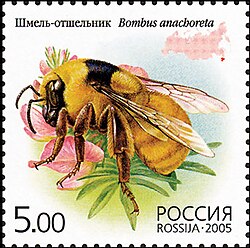
Bumblebees, belonging to the genus Bombus, are among the most recognizable and vital pollinators in the natural world. These fuzzy, industrious insects are members of the family Apidae and the order Hymenoptera. With more than 250 species and subspecies distributed globally, they play a critical role in maintaining biodiversity and supporting agricultural productivity.
From their ancient origins in the Eocene epoch to their complex social structures, bumblebees exhibit remarkable physiological adaptations that allow them to thrive in diverse environments, including high-altitude alpine regions and cold northern climates.
Key Facts
![Beatrix Potter's 1910 story The Tale of Mrs. Tittlemouse features a "bumble bee" called Babbity Bumble.[1]](/images/5a/58/5a58cd714d5269869817e78d5061d44bff519c978fdfa255eeafadae3aea8ee6.jpg)
- Diversity: Over 250 species and subspecies exist worldwide.
- Temporal Range: They have existed from the Eocene epoch to the present.
- Social Structure: Most are social insects, though some species act as parasites.
- Pollination: They are essential pollinators for both wild plants and commercial crops.
- Flight: Despite common myths, bumblebees are highly efficient flyers capable of reaching extreme altitudes.
Evolution and Taxonomy

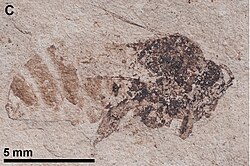
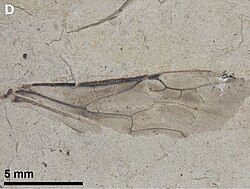
The genus Bombus has a fossil record extending back to the Eocene. Paleontologists have identified early ancestors such as Calyptapis florissantensis from the Florissant Formation, helping scientists trace the evolutionary trajectory of these bees.
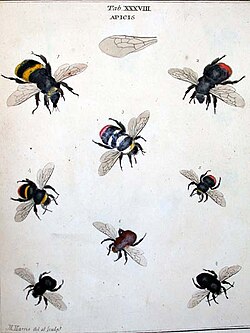
Taxonomically, bumblebees are classified under the tribe Bombini. Their diversity is reflected in a wide array of subgenera, each adapted to specific ecological niches. Over time, they have spread across the globe, with some species being introduced to new regions, such as New Zealand and Tasmania.
Physiology and Adaptations
Bumblebees are engineered for efficiency in challenging climates. One of their most significant adaptations is temperature control. Unlike many insects, bumblebees can regulate their internal body heat, allowing them to remain active at lower temperatures than honeybees.
Flight and Energy
A persistent misconception suggests that scientists once proved bumblebees were incapable of flight due to their body shape. In reality, bumblebees are powerful flyers. They utilize asynchronous flight muscles to maintain the rapid wingbeats necessary to lift their heavy bodies.
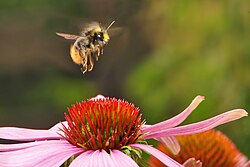
Their flight capabilities are so advanced that some alpine species can fly at altitudes surpassing the peak of Mt. Everest.
Coloration and Communication
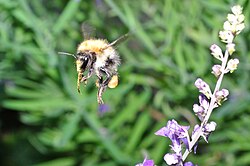
The bright yellow and black patterns of bumblebees serve as aposematic coloration—a biological warning signal to predators that the insect possesses a sting. They also communicate and learn through social interactions and the use of scent marks to coordinate foraging efforts.
Biology and Life Cycle
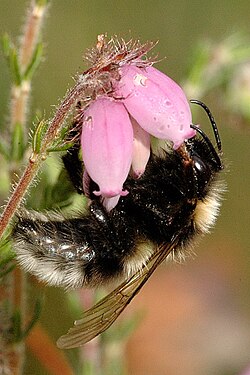
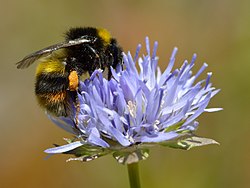
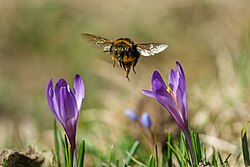
The life of a bumblebee is centered around the colony and the collection of resources. They feed on nectar for energy and pollen for protein, which they carry in specialized structures called pollen baskets on their hind legs.
Nesting and Wax Production
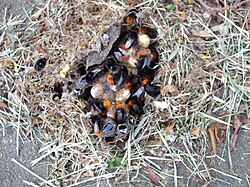
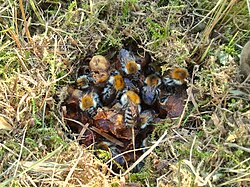
Bumblebees construct nests often located underground or in thick grass. They produce wax to create honey pots for food storage and cells for larvae. These nests are complex structures that protect the queen and her workers from the elements.
The Life Cycle
The colony typically begins with a single queen. As the season progresses, she produces workers who take over the foraging and nursing duties. The cycle concludes with the production of new queens and drones (males) before the colony collapses in winter.
![Bumblebee life-cycle showing adults and larvae in nest of B. terrestris. Engraved in 1840 by William Home Lizars after drawing probably by James Hope Stewart.[54]](/images/39/92/3992492dd68aaf0131c7787fc6296dd777285fa5ef0785b4098ab1ee6237e3cd.jpg)
Specialized Behaviors and Species
Not all bumblebees contribute to the construction of a nest. Cuckoo bumblebees are social parasites. They do not produce wax or workers; instead, they infiltrate the nests of other bumblebee species, often mimicking the appearance of their hosts to avoid detection.
Foraging Techniques
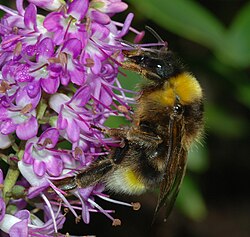
Bumblebees are highly intelligent foragers. They can detect electric fields in flowers to determine if a bloom has recently been visited. They also use their long tongues to reach nectar in deep-throated flowers, a process that makes them superior pollinators for certain plant species.
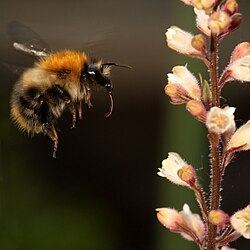
Conservation and Human Impact
Bumblebees are increasingly threatened by human activity. Population declines have been linked to habitat loss, climate change, and the use of neonicotinoids—a class of pesticides that impair brain function and reduce colony growth.
Conservation efforts include the creation of bumblebee sanctuaries and reintroduction programs. For example, the short-haired bumblebee (Bombus subterraneus) was successfully reintroduced to England from Sweden.
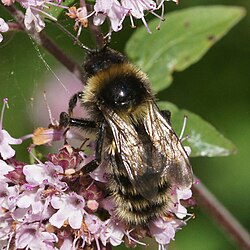
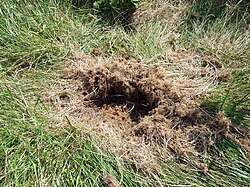
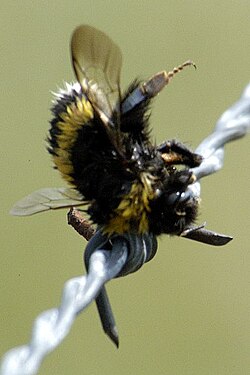
Predation also plays a role in their ecology; they are hunted by various animals, including badgers and shrikes.
Summary of Bumblebee Characteristics
| Feature | Description |
|---|---|
| Scientific Name | Bombus |
| Species Count | > 250 species and subspecies |
| Diet | Nectar and Pollen |
| Key Adaptation | Thermoregulation (Cold tolerance) |
| Threats | Neonicotinoids, habitat loss, pathogens |
Frequently Asked Questions
Do bumblebees sting multiple times?
Yes, unlike honeybees, bumblebees have barbless stingers, which allows them to sting multiple times without dying.
What is a cuckoo bumblebee?
A cuckoo bumblebee is a parasitic species that does not build its own nest but instead takes over the nest of another bumblebee species to raise its offspring.
Is it true that bumblebees cannot fly?
No, this is a widely believed falsehood. Bumblebees are highly capable flyers that use asynchronous flight muscles to stay airborne.
How do bumblebees help the environment?
They are essential pollinators. By moving pollen between flowers, they enable plants to reproduce, which supports the entire food chain and agricultural crop production.
What are pollen baskets?
Pollen baskets, or corbiculae, are specialized concave structures on the hind legs of bumblebees used to transport large quantities of pollen back to the nest.