Vertebrates: Evolution, Classification, and Diversity of the Backbone Animals
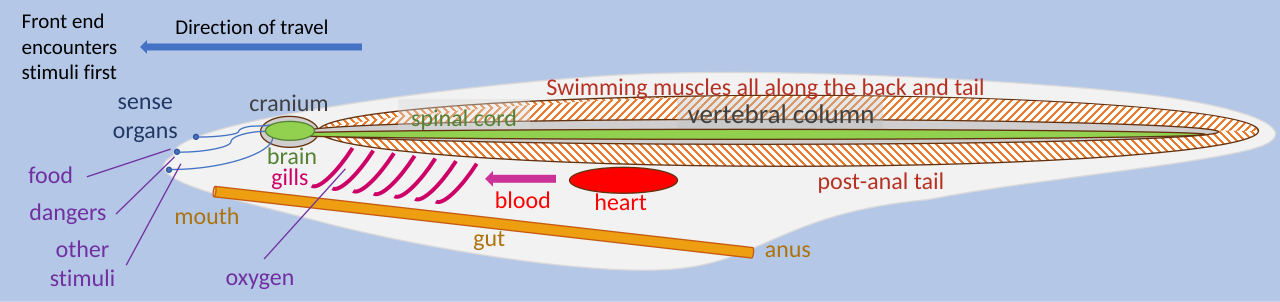
Vertebrates represent some of the most diverse and complex organisms on Earth. Defined primarily by the presence of a vertebral column (backbone), these animals range from the microscopic to the gargantuan. From the depths of the oceans to the highest mountain peaks, vertebrates have adapted to nearly every environment on the planet over hundreds of millions of years.
The scale of vertebrate life is staggering. For instance, the smallest known frog species, Brachycephalus pulex, possesses an adult snout-vent length of just 6.45 millimetres (0.254 in). At the opposite end of the spectrum is the blue whale, which can reach lengths of 33 metres (108 ft) and weigh up to 150 tonnes.
Key Facts
- Temporal Range: Vertebrates first appeared during the Cambrian Stage 3, approximately 518 million years ago.
- Defining Feature: The presence of a backbone or vertebral column.
- Diversity: There are over 66,000 described species across various classes.
- Classification: They belong to the phylum Chordata and the clade Olfactores.
- Conservation: Global vertebrate populations declined by 60% between 1970 and 2014.
The Evolutionary Journey
The history of vertebrates is a saga of adaptation and survival, beginning with the Cambrian explosion. Early ancestors, such as the Haikouichthys from 518 million years ago, laid the groundwork for the complex skeletal structures seen today.
![The Cambrian Haikouichthys, 518 mya[26]](/images/4d/f3/4df3d0841daee0e74182cb9e0fd96468778d9d8e550fcb41741da382e3b3d32d.jpg)
Throughout the Paleozoic era, vertebrates transitioned from jawless fish to jawed fish (Gnathostomata) and eventually moved onto land. The Devonian period saw the rise of labyrinthodonts like Acanthostega (c. 365 mya), which represented a critical bridge between aquatic life and the first tetrapods—four-limbed vertebrates.
![Acanthostega, a Devonian labyrinthodont, c. 365 mya[33]](/images/b4/8c/b48cb8191a2676b4227167c266e4f836b4082ea4c986e04dfd0480b1e95c69c6.jpg)
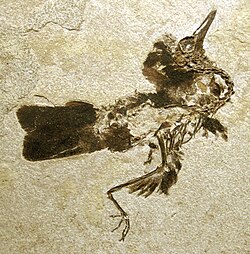
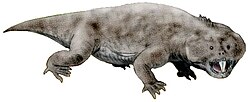
The Mesozoic era, often called the Age of Dinosaurs, saw the dominance of diapsid reptiles, such as Hyperodapedon. This era also witnessed the emergence of early birds, leading into the Cenozoic era, the Age of Mammals, where mammals diversified to fill ecological niches left vacant after mass extinction events.
Classification and Taxonomy
The classification of vertebrates has evolved significantly since Jean-Baptiste Lamarck first defined them as a distinct group in 1801. While early taxonomists grouped them into four simple classes (fish, reptiles, birds, and mammals), modern science uses a more nuanced approach based on phylogeny (evolutionary relationships).
Anamniotes vs. Amniotes
A primary division in vertebrate evolution is based on the amniotic membrane. Anamniotes, including jawless fish, cartilaginous fish, bony fish, and amphibians, lack this membrane and generally must reproduce in water. In contrast, amniotes (reptiles, birds, and mammals) possess an amniotic membrane, an adaptation that allowed them to reproduce entirely on land.
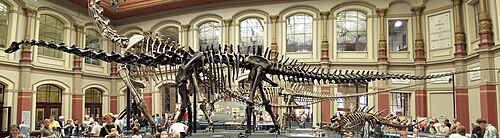
Major Taxonomic Groups
- Agnatha: Jawless fishes, such as hagfish (Myxini) and lampreys (Petromyzontida).
- Gnathostomata: Jawed vertebrates, which include:
- Chondrichthyes: Cartilaginous fishes (sharks and rays).
- Osteichthyes: Bony fishes, divided into ray-finned (Actinopterygii) and lobe-finned (Sarcopterygii) varieties.
- Tetrapoda: Four-limbed animals, including amphibians, synapsids (mammals), and sauropsids (reptiles and birds).
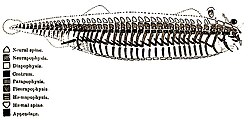
Vertebrate Diversity and Population Trends
The sheer variety of vertebrate life is captured in the number of described species across different groups. Bony fish (Actinopterygii) represent the largest group, while mammals and birds follow in terms of diversity.
| Category | Class/Group | Estimated Species |
|---|---|---|
| Anamniotes | Jawless Fish (Myxini & Hyperoartia) | 118 |
| Chondrichthyes | >1,100 | |
| Actinopterygii | >32,000 | |
| Amphibia | 7,302 | |
| Amniotes | Reptilia | 10,711 |
| Aves (Birds) | 10,425 | |
| Mammalia | 5,513 | |
| Total Described Species | 66,178 |
Despite this diversity, vertebrates face severe threats. The Living Planet Index reports a 60% decline in populations between 1970 and 2014, with freshwater species suffering an 83% drop. Experts warn that land-use change, overexploitation, climate change, pollution, and invasive species could trigger a sixth major extinction event.
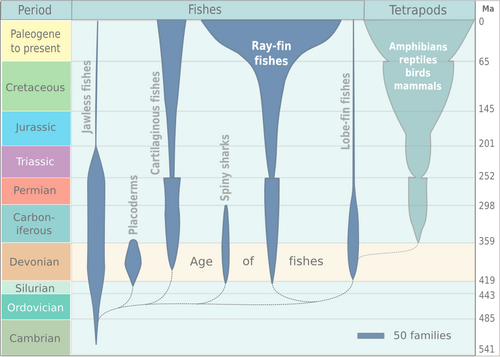
Frequently Asked Questions
What is the primary difference between an anamniote and an amniote?
The primary difference is the amniotic membrane. Amniotes have this membrane, which protects the embryo and allows them to lay eggs on land or retain the embryo internally. Anamniotes lack this membrane and typically require water for reproduction.
Who first defined vertebrates as a taxonomic group?
Jean-Baptiste Lamarck defined vertebrates as a taxonomic group in 1801, distinguishing them from invertebrates.
Which vertebrate group has the highest number of described species?
The ray-finned bony fishes (Actinopterygii) have the highest number of described species, with over 32,000.
What are the main causes of current vertebrate biodiversity loss?
The five main causes are land-use change, overexploitation of natural resources, climate change, pollution, and the introduction of invasive species.
What is the temporal range of vertebrates?
Vertebrates have existed from the Cambrian Stage 3, approximately 518 million years ago, to the present day.