Venezuela National Football Team: The Rise of La Vinotinto
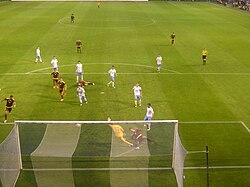
Known affectionately as La Vinotinto (The Red-Wine), the Venezuela national football team represents a unique journey within South American sports. While football is the global game, Venezuela has historically shared its athletic passion with baseball, a factor that long diverted talent away from the pitch. This cultural divide contributed to a period of struggle within CONMEBOL (the South American Football Confederation), making Venezuela the only team in the confederation yet to qualify for a FIFA World Cup.
However, the narrative has shifted. In recent decades, a surge in player development and fan support—mirrored by the growth of football in other non-traditional powerhouses—has propelled the team toward greater competitiveness. From early struggles to historic victories over giants like Brazil and Argentina, La Vinotinto is steadily carving its place in international football.
Key Facts
- Nickname: La Vinotinto (The Red-Wine).
- Governing Body: Federación Venezolana de Fútbol (FVF).
- All-Time Top Scorer: Salomón Rondón with 50 goals.
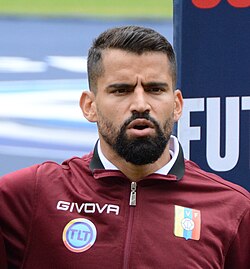
- Most Capped Player: Tomás Rincón with 143 appearances.
- Best Copa América Result: Fourth place (2011).
- Highest FIFA Ranking: 25th (November 2019).
Historical Evolution
The 20th Century and Early Struggles
Venezuela's early international history was marked by difficulty. The team played its first international match on February 12, 1938, losing 2–1 to Panama. For decades, World Cup qualification was a steep mountain to climb; the team often went through entire cycles without a single win. A rare bright spot occurred in the 1998 qualifiers when goalkeeper Rafael Dudamel scored a goal against Argentina.
Despite the lack of team trophies, individual talents like Luis Mendoza and Rafael Santana earned recognition, and the nation achieved a milestone by qualifying for the 1980 Summer Olympics.
The Era of Growth: Páez and Farías
The turn of the millennium saw a gradual improvement. Under coach Richard Páez, the team began to find its footing, eventually reaching the second round of the 2007 Copa América on home soil. This momentum accelerated under César Farías, who led the team to a historic 2–0 victory over Brazil in a 2008 friendly.
Farías also oversaw a significant leap in World Cup qualification during the 2010 cycle, where Venezuela finished eighth in the region with 22 points. This era culminated in a landmark 1–0 victory over Argentina during the 2014 qualifiers.
The Golden Generation and Modern Era
Former goalkeeper Rafael Dudamel took the helm with a vision to integrate a "Golden Generation"—young players who had finished second at the 2017 FIFA U-20 World Cup. This injection of youth led to a quarterfinal appearance in the Copa América Centenario and a dominant 5–0 win over Bolivia in the 2018 qualifiers.
Copa América Performance
Venezuela first entered the Copa América in 1967, finishing fifth. For years, the team struggled, including a devastating 11–0 loss to Argentina in 1975. However, the early 2000s sparked the Auge Vinotinto (Vinotinto Rise), a period of increased government and private investment in the sport.
The pinnacle of this rise occurred during the 2011 Copa América. Venezuela reached the semi-finals for the first time, defeating Chile 2–1 in the quarter-finals. Although they lost the third-place match to Peru, their fourth-place finish remains their best-ever result in the competition.

Team Overview and Records
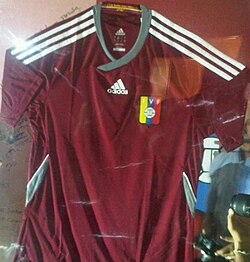
The team's identity is closely tied to its colors. While the jersey saw various changes—including a period with a national flag band in 1993—it returned to the iconic vinotinto (burgundy) tone in 1996.
| Category | Detail |
|---|---|
| Current Head Coach | Oswaldo Vizcarrondo |
| Current Captain | Jon Aramburu |
| Home Stadiums | Estadio Monumental, Estadio Olímpico de la UCV, Estadio Metropolitano de Mérida |
| Biggest Win | 7–0 vs Puerto Rico (1959) |
| Biggest Defeat | 0–11 vs Argentina (1975) |
Frequently Asked Questions
Why is the team called La Vinotinto?
The nickname translates to "The Red-Wine," referring to the distinct burgundy color of the team's home jerseys.
Has Venezuela ever qualified for the FIFA World Cup?
No, Venezuela is currently the only CONMEBOL member that has never qualified for a FIFA World Cup final tournament.
Who is the most successful player in Venezuela's history?
In terms of goals, Salomón Rondón is the all-time top scorer with 50 goals. In terms of longevity and presence, Tomás Rincón holds the record for most appearances with 143 caps.
What is the team's best performance in the Copa América?
Their best result was a fourth-place finish during the 2011 tournament, where they reached the semi-finals.
Why did football take longer to grow in Venezuela than in other South American countries?
Baseball is extremely popular in Venezuela, which historically diverted athletic talent and resources away from football development.