Vasile Ralea: The Complex Life of a Romanian Intellectual and Politician
Vasile Ralea was a towering yet controversial figure in 20th-century Romanian intellectual and political life. A polymath who navigated the turbulent waters of behavioral genetics, sociology, and high-stakes diplomacy, Ralea's career spanned the transition from the democratic aspirations of the interwar period to the rigid constraints of the communist regime. His ability to maintain influence across wildly different political eras makes him a fascinating study in survival and intellectual adaptation.
Born in Huși, Fălciu County, Ralea was the son of Dumitru Ralea, a local magistrate and Senator, and Ecaterina Botezatu-Ralea. Historian Camelia Zavarache notes that Ralea's heritage was diverse, with Bulgarian roots on his father's side and Jewish roots on his mother's. This multicultural background complemented his early academic brilliance at the Boarding High School in Iași, where he studied the classics and formed lifelong bonds with fellow intellectuals like D. I. Suchianu and Petre Constantinescu-Iași.
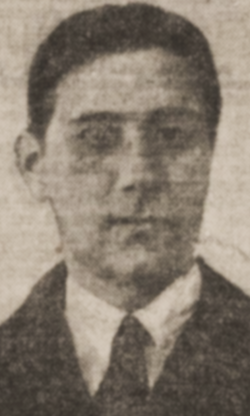
Key Facts
- Academic Pioneer: Introduced behavioral genetics to Romania with his work Formația ideii de personalitate.
- Political Versatility: Served as a deputy for the National Peasants' Party (PNȚ), a minister under King Carol II, and a minister under the communist-led government.
- Cultural Influence: A key ideologue for the influential magazine Viața Românească.
- Diplomatic Role: Served as Romania's ambassador to the United States.
- Scientific Legacy: Chaired the independent Institute of Psychology in Bucharest starting in 1956.
Academic Rise and Poporanist Ideology
Ralea quickly established himself as a leading theoretician. In 1926, he was appointed Professor of Psychology and Aesthetics at the University of Iași. He became a central figure in Poporanism (a Romanian populist movement emphasizing the peasantry) and a primary polemicist for Viața Românească. His early writings, including Contributions to Social Science and Companion to Sociology, cemented his reputation as a scholar of society and education.
Beyond the classroom, Ralea utilized the emerging medium of radio to spread his ideas, often collaborating with the Social Institute led by Dimitrie Gusti. His intellectual reach extended to various cultural magazines, including Kalende and Minerva, making him one of the most visible public intellectuals of his time.
Political Career: From PNȚ to the Royal Dictatorship
By 1928, Ralea entered formal politics by joining the National Peasants' Party (PNȚ). He was elected to the Assembly of Deputies and became a vocal critic of the National Liberal Party, which he described as a regime of corruption. As an editor of the party newspaper Dreptatea, he helped draft the 1935 Party Program, which envisioned Romania as a "peasant state" focused on the just distribution of national income.
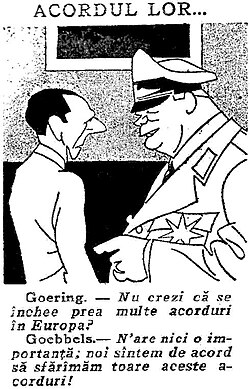
Opposition to Fascism
Ralea was a fierce opponent of the Iron Guard, the violent fascist movement of the era. He viewed fascism as a parasitical phenomenon that fed on the failures of democracy. This opposition led to personal clashes, including a 1932 incident where a symposium he presided over was disrupted by Guardists. In his 1935 collection of essays, Valori (Values), he predicted a shift toward a more collectivist and conformist civilization.
Service Under King Carol II
In a pivot that characterized his opportunistic streak, Ralea joined King Carol II's single party, the National Renaissance Front (FRN), in 1938. He served as a minister and as the Royal Resident (governor) of Ținutul Prut. During this period, he maintained a close friendship with Premier Armand Călinescu, though he was later accused by some of failing to protect other political colleagues from the regime's purges.
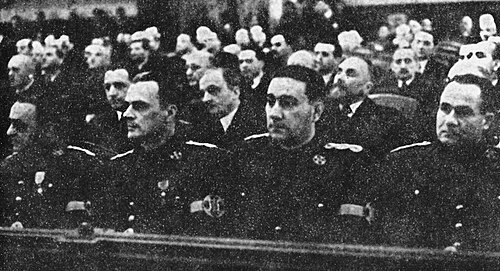
Navigating the Communist Era
Following the political upheavals of 1944, Ralea aligned himself with the new power structure. He was appointed Minister of Arts on March 6, 1945, under the premiership of Petru Groza. He later briefly held the Ministry of Religious Affairs. During this time, he assisted in the purge of PNȚ functionaries and artists deemed pro-fascist by the Communist Party (PCdR).
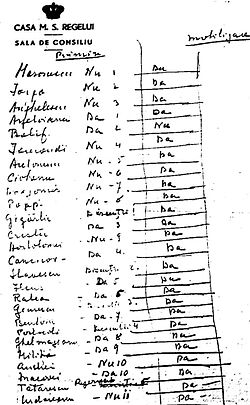
Ralea's relationship with the communist regime was complex. While he served as Ambassador to the United States, he faced suspicion from the Securitate (the secret police), who monitored his contacts and labeled him "opportunistic." He survived several waves of party criticism, including accusations that his research did not meet Marxist standards.
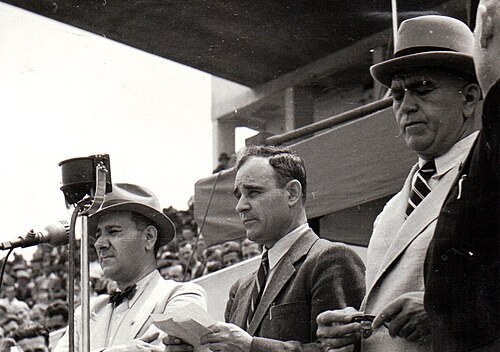
Despite the surveillance, Ralea remained a useful asset to the state. He supported Gheorghe Gheorghiu-Dej's move toward a national communist platform and, in 1955, submitted a report criticizing the poor scientific standards and political appointments within Romanian universities.
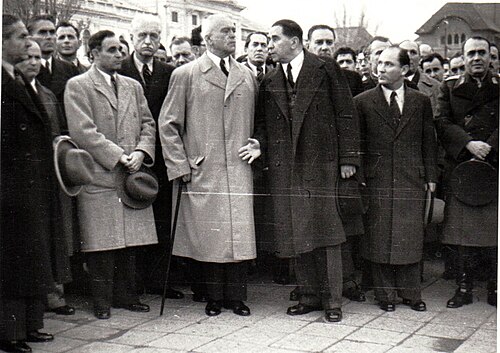
Final Years and Legacy
In his later years, Ralea focused on the institutionalization of psychology. He became the chairman of the independent Institute of Psychology in 1956 and co-authored the History of Psychology in 1958. He also played a diplomatic role in negotiating the partial return of the Romanian Treasure from the Soviet Union.
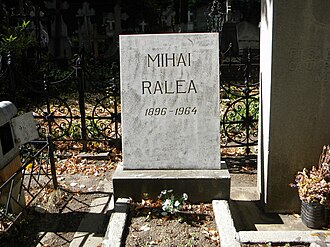
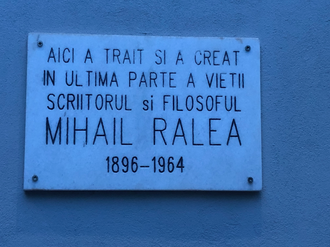
Ralea passed away on August 17, 1964, while traveling to East Berlin. An autopsy revealed he suffered from severe cerebral sclerosis. He was buried at Bellu Cemetery in Bucharest, fulfilling his wish to be laid to rest near the national poet, Mihai Eminescu.
Summary of Vasile Ralea's Career
| Period | Primary Role | Political Affiliation | Key Contribution/Event |
|---|---|---|---|
| 1920s | Professor / Ideologue | Poporanist | Introduced behavioral genetics to Romania |
| 1928–1938 | Deputy / Editor | National Peasants' Party (PNȚ) | Opposed the Iron Guard; edited Dreptatea |
| 1938–1940 | Minister / Governor | National Renaissance Front (FRN) | Served under King Carol II |
| 1945–1949 | Minister / Ambassador | Ploughmen's Front / FND | Minister of Arts; Ambassador to the USA |
| 1950s–1964 | Institute Chairman | Workers' Party (Communist) | Led the Institute of Psychology |
Frequently Asked Questions
What was Vasile Ralea's contribution to science?
Ralea was a pioneer in Romanian psychology and sociology. He is specifically noted for introducing behavioral genetics through his work Formația ideii de personalitate and for leading the independent Institute of Psychology in his later years.
How did Ralea's political views change over time?
Ralea moved from the agrarian-focused Poporanism and the National Peasants' Party to the royal dictatorship of King Carol II, and finally to the communist regime. While he consistently opposed fascism, he was often viewed as an opportunist for his ability to hold high office under conflicting regimes.
What was Ralea's relationship with the Iron Guard?
He was a staunch opponent of the Iron Guard, describing them as an ignorant and parasitical movement. This led to public confrontations and a lifelong intellectual battle against the far-right in Romania.
Why was Ralea monitored by the Securitate?
Despite his service to the state, the Securitate viewed him as "opportunistic" and a potential danger. They bugged his office and monitored his friendships with other intellectuals, suspecting him of not being fully committed to Marxist-Leninist dogmas.
Where is Vasile Ralea buried?
Vasile Ralea is buried at Bellu Cemetery in Bucharest, where he requested to be placed near the grave of the poet Mihai Eminescu.