Variety in Biological Taxonomy: Defining Ranks and Nomenclature
In the complex world of biological classification, scientists use a hierarchical system to organize life. One specific level within this system is the variety (abbreviated as var. or from the Latin varietas). While the term is used frequently in casual conversation, its scientific meaning varies significantly depending on whether you are discussing plants, animals, or bacteria.
In botanical nomenclature—the formal system for naming plants—a variety represents a taxonomic rank that sits below the levels of species and subspecies, but above the rank of form (forma). Because it occupies this intermediate position, a variety is typically identified using trinomial nomenclature, a three-part naming system.
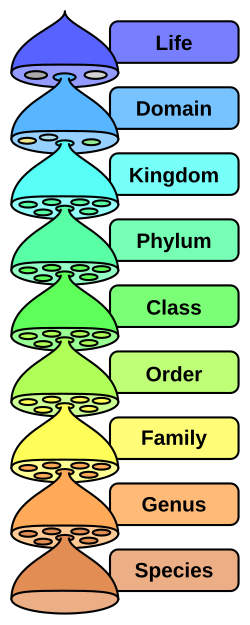
Distinguishing Variety from Subspecies
A common point of confusion in biology is the distinction between a subspecies and a variety. While definitions can vary among authors, a general rule of thumb is often applied regarding geography:
- Subspecies: Often used to recognize groups that are geographically distinct.
- Variety: Often used when the taxon is found throughout the entire geographic range of the species.
A key characteristic of a biological variety is that while it possesses a distinct appearance compared to other varieties of the same species, it will still hybridize freely with them.
Case Study: The Pincushion Cactus
The pincushion cactus (Escobaria vivipara) serves as an excellent example of how varieties function in nature. This wide-ranging species occurs from Canada to Mexico and is found throughout New Mexico at elevations below approximately 2,600 metres (8,500 ft). Scientists have described nine distinct varieties of this cactus. For instance, Escobaria vivipara var. arizonica is native to Arizona, while Escobaria vivipara var. neo-mexicana is found in New Mexico. Notably, where these different varieties meet, they intergrade.
Nomenclature Across Different Fields
The application of the word "variety" changes drastically depending on the scientific discipline being practiced.
Botany and Cultivated Plants
In formal botany, the International Code of Nomenclature for Cultivated Plants makes a strict distinction between a "variety" and a "cultivar." While many people use the terms interchangeably, the Code does not accept "variety" as a synonym for cultivar. In the context of cultivated plants, a variety is strictly defined as the category between species and form.
Zoology and Bacteriology
In zoological nomenclature, the rules are much stricter. The only officially recognized rank below species is the subspecies. Any name published as a "variety" before 1961 is automatically treated as a subspecies. However, any name published as a "variety" after 1960 does not formally exist in zoological terms. While scientists may use terms like "forms" or "morphs" informally, these are not regulated by the International Code of Zoological Nomenclature (ICZN).
Similarly, in bacteriology, the term subspecies is used. Although some bacteria were named as "varieties" prior to 1992, current terminology disallows this, and those older names are now treated as subspecies.
Viticulture and Law
In the world of wine (viticulture), the term "grape variety" is deeply entrenched. However, scientifically speaking, these are actually cultivars. This is because they are typically propagated by cuttings and do not maintain stable properties through sexual reproduction. In plant breeding, particularly in countries signatory to the UPOV Convention, "plant variety" is a specific legal term used in legislation.
Key Facts
- In botany, a variety is a rank below species and subspecies, but above form.
- Varieties are typically identified using three-part (trinomial) names.
- In zoology, the rank of "variety" is not formally recognized; only subspecies is allowed.
- Biological varieties can hybridize freely with other varieties of the same species.
- In viticulture, "grape varieties" are technically considered cultivars.
Summary of Taxonomic Usage
| Field | Status of "Variety" Rank | Preferred/Correct Terminology |
|---|---|---|
| Botany (Wild) | Recognized rank | Variety (between subspecies and form) |
| Cultivated Plants | Distinguished from cultivar | Cultivar |
| Zoology | Not formally recognized | Subspecies |
| Bacteriology | Disallowed (since 1992) | Subspecies |
| Viticulture | Commonly used but technically incorrect | Cultivar |
Frequently Asked Questions
What is the difference between a variety and a cultivar?
In formal botanical nomenclature, a variety is a naturally occurring taxonomic rank, whereas a cultivar (short for "cultivated variety") refers to a plant that has been selected or bred by humans. The International Code of Nomenclature for Cultivated Plants maintains this distinction.
Can varieties interbreed?
Yes. A defining characteristic of a biological variety is that it maintains a distinct appearance but is still capable of hybridizing freely with other varieties of the same species.
Why is the term "variety" not used in zoology?
The International Code of Zoological Nomenclature only recognizes the subspecies as the rank below species. Any historical use of "variety" in zoology is either reclassified as a subspecies (if published before 1961) or is not formally recognized.
Is a grape variety a botanical variety?
Technically, no. Because grape varieties are usually propagated by cuttings to ensure consistency, they are considered cultivars rather than botanical varieties, which are defined by their position in the natural taxonomic hierarchy.
What is trinomial nomenclature?
Trinomial nomenclature is a three-part naming system used for infraspecific taxa (ranks below species). For example, in Escobaria vivipara var. arizonica, the three parts represent the genus, the species, and the variety.