Vampires in Cinema and Television: A Century of Evolution
From the silent era's haunting shadows to the high-definition glamour of modern streaming, the vampire has remained one of the most enduring figures in entertainment. What began as a symbol of predatory seduction has evolved into a complex archetype, shifting between a hideous monster, a romantic lead, and even a comedic foil. This evolution reflects changing societal views on desire, death, and the supernatural.
The Early Era: From "Vamps" to Monsters
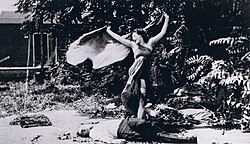
In the earliest days of cinema, the "vampire" was not always a bloodsucking creature of the night. In films like The Vampire (1913), directed by Robert G. Vignola, the term referred to the "vamp"—a femme fatale character. These roles were inspired by Rudyard Kipling's 1897 poem "The Vampire," which itself commented on a painting by Philip Burne-Jones. This trend continued in A Fool There Was (1915), starring Theda Bara.
The transition to supernatural horror arrived with Nosferatu (1922). Directed by F. W. Murnau and starring Max Schreck as Count Orlok, this unlicensed adaptation of Bram Stoker's Dracula was so similar to the novel that the Stoker estate successfully sued to have all copies destroyed. Only five prints survived, allowing scholars to restore the film in 1994. Crucially, Nosferatu introduced the concept of sunlight destroying the vampire, a trope that replaced the traditional stake through the heart in many future productions.
The Legacy of Count Dracula
The definitive image of the vampire was cemented by Universal's Dracula (1931). Bela Lugosi's portrayal of the Count introduced the Hungarian accent and sweeping gestures that became synonymous with the character. Universal expanded this universe with Dracula's Daughter (1936) and Son of Dracula (1943), as well as crossover films like House of Frankenstein (1944) and House of Dracula (1945).
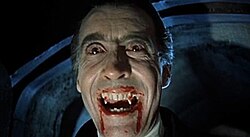
In 1958, Hammer Films reimagined the character with Christopher Lee. This series reinforced the "sunlight death" established by Nosferatu, making it a standard rule of vampire lore. Lee's presence brought a new level of physicality and menace to the role across seven sequels.
Later interpretations continued to refine the character. Francis Ford Coppola's Bram Stoker's Dracula (1992) linked the Count to the historical figure Vlad III the Impaler. To date, Count Dracula is the most frequently portrayed character in horror films, with over 170 representations—surpassed in total film appearances only by Sherlock Holmes.
Diversification of the Vampire Archetype
The Erotic and the Subversive
Vampires have long represented passion and desire. While Lugosi established the vampire as an alluring figure, later films made these themes more explicit. Inspired by Le Fanu's Carmilla, a subgenre of lesbian vampires emerged, starting with Blood and Roses (1960) and continuing through Hammer's Karnstein Trilogy, including The Vampire Lovers (1970).
Comedy and Science Fiction
The genre also embraced humor, beginning with Abbott and Costello Meet Frankenstein (1948). Notable parodies include Roman Polanski's The Fearless Vampire Killers (1967) and the mockumentary What We Do in the Shadows (2014).
Simultaneously, some filmmakers replaced magic with science. Films based on Richard Matheson's I Am Legend (such as The Last Man on Earth and The Omega Man) and David Cronenberg's Rabid (1976) explained vampirism as a biological condition or a virus.
The Grotesque and the Hunter
A smaller subgenre maintains the vampire as a hideous creature of folklore. This is seen in Max Schreck's original performance, Klaus Kinski's role in Nosferatu the Vampyre (1979), and the terrifying creatures in Stephen King's Salem's Lot (1979) and 30 Days of Night.
To counter these threats, the vampire hunter became a staple character, prototyped by Abraham Van Helsing. This role evolved from the traditional stake-wielder to the heavily armed squads in John Carpenter's Vampires (1998) and the supernaturally endowed Slayers in Buffy the Vampire Slayer.
Vampires on the Small Screen and Beyond
Television has expanded the vampire's role from Gothic soap operas like Dark Shadows (1966) to modern dramas. True Blood (2008) and The Vampire Diaries (2009) focused on romantic entanglements, while The Strain (2014) returned to a more visceral, biological horror.
Animation and web series have further pushed boundaries. From the parody Count Duckula (1988) to the dark fantasy of Netflix's Castlevania and the anime Vampire Hunter D, the vampire continues to adapt. Web series like The Hunted (2001) and Carmilla (2014) have allowed for more niche storytelling and modern retellings.
Key Facts
- Most Portrayed: Count Dracula has appeared in over 170 films, the most of any horror character.
- Lore Shift: Nosferatu (1922) popularized the idea that sunlight kills vampires, moving away from the traditional stake.
- Defining Performance: Bela Lugosi's 1931 portrayal established the accent and gestures now associated with Dracula.
- Scientific Twist: Some films, like those based on I Am Legend, treat vampirism as a virus or natural cause rather than a curse.
- Historical Link: Some theories and documentaries link the inspiration for Dracula to the 18th-century Czech princess Eleonore von Schwarzenberg.
| Era/Style | Key Example | Primary Characteristic |
|---|---|---|
| Early Silent | The Vampire (1913) | Femme Fatale ("Vamp") |
| Expressionist | Nosferatu (1922) | Hideous, folklore-based monster |
| Golden Age | Dracula (1931) | Aristocratic, alluring sex symbol |
| Hammer Horror | Dracula (1958) | Physical menace, sunlight vulnerability |
| Modern/Sci-Fi | Blade / Rabid | Biological virus or genetic mutation |
Frequently Asked Questions
Who is the most filmed horror character of all time?
Count Dracula is the most frequently portrayed character in horror films, with more than 170 film representations.
How did the "sunlight kills vampires" trope start in cinema?
While not traditional in all folklore, this concept was prominently featured in the 1922 film Nosferatu and was later reinforced by the Hammer Films series starring Christopher Lee.
What is the difference between a "vamp" and a supernatural vampire?
In early cinema, a "vamp" was a femme fatale—a seductive woman who manipulated men—rather than an undead creature that drank blood.
Which actor is credited with creating the modern image of Dracula?
Bela Lugosi's performance in the 1931 film Dracula established the Hungarian accent and sweeping gestures that are now commonly associated with the character.
Are there vampires in cinema that aren't supernatural?
Yes. Several films, including those based on Richard Matheson's I Am Legend and David Cronenberg's Rabid, explain vampirism as a virus or a natural biological cause.